

Honey Skincare Benefits for Skin: A 2026 Guide

Table of Contents
- What Makes Honey a Skincare Powerhouse?
- Does Honey Help With Acne and Breakouts?
- How to Use Honey as a Face Mask: Step-by-Step
- Benefits of Manuka Honey for Skin vs. Raw Honey
- Honey for Hyperpigmentation and Uneven Skin Tone
- How to Choose Honey-Based Skincare: Formulation and Sourcing
- Common Mistakes When Using Honey on Your Face
- Frequently Asked Questions
Last Updated: September 11, 2026
What Makes Honey a Skincare Powerhouse?
Honey skincare benefits for skin start with a simple fact: honey is one of the few natural ingredients that hydrates, exfoliates, and calms at the same time. This guide breaks down what honey actually does at the skin barrier level, who should avoid it, and how to use it without triggering a breakout.
Honey is a humectant, meaning it pulls water from the air into the epidermis (peer-reviewed research). It also contains trace amounts of gluconic acid, a gentle alpha-hydroxy acid that loosens dead cells without the sting of a chemical peel.
Humectant and Emollient Properties
As a humectant, honey draws moisture into the top layer of skin. As an emollient, it leaves behind a soft, flexible film that slows transepidermal water loss. That dual action is why honey shows up in dermatological formulations for dry, compromised skin.
In practice, this means a honey mask can plump fine lines within minutes. The effect is temporary, but repeated use supports a healthier skin barrier over time.
Antioxidants and Skin Barrier Support
Raw honey carries phytonutrients and antioxidant compounds that neutralize free radicals before they break down collagen. Fewer free radicals means slower wrinkle formation and better long-term radiance.
The skin microbiome also benefits. Honey's natural pH balance sits close to skin's own, so it soothes without stripping the acid mantle.
Does Honey Help With Acne and Breakouts?
Honey can help with some acne, but the type of breakout matters more than the brand of honey. Understanding the mechanism tells you whether honey is the right tool or the wrong one.
How Honey Actually Acts on Acne
Three properties do the work:
- Osmotic dehydration. Honey is a supersaturated sugar solution with very low water activity. When it sits on skin, it draws water out of bacterial cells, which inhibits their growth. This is a physical mechanism, not a chemical one, so bacteria are less able to develop resistance to it than to a topical antibiotic.
- Slow hydrogen peroxide release. Glucose oxidase, an enzyme bees deposit in honey, converts glucose into gluconic acid and hydrogen peroxide at low, sustained levels when the honey is diluted by skin moisture. That trickle of peroxide is far gentler than a drugstore benzoyl peroxide spot treatment, which is why honey rarely causes the peeling and irritation those products do.
- Low pH and anti-inflammatory flavonoids. Honey's natural acidity sits near the range where acne bacteria struggle to thrive, and its flavonoid content calms the redness and swelling that make a pimple look worse than it is.
Matching Honey to Your Acne Type
Not all breakouts respond the same way:
- Inflammatory papules and pustules (red, tender, pus-filled): This is honey's strongest use case. The antibacterial and anti-inflammatory effects target exactly this pattern.
- Comedonal acne (blackheads and closed bumps): Honey's mild gluconic acid can help loosen plugged pores over time, but it is not a substitute for a salicylic acid or retinoid routine. Treat honey as a supporting step, not the main event.
- Fungal acne (small, uniform, itchy bumps along the hairline or chest): Honey is a sugar, and Malassezia, the yeast behind fungal acne, feeds on simple sugars (peer-reviewed research). Skip honey here and look for a zinc pyrithione or ketoconazole-based approach instead.
- Cystic acne: Honey will not reach the deep inflammation driving cysts. See a dermatologist; topical honey is not the answer.
A Realistic Honey Protocol for Acne-Prone Skin
If honey fits your breakout type, use it as a targeted mask rather than an all-over daily treatment:
- Cleanse and fully dry the skin.
- Apply a thin layer only to active, inflamed areas, not the whole face.
- Leave on 10 to 15 minutes, no longer.
- Rinse with lukewarm water until the skin no longer feels tacky.
- Follow with a non-comedogenic moisturizer.
- Start with two or three sessions per week and adjust based on how your skin responds.
Who Should Avoid Honey on Acne-Prone Skin
Honey is generally low on the comedogenic scale, but three groups should be cautious:
- Anyone with a pollen or bee-product allergy. Raw honey can carry trace pollen and bee proteins. A forearm patch test is non-negotiable before facial use.
- People with fungal-acne patterns. As noted above, the sugar content can make things worse.
- Those prone to pore congestion from occlusive residues. If you already break out from heavy balms or thick creams, honey's sticky film may trap oil the same way. Rinse thoroughly and never sleep in it.
The Unique Angle Most Guides Skip
Most articles treat honey as a universal acne cure. It isn't. The honest framing is that honey is a mild, well-tolerated anti-inflammatory for inflammatory acne, and a poor choice for fungal or cystic acne. Knowing which category you fall into is the difference between a helpful mask and a wasted jar.
How to Use Honey as a Face Mask: Step-by-Step
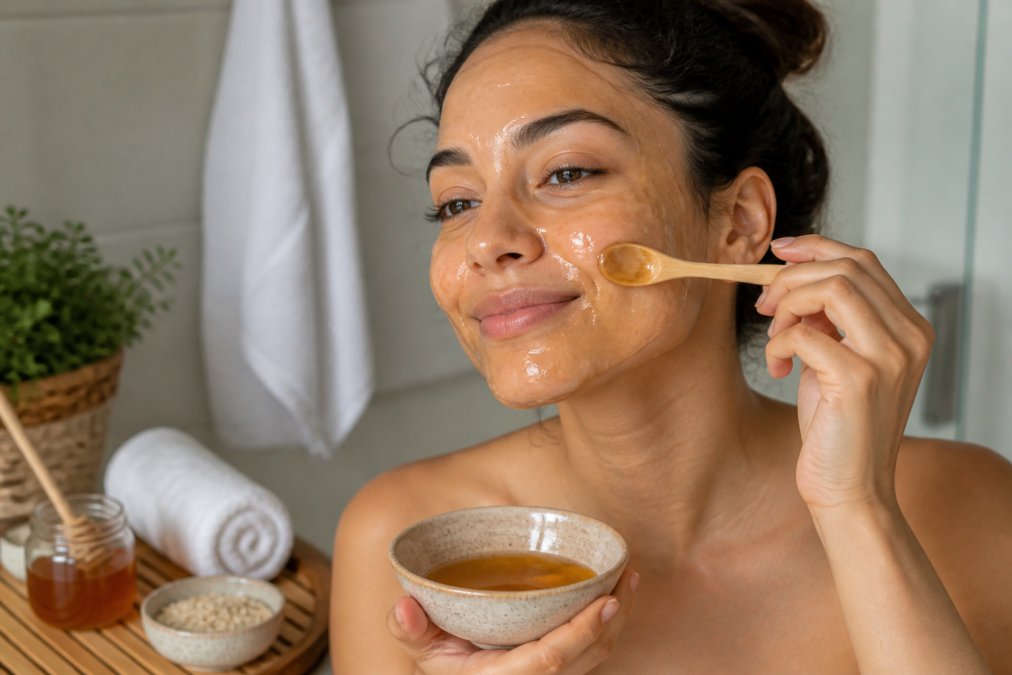
Learning how to use honey as a face mask takes about five minutes of prep and 15 minutes of wear. The method matters more than the brand.
- Wash your face with a gentle cleanser and pat dry.
- Warm 1 to 2 teaspoons of honey between your fingertips.
- Apply an even layer, avoiding the eyes and hairline.
- Leave on for 10 to 15 minutes.
- Rinse with lukewarm water and a soft cloth.
- Follow with a light moisturizer to seal in hydration.
DIY Honey Mask Recipes for Different Skin Types
- Dry skin: honey plus a teaspoon of plain yogurt
- Oily skin: honey plus a few drops of lemon juice
- Sensitive skin: honey alone, no additives
- Dull skin: honey plus a pinch of turmeric
Patch Testing Protocol Before First Use
Dab a small amount of honey on the inner forearm. Wait 24 hours. If you see redness, itching, or swelling, do not apply it to your face. A patch test is the single most reliable way to rule out a reaction before it happens.
Benefits of Manuka Honey for Skin vs. Raw Honey
The benefits of manuka honey for skin come down to one compound: methylglyoxal. Manuka carries higher concentrations of it than ordinary raw honey, which gives it stronger antibacterial activity.
Raw honey, by contrast, is more affordable and easier to source. For general hydration and soothing, raw honey works well. For active breakouts or healing, manuka is the stronger choice. Look for a UMF or MGO rating on the label to confirm potency.
| Type | Key Strength | Best For |
|---|---|---|
| Raw honey | Hydration, antioxidants | Dry, dull skin |
| Manuka honey | Antibacterial potency | Acne, healing |
| Honey-based soap | Gentle daily cleanse | All skin types |
Honey for Hyperpigmentation and Uneven Skin Tone
Honey alone will not fade stubborn dark spots, but it supports the process. Its mild enzymatic activity encourages cell turnover, which helps pigmentation lift faster when paired with sunscreen and a consistent routine.
What most guides miss is that honey works best as a supporting ingredient, not a standalone treatment. Pair it with vitamin C or niacinamide for uneven tone, and use it daily for at least eight weeks before judging results.
How to Choose Honey-Based Skincare: Formulation and Sourcing
This is where most honey-skincare guides stop at 'read the label.' The real decisions happen at the formulation and sourcing level, and almost no competitor covers them.
Formulation Science: How Honey Behaves in a Product
Honey is a difficult ingredient to formulate with, and how a brand handles that difficulty tells you a lot about quality:
- Heat sensitivity. The enzymes that give honey its antibacterial and antioxidant activity, glucose oxidase chief among them, denature at sustained high temperatures (peer-reviewed research). A brand that pasteurizes or hot-processes its honey for shelf stability is trading potency for convenience. Cold-processed and low-heat formulations preserve more of the active compounds.
- Water activity and preservation. Honey's low water activity makes it self-preserving in its raw form, but once it is diluted into a water-based serum or toner, that protection disappears. A well-formulated product needs a proper preservative system; a poorly preserved one is a contamination risk. Don't assume 'natural' means 'safe to leave open on the counter.'
- Concentration vs. position on the INCI list. Ingredients are listed in descending order of concentration. Honey appearing in the first five ingredients signals a meaningful amount; honey appearing after fragrance or near the end is a marketing nod, not a functional dose.
-
Pairing with other actives. Honey plays well with most ingredients, but two pairings are worth knowing:
- Vitamin C: Honey's low pH is compatible with L-ascorbic acid, and the two can layer without conflict. Some formulators use honey as a humectant base for vitamin C serums specifically because it buffers the sting.
- Retinol: Honey is a soothing counterweight to retinol's irritation, which is why you'll see it in 'retinol buffer' creams. Apply honey-based products before or alongside retinol, not as a replacement.
- Benzoyl peroxide: Skip combining these. Both are oxidizing agents, and layering them offers no added benefit while raising irritation risk.
Sourcing: What 'Ethical Honey' Actually Means
Sustainability in honey is a real consumer concern that top-ranking guides largely ignore. Here's what to look for:
- Named origin. A label that says 'honey' with no geographic source is usually a blend. Blends are legal and often fine for hydration, but they're harder to trace and more likely to be cut with syrups.
- Single-origin and varietal labeling. 'Wildflower,' 'clover,' or 'manuka' with a specific region tells you the bees foraged in a defined area, a marker of both quality and traceability.
- Third-party testing. Reputable brands test for adulteration (added corn syrup or rice syrup), pesticide residues, and heavy metals. If a brand publishes its test results, that's a strong signal.
- Bee welfare and habitat. Look for brands that disclose their beekeeping practices, avoiding overwinter sugar-feeding that ends up in the final product, and supporting pollinator habitat. This is the fastest-growing consumer concern in the category and almost no skincare guide addresses it.
- Manuka ratings. For manuka specifically, UMF (Unique Manuka Factor) and MGO (methylglyoxal) ratings are the industry standards for verifying potency. A product claiming manuka without either rating is unverifiable.
A Quick Label Audit
Before you buy, run this five-point check:
- Does honey appear in the first five ingredients?
- Is the honey's origin or varietal named?
- Does the brand disclose its preservation system?
- For manuka, is there a UMF or MGO rating?
- Does the brand publish any third-party testing?
Three or more 'yes' answers is a strong signal. Zero or one means you're likely paying for the word 'honey' on the front of the jar.
The Unique Angle Most Guides Skip
Formulation and sourcing are where honey skincare separates into two tiers: products built around honey's actual chemistry, and products that use honey as a label claim. The five-point audit above is the fastest way to tell which tier you're buying from, and it's a test no competing guide gives you.
Common Mistakes When Using Honey on Your Face
The biggest mistake is using too much. A thin layer absorbs better than a thick one, and excess honey just drips off your chin.
Other frequent errors:
- Applying to dirty skin, which traps grime under the mask
- Rinsing with hot water, which strips the barrier
- Skipping moisturizer afterward
- Expecting overnight results from a single use
- Using honey on open cuts or fresh breakouts
Our handcrafted honey-based soaps and skin toners are built around these principles: gentle daily use, real honey content, and formulas that support the skin barrier rather than fight it.
Frequently Asked Questions
Is it good to apply honey on your face daily?
Daily use is generally safe for most skin types, but it depends on your skin's tolerance. Raw or manuka honey can be used as a gentle cleanser or mask two to three times per week. For sensitive or acne-prone skin, start with once weekly and increase gradually. If you notice irritation, redness, or breakouts, reduce frequency. Always patch test first and consult a dermatologist if you have a diagnosed skin condition.
What should you never mix honey with for skincare?
Avoid mixing honey with lemon juice or apple cider vinegar in high concentrations, as the acidity can disrupt your skin barrier and cause burns or irritation. Do not combine honey with hydrogen peroxide or other harsh antiseptics. Also skip essential oils known to be phototoxic, like bergamot or lime, unless diluted properly. Stick to gentle ingredients like yogurt, oatmeal, or aloe vera for safe DIY masks.
Does honey help with acne and breakouts?
Yes, honey can help with mild to moderate acne. Its natural antibacterial compounds, including hydrogen peroxide and methylglyoxal in manuka honey, reduce acne-causing bacteria. Honey is also anti-inflammatory, which calms redness and swelling. However, honey alone will not clear severe cystic acne. For stubborn breakouts, use honey as a complement to a dermatologist-recommended routine, not a replacement.
What is the difference between raw honey and manuka honey for skin?
Raw honey is unprocessed and retains natural enzymes, antioxidants, and pollen. Manuka honey comes specifically from New Zealand's manuka bush and contains higher levels of methylglyoxal (MGO), giving it stronger antibacterial properties. For general hydration and soothing, raw honey works well. For acne, wound healing, or compromised skin, manuka honey with a verified MGO rating above 250 is more effective. Both can be used in masks and spot treatments.
Can honey make your face look younger?
Honey supports younger-looking skin by fighting free radicals that break down collagen and elastin. Its humectant properties draw moisture into the epidermis, plumping fine lines and improving radiance. Regular use of honey masks can soften dry patches and support the skin barrier, which reduces transepidermal water loss. While honey is not a replacement for retinoids or sunscreen, it is a gentle, natural addition to an anti-aging routine.
How do I patch test honey before using it on my face?
Apply a small amount of honey to the inside of your forearm or behind your ear. Leave it on for 15 to 20 minutes, then rinse with lukewarm water. Wait 24 hours and check for redness, itching, swelling, or bumps. If no reaction occurs, honey is likely safe for your face. Repeat this patch test with any new honey product or DIY mask recipe, especially if you have sensitive skin or known allergies to bee products.
Is honey comedogenic or will it clog my pores?
Honey is low on the comedogenic scale, typically rated 0 to 2, meaning it is unlikely to clog pores. Its natural sugars and enzymes dissolve easily in water and do not leave heavy residue. However, if you mix honey with heavy oils like coconut oil, the final product may become pore-clogging. For acne-prone skin, use honey alone or with non-comedogenic ingredients like aloe vera or green tea.
How should I store honey-based skincare products?
Store honey and honey-based products in a cool, dark place away from direct sunlight. Raw honey can crystallize over time, which is normal and does not mean it has spoiled. To liquefy, place the jar in warm water for a few minutes. For DIY masks, make small batches and refrigerate them for up to one week. Always use clean hands or a spoon to scoop honey to avoid introducing bacteria.
Honey is a supporting player in a skincare routine, not a miracle cure, and treating it that way is the fastest route to disappointment. FAITH & RICH builds honey-based soaps and handcrafted toners for women who want natural ingredients that actually do something: fight blemishes, soften fine lines, and turn a daily routine into a moment of self-care. Explore the collection and find the formula that fits your skin.


