

Does Honey Help With Acne? A 2026 Guide

Table of Contents
- What Makes Honey for Acne Worth Trying
- Manuka Honey for Acne vs. Raw Honey: Which Works Better
- How to Use Honey as a Face Mask Step by Step
- Honey Face Mask for Pimples: How Long to Leave It On
- Honey Acne Treatment Side Effects and Safety Checks
- DIY Honey Mask Safety and Sourcing
- Is Honey for Acne Enough on Its Own?
- Conclusion
Last Updated: August 13, 2026
What Makes Honey for Acne Worth Trying
Honey helps with acne through antibacterial compounds, antioxidants, and natural enzymes that work on mild to moderate breakouts. However, not all honey is equal, therapeutic-grade, properly sourced honey performs differently than kitchen varieties. Below, we break down what the science supports, which honey to use, how to apply it safely, and where it falls short.
Antibacterial Properties That Fight Breakouts
Honey's antibacterial action stems from multiple mechanisms: it produces hydrogen peroxide through enzymatic activity, its low water content and high sugar concentration inhibit bacterial growth, and manuka honey specifically contains methylglyoxal, a compound that adds persistent antimicrobial activity even when hydrogen peroxide is neutralized.
Acne vulgaris is driven partly by Cutibacterium acnes bacteria proliferating in blocked follicles. Topical honey slows bacterial growth and reduces breakout severity without the dryness and irritation of conventional treatments. According to National Center for Biotechnology Information review on honey's antimicrobial properties, honey's antimicrobial activity is well-documented and attributed to its osmotic effect, low pH, and enzymatic hydrogen peroxide production.
Anti-Inflammatory Effects and Skin pH Balance
Honey's anti-inflammatory properties calm the redness, swelling, and pain of acne lesions, particularly for inflammatory acne (papules and pustules) rather than comedonal acne (blackheads and whiteheads).
Honey's mildly acidic pH of 3.2 to 4.5 aligns with healthy skin's pH range of 4.5 to 5.5, making it gentler than harsh alkaline cleansers. This makes honey a suitable option for people with sensitive skin who find conventional acne treatments cause more irritation than relief.
Manuka Honey for Acne vs. Raw Honey: Which Works Better
Manuka honey for acne has stronger evidence than raw honey due to its methylglyoxal content. Raw honey relies primarily on hydrogen peroxide, which degrades with light, heat, and skin enzymes. Manuka honey's methylglyoxal remains stable and active longer on skin.
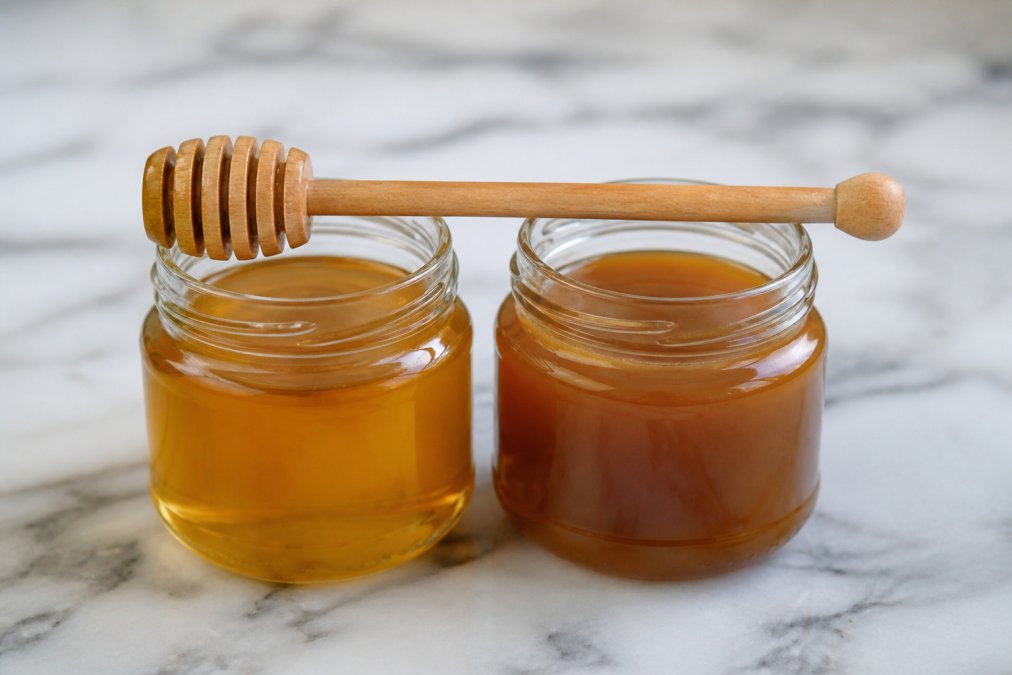
Manuka honey is graded by Unique Manuka Factor (UMF) or MGO content. For topical use, a UMF rating of 10+ or MGO above 100 is the minimum threshold for meaningful antibacterial activity.
Raw honey remains a legitimate option for people prioritizing hydration and mild anti-inflammatory benefits. It is widely available, inexpensive, and offers antioxidants and enzymes that support wound healing and skin barrier function.
| Honey Type | Key Active | Antibacterial Strength | Best For | Stability on Skin |
|---|---|---|---|---|
| Raw Honey | Hydrogen peroxide | Moderate | Mild breakouts, hydration | Lower (degrades with heat/enzymes) |
| Manuka Honey | Methylglyoxal (MGO) | High | Moderate acne, inflamed spots | Higher (stable under skin enzymes) |
If budget allows, manuka honey is the better clinical choice. Otherwise, raw honey still has value with adjusted expectations.
How to Use Honey as a Face Mask Step by Step
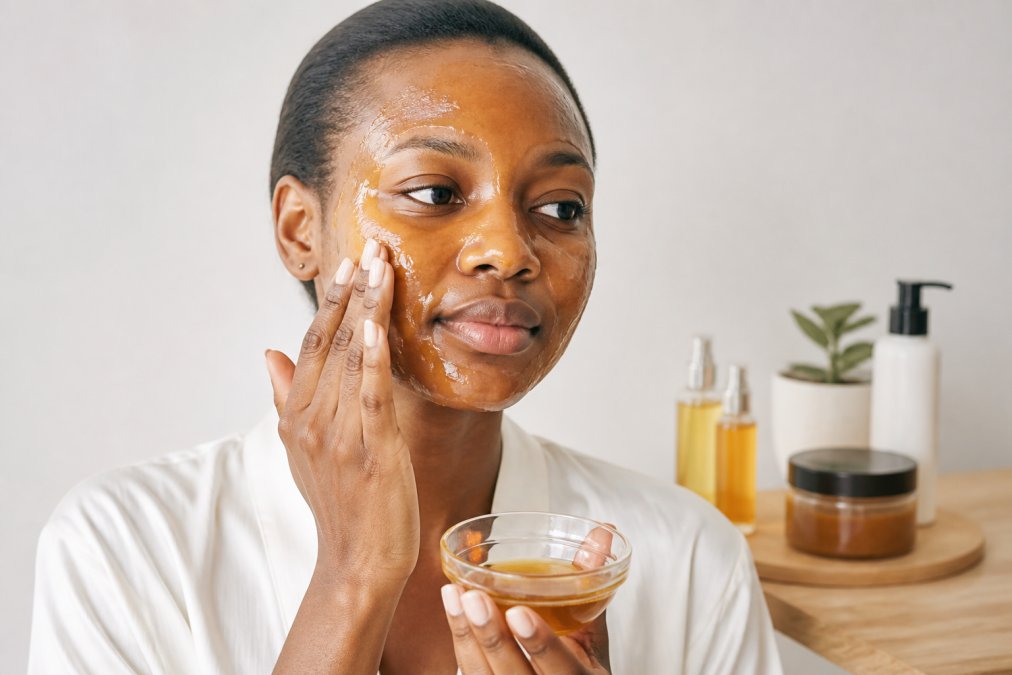
Correct application separates a useful treatment from a sticky mess. Application method and timing matter as much as the honey itself.
What You'll Need Before You Start
- Raw or manuka honey (UMF 10+ for manuka)
- A clean bowl and silicone or wooden spatula
- A gentle, non-stripping cleanser
- Warm water and a soft cloth for removal
- A patch-tested moisturizer
Application Steps for a Honey Spot Treatment or Full Mask
- Cleanse your face with a gentle cleanser. Remove all makeup, sunscreen, and surface oil. Pat dry.
- Warm the honey slightly by placing the jar in warm water for two to three minutes. Never microwave it, as heat degrades active enzymes.
- Apply a thin, even layer using clean fingertips or a silicone brush. For a full mask, cover the entire face avoiding the eye area. For a spot treatment, apply directly to individual pimples.
- Leave on for 15 to 20 minutes.
- Remove with lukewarm water and a soft cloth using gentle circular motions.
- Follow with your regular moisturizer while skin is still slightly damp.
Honey Face Mask for Pimples: How Long to Leave It On
The ideal duration for a full honey face mask is 15 to 20 minutes, or up to 30 minutes for a targeted spot treatment left on overnight with a small dab covered by a bandage.
Leaving honey on longer than 20 minutes for a full-face application offers diminishing returns. Active compounds do their work within the first 15 to 20 minutes. Extended contact provides mainly hydration benefits, and sensitive skin types may experience mild irritation around the mouth and nose.
Overnight spot treatments differ. A tiny amount applied directly to a single pimple and covered with an adhesive bandage can be left on for several hours or overnight, increasing antibacterial and anti-inflammatory exposure without exposing the entire face to prolonged contact. As documented in Journal of Wound Care research on honey's wound healing properties, honey's antimicrobial effects are enhanced by sustained contact time.
Honey Acne Treatment Side Effects and Safety Checks
Honey acne treatment side effects are generally mild but worth knowing. The most common issue is skin sensitivity or allergic reaction, particularly in people with pollen or bee-related allergies.
Allergy Testing Protocol Before First Use
A patch test is essential before applying honey to your full face, especially for anyone with pollen allergies, since honey contains trace pollen.
Standard patch test protocol:
- Apply a small amount of honey (roughly pea-sized) to the inside of your forearm or behind your ear.
- Leave it on for 30 minutes without washing.
- Check for redness, itching, swelling, or hives.
- Leave the area unwashed for 24 hours and check again.
- Proceed with facial application only if no reaction occurs.
Anyone with a diagnosed bee venom allergy or severe pollen allergy should consult a dermatologist before using honey topically.
Interactions With Active Acne Ingredients
Honey does not work well with every acne ingredient.
Retinoids (tretinoin, adapalene): Applying honey over or immediately after retinoids increases skin sensitivity and potential irritation. Use honey on evenings when you are not applying retinoids, or use it as a morning treatment only.
Benzoyl peroxide: This oxidizing agent can partially deactivate honey's active enzymes. Combining them can cause unexpected dryness and peeling. Keep them on separate days.
AHAs and BHAs (glycolic acid, salicylic acid): While theoretically compatible, layering actives always increases irritation risk. Apply honey on alternate days or as a standalone treatment.
Vitamin C serums: These are generally compatible with honey, as both are antioxidant-rich and acidic.
DIY Honey Mask Safety and Sourcing
DIY honey mask safety starts with sourcing. Not all honey sold for food use is appropriate for topical application.
What to look for when sourcing honey for skin use:
- Raw and unfiltered: Processed honey is heated and filtered, destroying active enzymes. Look for "raw" on the label.
- Monofloral manuka: Monofloral varieties have higher, more consistent MGO levels than blended products.
- Third-party tested: Reputable manuka honey producers provide UMF or MGO certification from independent labs.
- Sustainable sourcing: Look for producers who disclose sourcing regions and beekeeping methods.
Honey from large commercial suppliers is often blended, ultra-filtered, and heat-processed, lacking the enzymatic activity needed for skin benefits. For DIY honey masks to deliver results, ingredient quality is foundational. According to USDA guidance on honey grading and labeling standards, there are no federal standards legally defining "raw honey" in the US, making sourcing from reputable, transparent producers essential.
Is Honey for Acne Enough on Its Own?
Honey is a useful addition to an acne routine, not a complete solution. For mild, occasional breakouts, a raw or manuka honey spot treatment can visibly reduce inflammation and speed healing. Many people with sensitive skin who cannot tolerate conventional treatments find honey genuinely effective.
For moderate to severe acne, particularly cystic acne or acne with scarring risk, honey alone is insufficient. Dermatological advice and prescription treatments are appropriate. Honey can support such a routine but should not replace clinical care.
The most effective approach pairs honey with a broader routine addressing sebum production, skin barrier health, and consistent cleansing. FAITH & RICH's Turmeric Face Cleanser works well as a prep step before a honey mask, removing dirt and impurities without stripping the skin barrier. The brand's Turmeric Toner complements honey's anti-inflammatory effects by balancing and brightening the complexion after treatment.


For those dealing with hyperpigmentation and dark spots alongside breakouts, the FAITH & RICH Turmeric & Lemon Set addresses both concerns, combining turmeric's ability to fade acne scars and reduce inflammation with lemon's natural brightening properties.

| Acne Type | Honey's Likely Benefit | Recommended Role |
|---|---|---|
| Mild, occasional pimples | High | Spot treatment or full mask |
| Inflammatory papules/pustules | Moderate | Spot treatment alongside cleanser |
| Comedonal (blackheads/whiteheads) | Low | Hydration support only |
| Moderate to severe/cystic acne | Minimal alone | Supplement to dermatologist-directed care |
Research on topical honey for acne specifically is limited. Most supporting data comes from honey's broader wound healing and antibacterial literature. The application to acne is biologically plausible but lacks large-scale clinical trials. As noted by American Academy of Dermatology guidance on natural acne remedies, natural remedies including honey may help some patients but should not replace evidence-based treatments for moderate to severe cases.
Acne is rarely solved by a single ingredient. The real challenge is building a routine that addresses inflammation, bacterial activity, and skin barrier health consistently without triggering further irritation. FAITH & RICH's handcrafted, honey-based and turmeric-infused skincare line is designed for that layered approach, fighting blemishes, reducing inflammation, and supporting skin clarity without the harshness of conventional acne treatments. EXPLORE the full FAITH & RICH skincare collection and find the routine your skin has been waiting for.
Frequently Asked Questions
Does applying honey actually remove pimples?
Honey won't erase an existing pimple overnight, but its antibacterial and anti-inflammatory properties can reduce redness, limit bacterial growth, and speed up the skin's wound healing process. Used consistently as a spot treatment or face mask, raw or manuka honey for acne may visibly calm active breakouts and help prevent new ones. Results vary by skin type, and honey works best as part of a broader skincare routine rather than a standalone cure for acne vulgaris.
What type of honey is best for acne-prone skin?
Manuka honey is widely regarded as the strongest option for acne-prone skin because of its high methylglyoxal content, which gives it concentrated antibacterial activity. Raw honey is a solid second choice since it retains natural enzymes and antioxidants that processed honey loses. Avoid commercial table honey, it's typically heated and filtered, stripping out most of the compounds that make honey useful as a topical application for breakouts and skin inflammation.
Are there side effects to using honey on skin?
Honey acne treatment side effects are uncommon but real. People with bee-related allergies or pollen sensitivities face the highest risk of irritation or an allergic reaction. Even without a known allergy, some skin types react to honey's natural sugars or residual pollen. A patch test on the inner forearm for 24 hours before full facial application is the safest first step. If you're using retinoids, benzoyl peroxide, or other actives, ask a dermatologist before layering honey on top.
How long should you leave a honey face mask on for pimples?
Most dermatological guidance suggests leaving a honey face mask on for 10 to 20 minutes for general skin hydration and anti-inflammatory benefits. For a targeted spot treatment on an active pimple, you can extend that to 30 minutes. Leaving honey on overnight is not recommended for most people, prolonged contact can cause irritation, especially on sensitive skin. Always rinse thoroughly with lukewarm water and follow with a non-comedogenic moisturizer to maintain your skin barrier.
This article was written using GrandRanker


