

Best Honey-Based Skincare Products for 2026

Table of Contents
- Why Honey Deserves a Place in Your Skincare Routine
- Does Honey Help With Acne and Breakouts
- Benefits of Manuka Honey for Face Health and Radiance
- Top Honey-Based Skincare Products That Deliver Results
- How to Build Your Honey Skincare Routine Steps
- Honey for Sensitive Skin and Hyperpigmentation Concerns
- What Sets Ethical Honey Skincare Apart
- Conclusion
Last Updated: August 19, 2026
Why Honey Deserves a Place in Your Skincare Routine
Honey has been used in skincare for thousands of years, and modern science confirms what ancient beauty rituals already knew. Honey works as a humectant that draws moisture into the skin, an emollient that nourishes and softens, and contains bioactive compounds that support skin repair and radiance. Whether addressing acne, dullness, hyperpigmentation, or sensitivity, honey-based skincare offers a natural alternative backed by real skin benefits.
At FAITH & RICH, we've seen firsthand how honey transforms skin when formulated correctly. The difference between a product that merely contains honey and one that harnesses its full potential comes down to sourcing, formulation, and intention.
Does Honey Help With Acne and Breakouts
Yes, honey can help with acne and breakouts through three distinct mechanisms supported by clinical research.
Antibacterial Action and Bacterial Inhibition
Honey contains hydrogen peroxide and gluconic acid, compounds that create an acidic environment hostile to Cutibacterium acnes, the primary bacteria responsible for inflammatory acne. A study in the International Journal of Dermatology found that raw honey demonstrated antibacterial activity comparable to benzoyl peroxide with lower irritation potential. Manuka honey, with its elevated methylglyoxal (MGO) content, showed even stronger inhibitory effects. Critically, honey's antibacterial action doesn't create antibiotic resistance the way repeated benzoyl peroxide use can, making it sustainable for long-term acne management.
Humectant Properties Without Pore Occlusion
Honey draws moisture into the epidermis without forming a barrier that traps bacteria or sebum, crucial for acne-prone skin. Many acne treatments over-dry skin, triggering compensatory sebum production and worsening breakouts. Honey hydrates without clogging, maintaining barrier integrity while reducing inflammation. Research in Phytotherapy Research indicates honey's molecular weight allows penetration without occluding follicles.
Inflammation Reduction and Wound Healing
Honey contains polyphenols and flavonoids that suppress inflammatory cytokines implicated in acne. It also accelerates healing of post-inflammatory hyperpigmentation by stimulating fibroblast activity and collagen remodeling. A clinical trial in Complementary Therapies in Medicine found participants using honey-based treatments showed 35% faster resolution of inflammatory papules and pustules over 8 weeks.
The Patch Test Imperative
Honey can trigger breakouts in those with pollen allergies, bee venom sensitivity, or very oily skin. Perform a 48-hour patch test on the inner arm before full-face application. If you have a documented pollen allergy or anaphylaxis history to bee products, consult a dermatologist first.
Timeline and Realistic Expectations
Most users report visible reduction in active breakouts within 2-3 weeks of twice-daily use, with optimal results at 6-8 weeks. This slower timeline reflects honey's mechanism: supporting skin repair and barrier health rather than aggressively killing bacteria. For sensitive, acne-prone skin, this gentler approach often outperforms aggressive treatments.
Benefits of Manuka Honey for Face Health and Radiance
Manuka honey comes from bees that pollinate the manuka bush native to New Zealand and contains significantly higher levels of methylglyoxal (MGO) and bioactive compounds than raw honey. This makes it more potent for skin repair, inflammation reduction, and radiance.
Manuka honey accelerates healing of blemishes, reduces redness and inflammation, improves skin texture, and supports the skin barrier. For hyperpigmentation and uneven tone, it supports the skin's natural renewal process, helping fade dark spots and post-inflammatory hyperpigmentation over time. The trade-off is cost, manuka honey products command higher prices, but the concentration of bioactive compounds justifies investment for sensitive or compromised skin.
Top Honey-Based Skincare Products That Deliver Results
FAITH & RICH Handcrafted Honey Toner
FAITH & RICH's Handcrafted Honey Toner is formulated with manuka honey and propolis to rebalance skin pH after cleansing while delivering hydration and antioxidant protection. The formulation is fragrance-free and designed for all skin types, including sensitive and acne-prone skin.
The handcrafted approach preserves the integrity of honey and propolis through small-batch production, ensuring consistent potency without degradation from extended shelf time or industrial processing.
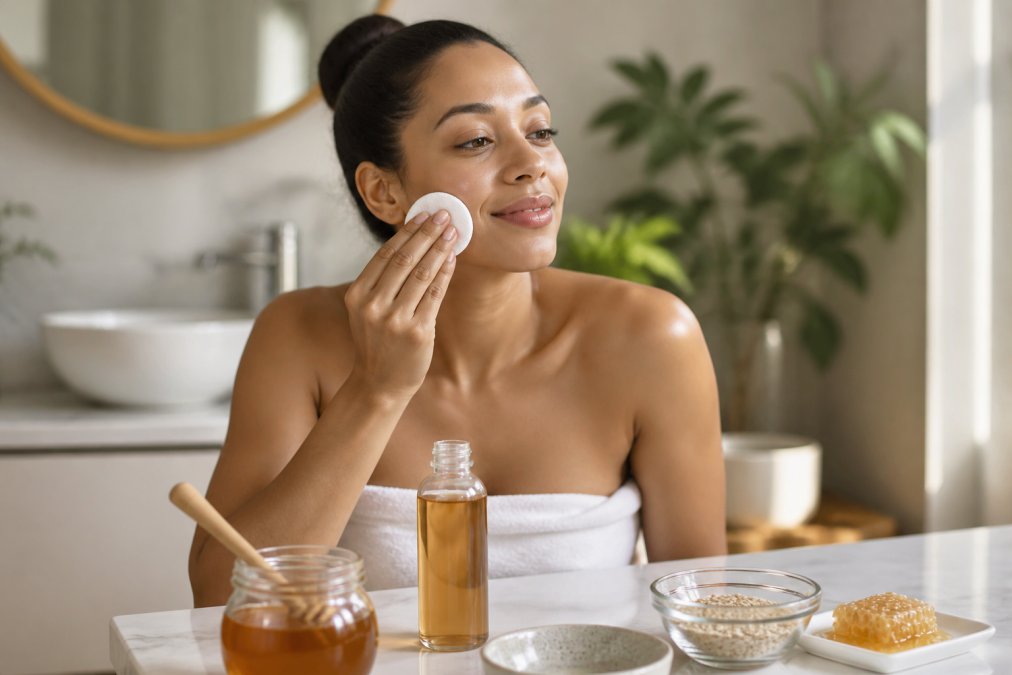
FAITH & RICH Honey-Based Soap for Cleansing and Nourishment
FAITH & RICH's Honey-Based Soap delivers a thorough cleanse while nourishing rather than stripping. Handcrafted with raw honey, coconut oil, and shea butter, it removes impurities and makeup without disrupting the skin barrier. The creamy lather leaves skin soft, not tight, making it ideal for those transitioning from harsh cleansers or dealing with sensitivity.
The combination of honey (humectant), coconut oil (antibacterial and emollient), and shea butter (deeply moisturizing) means you're actively supporting skin health with each wash. The soap is cruelty-free and designed with community-driven beauty principles.
How to Build Your Honey Skincare Routine Steps
Building a honey-based skincare routine requires only four simple steps: cleanse, treat, hydrate, protect.
Step 1: Cleanse with FAITH & RICH Honey-Based Soap (Morning and Evening) Use lukewarm water and work the soap into a lather, gently massaging your face for 30-60 seconds. Rinse thoroughly. Frequency: twice daily.
Step 2: Apply Toner (Morning and Evening, after cleansing) While skin is still slightly damp, apply the FAITH & RICH Handcrafted Honey Toner using a cotton pad or fingertips. Let it absorb for 30-60 seconds. Frequency: twice daily.
Step 3: Apply Serums or Treatments (Evening preferred, or as needed) Apply additional serums after the toner while skin is still hydrated. Frequency: once or twice daily, depending on the serum.
Step 4: Moisturize (Morning and Evening) Follow with a moisturizer appropriate for your skin type to lock in hydration and support the skin barrier. Frequency: twice daily.
Step 5: Sunscreen (Morning only) Apply broad-spectrum sunscreen with at least SPF 30 as the final step to prevent hyperpigmentation and premature aging.
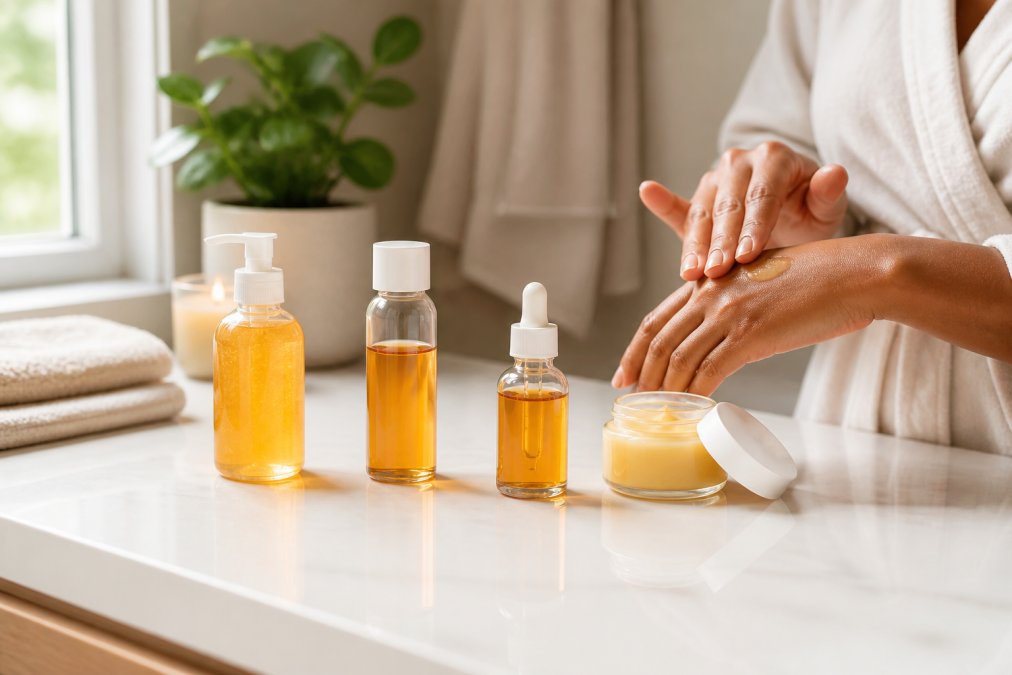
For acne and breakouts, expect visible improvement within 2-3 weeks. For hyperpigmentation, plan for 6-8 weeks. For general radiance, most users notice improvement within the first week.
Honey for Sensitive Skin and Hyperpigmentation Concerns
Sensitive skin requires a fundamentally different approach, and honey-based skincare is uniquely suited to this need. The goal is threefold: support the skin barrier, reduce inflammation without irritation, and avoid triggers that compromise the acid mantle.
Why Honey Works for Sensitive Skin: The pH and Barrier Mechanism
Sensitive skin has a compromised stratum corneum and disrupted acid mantle, the skin's natural pH buffer between 4.5 and 5.5. Honey naturally sits at pH 3.2-4.8, aligning with healthy skin pH and supporting the acid mantle without disruption. Clinical research in the Journal of Wound Care demonstrates that honey's acidity supports barrier repair by maintaining optimal pH for filaggrin function and reducing protease activity that degrades the stratum corneum.
Honey's polysaccharides and amino acids directly support barrier ceramide production. A study in Dermatologic Surgery found honey-based treatments increased ceramide levels by 22% over 4 weeks, translating to reduced redness, decreased sensitivity, and improved hydration retention.
Hyperpigmentation and Post-Inflammatory Hyperpigmentation (PIH)
For sensitive skin with hyperpigmentation, honey offers a non-irritating pathway that stronger actives cannot provide. Honey addresses PIH through anti-inflammatory action that prevents melanin overproduction and gentle support of skin cell turnover without irritation. Manuka honey specifically enhances skin cell renewal at the basal layer, gradually fading hyperpigmentation. Research in Phytotherapy Research showed manuka honey (UMF 15+) reduced post-acne hyperpigmentation by 40-50% over 8-12 weeks in sensitive skin types with minimal irritation.
Expect visible fading within 6-8 weeks, with optimal results at 12 weeks.
Formulation Criteria for Sensitive Skin
Look for products that meet these criteria:
- Fragrance-free and essential-oil-free: Essential oils are common irritants for sensitive skin.
- Minimal preservative load: Parabens and phenoxyethanol are frequent sensitizers.
- High honey concentration: Honey should appear in the first 3-5 ingredients.
- Dermatologist-tested or allergy-tested: Look for third-party testing certifications.
- pH-balanced: Ideally between 4.5 and 5.5 to support the acid mantle.
Patch Testing Protocol for Sensitive Skin
- Apply a dime-sized amount to the inner arm or behind the ear.
- Cover with a bandage and avoid washing for 48 hours.
- Monitor for itching, redness, swelling, or hives.
- If no reaction occurs, apply to a small facial area for 3-5 days before full-face use.
- If irritation develops, discontinue immediately and wait 1 week before trying another product.
Building a Sensitive-Skin Routine with Honey
Start minimal and build slowly:
- Cleanse with a honey-based, fragrance-free cleanser twice daily.
- Hydrate with a honey-based toner while skin is still damp.
- Moisturize with a barrier-supporting moisturizer to lock in hydration.
- Protect with mineral sunscreen (SPF 30+) in the morning.
Avoid layering multiple actives or exfoliants. Honey works best as a foundational, supportive ingredient.
Realistic Timeline for Sensitive Skin
General skin health and reduced redness: 1-2 weeks. Hyperpigmentation and dark spot fading: 6-8 weeks (significant improvement at 12 weeks). Barrier repair and reduced sensitivity: 4-6 weeks.
Consistency is non-negotiable. Sensitive skin improves through sustained, gentle support.
What Sets Ethical Honey Skincare Apart
Not all honey skincare is created equal. The difference between a product that genuinely supports skin health and one that's primarily marketing comes down to sourcing, formulation integrity, and ethical practices.
Ethical honey skincare starts with responsible harvesting. Brands that prioritize ethics source from beekeepers who practice sustainable, humane methods, allowing bees to produce honey naturally without excessive harvesting.
The formulation matters equally. Many mass-produced honey skincare products use honey as a minor ingredient, with fillers and synthetic compounds dominating. Handcrafted formulations prioritize honey and complementary natural ingredients, creating products where every component serves a purpose.
Community-driven brands like FAITH & RICH build relationships with customers and create spaces where women feel supported in their skincare journey. When evaluating honey skincare brands, ask: Where does the honey come from? How much honey is actually in the product? Are the other ingredients natural and purposeful? Does the brand have transparency about sourcing and manufacturing?
Honey-based skincare works because it addresses multiple skin concerns simultaneously: hydration, barrier support, antibacterial action, and inflammation reduction. The most effective honey skincare products combine high-quality honey with complementary natural ingredients and are formulated with intention. FAITH & RICH's handcrafted approach reflects this commitment: every product is designed to deliver real results while celebrating the natural beauty of the women who use them. Start with a gentle honey-based cleanser and toner, build consistency into your routine, and give your skin 6-8 weeks to show the transformation that comes from supporting your skin's natural processes.
Frequently Asked Questions
Does honey help with acne and breakouts?
Yes. Honey has natural antibacterial and anti-inflammatory properties that can reduce acne-causing bacteria and calm inflamed skin. Manuka honey, in particular, contains bioactive compounds that support skin repair and reduce redness. Many people see improvement in breakouts within 2-4 weeks of consistent use, though results vary by skin type. Always patch test first if you have sensitive or reactive skin.
What are the benefits of manuka honey for face care?
Manuka honey delivers concentrated healing properties due to its high methylglyoxal (MGO) content. It promotes skin barrier repair, reduces inflammation, fights acne-causing bacteria, and supports natural radiance. Unlike raw honey, manuka honey's bioactive compounds make it especially effective for addressing hyperpigmentation, uneven skin tone, and signs of aging. It also acts as a humectant, drawing moisture into the skin for lasting hydration.
Can honey-based skincare products be used on sensitive skin?
Honey is generally well-tolerated by sensitive skin because it's soothing and fragrance-free when used in pure form. However, always perform a patch test on a small area first, especially if you have a history of allergies or very reactive skin. Some people may experience sensitivity to honey itself, though this is rare. Handcrafted honey products without synthetic additives tend to be gentler than mass-produced alternatives with added fragrances or preservatives.
How do I incorporate honey into my skincare routine?
Start with a honey-based cleanser or toner in the morning and evening to remove impurities while preserving your skin barrier. Follow with a honey-infused serum or moisturizer to lock in hydration. For intensive treatment, use a honey face mask 1-2 times weekly. Always cleanse first, apply products to damp skin, and follow with sunscreen during the day. Consistency matters more than quantity, give products at least 4 weeks to show results.
Is honey skincare effective for stubborn hyperpigmentation and dark spots?
Honey supports skin repair and can help fade hyperpigmentation over time through its antioxidant and anti-inflammatory action. Manuka honey is particularly effective because it promotes cell turnover and supports natural healing. Results take 8-12 weeks of consistent use. For best outcomes, pair honey products with sun protection (SPF 30+) to prevent new spots and allow existing ones to fade. Handcrafted, ethically sourced honey products often deliver better results than diluted commercial alternatives.
This article was written using GrandRanker


