

Earth to Skin Alternative for Aging: 5 Natural Swaps

Table of Contents
- Why Switch from Earth to Skin for Aging Concerns?
- Natural Anti-Aging Skincare Routine: The Core Swap
- Key Botanical Ingredients for Anti-Aging
- Honey-Based Skincare Benefits for Aging Skin
- FAITH & RICH Products That Target Fine Lines
- How to Address Hyperpigmentation and Uneven Skin Tone
- Common Myths About Natural Aging Skincare
- Conclusion: Building Your Anti-Aging Ritual
- Frequently Asked Questions
Last Updated: September 8, 2026
Many women are trading harsh actives for botanical alternatives that work with the skin's natural processes. The search for an Earth to Skin alternative for aging often starts with the same frustration: products that promise cellular turnover but deliver irritation instead. At FAITH & RICH, we offer handcrafted, honey-based formulations that target fine lines without compromising the skin barrier.
Why Switch from Earth to Skin for Aging Concerns?
The appeal of natural skincare is about choosing ingredients that communicate with your skin at a cellular level, supporting collagen production through phytonutrients rather than forcing rapid change.
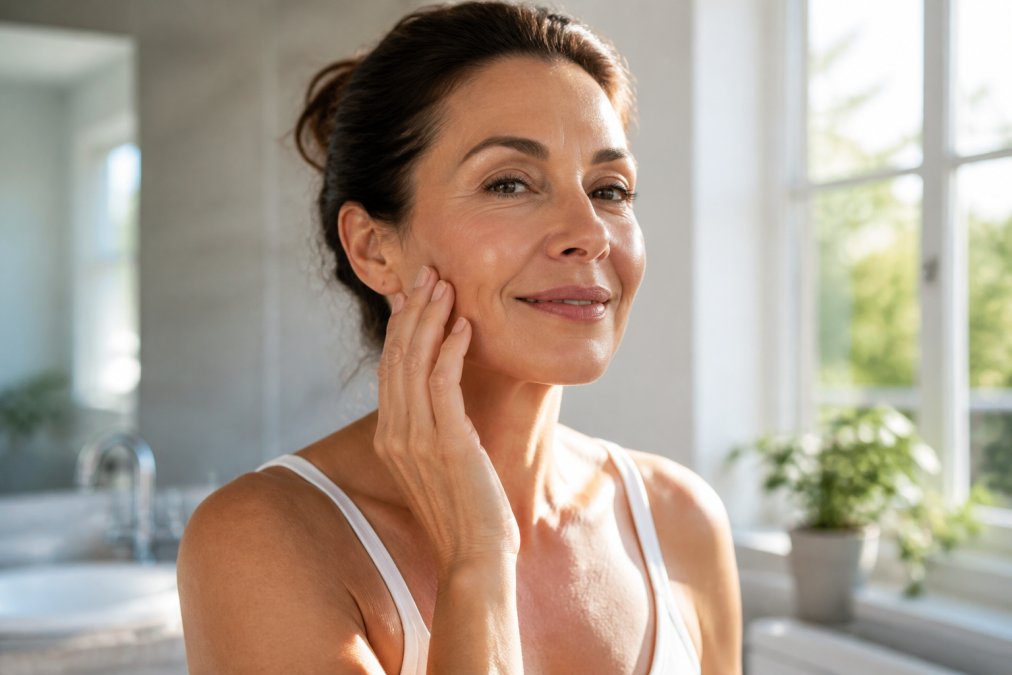
A common mistake is assuming "natural" means "less effective." In practice, botanical actives like bakuchiol deliver retinol-like results without the peeling and redness.
Natural Anti-Aging Skincare Routine: The Core Swap
Building a natural anti-aging skincare routine starts with replacing one product at a time. The goal is a simple framework: antioxidants and hydration in the morning, repair and renewal at night.
But here's what most routine guides get wrong: they assume one routine works for everyone. Your skin type determines which natural actives you can tolerate.
The Skin-Type Matrix for Natural Anti-Aging
| Skin Type | Primary Aging Concern | Best Natural Actives | Actives to Avoid | Key Routine Adjustment |
|---|---|---|---|---|
| Sensitive / Reactive | Redness, stinging, barrier damage | Bakuchiol (0.5-1%), snail mucin, centella asiatica, jojoba oil | Turmeric (can cause flushing), essential oils, high-concentration vitamin C | Start with bakuchiol every other night for 2 weeks; buffer with moisturizer before applying |
| Oily / Acne-Prone | Fine lines + congestion, enlarged pores | Bakuchiol (regulates sebum), niacinamide (from rice bran), green tea extract, argan oil (non-comedogenic) | Heavy butters (shea, cocoa), snail mucin (can feel heavy for some), collagen creams | Use gel-based moisturizers; apply bakuchiol before moisturizer to control oil |
| Dry / Dehydrated | Flakiness, tightness, pronounced fine lines | Snail mucin, hyaluronic acid (from fermentation), squalane (from olives), honey-based products | Alcohol-based toners, clay masks, high-percentage acids | Layer hydrating essences before moisturizer; seal with squalane or jojoba oil at night |
| Combination | T-zone oiliness + cheek dryness | Turmeric (brightening), bakuchiol, jojoba oil (balances) | Heavy creams on T-zone, drying gels on cheeks | Apply lighter products to T-zone, richer products to cheeks; use bakuchiol all over |
| Hyperpigmentation-Prone | Dark spots, melasma, uneven tone | Turmeric (curcumin), glutathione, licorice root extract, bakuchiol | Hydroquinone (rebound risk), high-dose vitamin C (can irritate) | Use brightening actives in the AM under sunscreen; be patient, 8-12 weeks minimum |
The AM Routine: Protection and Brightening
Morning rituals should focus on protection. A lightweight, hydrating serum with antioxidants shields the skin from environmental stress while preparing it for moisturizer and sunscreen.
For sensitive skin: Skip the turmeric serum in the morning, it can increase circulation and cause flushing when combined with sun exposure. Instead, use a centella asiatica or green tea serum for antioxidant protection without the irritation risk.

For oily skin: Use a niacinamide-based serum (from rice bran or fermentation) before moisturizer. Niacinamide controls sebum production while supporting ceramide synthesis, addressing both oil and fine lines simultaneously.
For dry skin: Layer a hydrating toner (look for snail mucin or hyaluronic acid) before your serum. This pre-hydration step ensures your moisturizer has water to lock in, which is critical for dehydrated skin where fine lines are more visible.
The PM Routine: Repair and Renewal
Nighttime is when your skin does its deepest work. A nourishing routine here should include products that support the skin barrier and smooth texture.
The bakuchiol introduction protocol: If you're replacing a retinol product, don't switch to bakuchiol every night immediately. Start with this 3-week protocol:
- Week 1: Apply bakuchiol every third night, buffered over moisturizer
- Week 2: Apply every other night, still buffered
- Week 3: Apply nightly, directly on clean skin before moisturizer
This gradual introduction allows your skin's retinoid receptors to adapt without the purging or peeling that causes many women to abandon retinol alternatives.
For dry or sensitive skin: Add a facial oil (jojoba, argan, or squalane) as the final step. This occlusive layer prevents overnight water loss, which is when most transepidermal water loss occurs.
For hyperpigmentation-prone skin: Apply your turmeric or glutathione serum at night, not in the morning. Some brightening actives are photosensitizing, and nighttime application allows them to work without competing with UV exposure.
The 60-Day Rule
Regardless of your skin type, commit to any new natural anti-aging routine for at least 60 days before evaluating results. Botanical actives work through gene expression changes that take multiple skin cycles (each roughly 28 days) to manifest visibly.
Sample Routines by Skin Type
Sensitive Skin (Morning): Gentle cleanser → Centella serum → Light moisturizer → SPF 30+ Sensitive Skin (Night): Gentle cleanser → Snail mucin essence → Bakuchiol (every other night) → Moisturizer → Jojoba oil seal
Oily Skin (Morning): Gel cleanser → Niacinamide serum → Oil-free moisturizer → SPF 30+ Oily Skin (Night): Gel cleanser → Bakuchiol → Light moisturizer → Argan oil (2 drops, only if feeling tight)
Dry Skin (Morning): Cream cleanser → Hyaluronic acid toner → Collagen serum → Rich moisturizer → SPF 30+ Dry Skin (Night): Cream cleanser → Snail mucin essence → Bakuchiol (buffered) → Rich moisturizer → Squalane oil seal
Key Botanical Ingredients for Anti-Aging
Not all botanical ingredients perform equally. The ones worth your attention have research backing for their effects on fine lines, skin tone, and hydration. But the real question women ask when searching for an Earth to Skin alternative for aging isn't just "what works", it's "how does this compare to the synthetic ingredient I'm trying to replace?"
The Side-by-Side: Natural vs. Synthetic Actives
| Natural Active | Conventional Equivalent | Mechanism of Action | Clinical Evidence Snapshot | Key Trade-Off |
|---|---|---|---|---|
| Bakuchiol | Retinol (Vitamin A) | Both bind to retinoic acid receptors to upregulate collagen synthesis; bakuchiol also activates the same gene expression pathways via a different receptor (RAR-γ) | A 2019 split-face study published in the British Journal of Dermatology found bakuchiol 0.5% comparable to retinol 0.5% for reducing fine lines and hyperpigmentation after 12 weeks, with significantly less facial peeling and stinging (PubMed) | Bakuchiol works more slowly (visible results at 8-12 weeks vs. 4-8 for retinol) but is suitable for sensitive and reactive skin types |
| Turmeric (curcumin) | Hydroquinone (for pigmentation) | Curcumin inhibits tyrosinase activity and melanin synthesis; hydroquinone blocks the same enzyme but through a different pathway that can cause ochronosis with prolonged use | A 2012 study in Phytotherapy Research showed a 1% curcumin gel was as effective as 4% hydroquinone for melasma over 4 weeks, with no reported side effects | Turmeric requires 8+ weeks of consistent use for visible brightening; hydroquinone works in 4-6 weeks but carries a rebound pigmentation risk and is banned in the EU and Japan |
| Snail mucin (glycoproteins, hyaluronic acid) | Hyaluronic acid serum (synthetic) | Snail mucin contains naturally occurring hyaluronic acid, glycoproteins, and antimicrobial peptides that support fibroblast activity and barrier lipid synthesis | Research on snail mucin (often cited from Korean dermatology journals) shows increased elastin and collagen production in fibroblast cultures; human studies are limited but consistent for hydration and barrier repair | Snail mucin provides multi-component barrier support beyond single-molecule HA, but results for deep wrinkle reduction are modest compared to retinoids |
| Collagen peptides | Synthetic peptide creams (e.g., Matrixyl) | Oral collagen peptides (hydrolyzed) stimulate fibroblast activity via the proline-hydroxyproline dipeptide; topical peptides act as signaling molecules to boost collagen synthesis | A 2019 meta-analysis in Nutrients found oral collagen peptides (2.5-10g daily for 8-12 weeks) significantly improved skin elasticity and hydration; topical collagen is less studied | Oral collagen requires daily supplementation for 3+ months; topical collagen peptides are more effective than whole collagen molecules but less potent than retinoids |
| Jojoba oil (wax esters) | Mineral oil / petrolatum | Jojoba oil mimics human sebum, penetrating the stratum corneum to support barrier lipids; mineral oil sits on the surface as an occlusive | Jojoba oil has been shown to reduce transepidermal water loss (TEWL) comparable to mineral oil in clinical patch testing, with the added benefit of being non-comedogenic | Jojoba oil hydrates but does not stimulate collagen; it is a support ingredient, not a primary anti-aging active |
What This Comparison Reveals
The pattern is clear: natural actives don't outperform synthetics on speed, they outperform them on tolerability and sustainability. Bakuchiol won't erase a wrinkle in two weeks like a prescription retinoid might, but it also won't leave you with peeling skin.
The Ingredients That Don't Make the Cut
Just as important as knowing what works is knowing what to avoid. Many "natural" anti-aging products contain botanical extracts at concentrations too low to be effective. When evaluating any product as an Earth to Skin alternative for aging, check the ingredient list for:
- Fragrance (parfum): A known irritant that triggers inflammation, which accelerates collagen breakdown
- Denatured alcohol (SD alcohol): Strips barrier lipids, making fine lines more visible within weeks of use
- Essential oils at high concentrations: While natural, oils like citrus and peppermint can cause phototoxicity and contact dermatitis on aging skin
- Synthetic dyes (FD&C colors): Provide no skincare benefit and can trigger sensitivity in compromised barriers
How to Choose Based on Your Primary Concern
| If Your Main Concern Is... | Choose This Natural Active | Why |
|---|---|---|
| Fine lines around eyes and mouth | Bakuchiol | Most clinically studied retinol alternative; targets collagen synthesis without irritation |
| Dark spots and uneven tone | Turmeric (curcumin) | Directly inhibits melanin production; safer long-term than hydroquinone |
| Dehydrated, tight-feeling skin | Snail mucin | Multi-component hydration that supports barrier repair |
| Loss of firmness in cheeks and jawline | Oral collagen peptides + bakuchiol | Oral collagen supports from within; bakuchiol stimulates topical collagen production |
| Sensitive, reactive skin with redness | Jojoba oil + snail mucin | Barrier support without active irritation |
Honey-Based Skincare Benefits for Aging Skin
Honey-based skincare benefits extend far beyond its reputation as a gentle cleanser. Raw honey is naturally humectant, drawing moisture into the skin while its anti-inflammatory properties soothe irritation.
The FAITH & RICH approach centers on handcrafted honey-based formulations that fight blemishes while reducing wrinkles.
FAITH & RICH Products That Target Fine Lines
For women seeking an Earth to Skin alternative for aging that addresses fine lines without compromising skin health, the Collagen & Snail Essence Face Serum is the most direct swap. At $24.99, this lightweight, hydrating serum absorbs quickly and leaves skin refreshed, making it suitable for daily AM and PM use. The collagen and snail mucin combination targets the appearance of fine lines while supporting the skin barrier.

For a more complete approach, the Collagen & Snail Skincare Set-Complete Face & Body Kit at $119.99 covers the entire body with a 6-piece collection designed to hydrate, nourish, and promote radiant-looking skin across all skin types. This kit works well for women who want their neck, chest, and body to match the care they give their face.

How to Address Hyperpigmentation and Uneven Skin Tone
Stubborn dark spots from sun damage or hormonal shifts are among the hardest concerns to treat naturally. The key is consistency: brightening ingredients need time to interrupt melanin production. The Faith & Rich Double Glutathione Set at $124.99 combines cleansing, hydration, and brightening in one routine.
Glutathione works as an antioxidant that supports the body's natural brightening processes. When paired with the Turmeric Serum at $19.99, which promotes healthy cell turnover, you create a targeted approach for fading dark spots. Use both consistently for at least eight weeks before judging results.
Common Myths About Natural Aging Skincare
Myth: Natural products don't work as well as chemical ones. Botanical actives like bakuchiol have demonstrated comparable results to retinol for fine lines and wrinkles, with significantly less irritation. The American Academy of Dermatology's guidance on retinoids notes that consistent use matters more than ingredient source for visible results.
Myth: You need to exfoliate aggressively to boost collagen. Over-exfoliation damages the skin barrier, which actually accelerates visible aging. Gentle, hydrating routines that support the barrier produce better long-term outcomes than harsh resurfacing.
Myth: Oils clog pores and cause breakouts. Non-comedogenic oils like jojoba and argan can actually balance sebum production. The issue is usually low-quality oils or incorrect application, not oil itself.
Myth: Anti-aging skincare is only for women over 40. Preventative aging, supporting the skin barrier and maintaining hydration in your 20s and 30s, is more effective than trying to reverse damage later. Research shared by the National Institutes of Health on skin aging emphasizes that cumulative sun exposure and barrier health in younger years determine how skin ages.
Conclusion: Building Your Anti-Aging Ritual
Aging gracefully isn't about fighting your skin, it's about supporting what it already knows how to do. The right Earth to Skin alternative for aging combines botanical intelligence with consistent daily rituals.
Our handcrafted, honey-based formulations are designed to reduce visible signs of aging while celebrating your natural beauty.
Frequently Asked Questions
What is the best natural alternative to retinol for aging skin?
Bakuchiol is the most studied natural alternative to retinol. It is a plant-based compound derived from the babchi plant that stimulates cellular turnover and collagen production without the irritation often linked to retinol. Clinical studies show bakuchiol matches retinol's effectiveness for fine lines and wrinkles over 12 weeks, with significantly less dryness. For a natural anti-aging skincare routine, look for serums or moisturizers with bakuchiol, and pair it with antioxidants like vitamin C to boost collagen production and brighten skin tone.
What are the benefits of honey-based skincare for aging?
Honey-based skincare benefits aging skin through deep hydration and anti-inflammatory action. Raw honey is a humectant, drawing moisture into the skin barrier to plump fine lines and improve skin texture. Its natural antioxidants help neutralize free radicals that accelerate cellular aging. Honey also soothes redness and supports dermal health, making it ideal for sensitive or reactive skin. Brands like FAITH & RICH incorporate handcrafted honey formulas that moisturize without clogging pores, helping maintain skin vitality and a smooth, healthy-looking complexion.
What ingredients should I look for in an anti-aging moisturizer?
For an effective anti-aging moisturizer, prioritize hydrating humectants like hyaluronic acid and glycerin to plump the skin. Look for barrier-supporting lipids such as jojoba oil or argan oil to lock in moisture. For visible anti-aging action, choose formulas with peptides, bakuchiol, or antioxidants like vitamin C and green tea extract. These ingredients support collagen production, improve skin elasticity, and address fine lines. Snail mucin and collagen are also proven to hydrate and smooth. Avoid fragrances and alcohol, which can disrupt the skin barrier and worsen signs of aging.
How do I build an anti-aging routine for sensitive skin?
Start with a gentle, non-foaming cleanser to avoid stripping the skin barrier. Follow with a hydrating toner that contains soothing ingredients like snail mucin or aloe. Apply a bakuchiol-based serum at night, as it is non-irritating and supports cellular turnover without the redness of retinol. In the morning, use a vitamin C serum for brightening and protection. Finish with a moisturizer rich in ceramides or honey, and always apply sunscreen with SPF 30 or higher. Introduce one new product at a time and patch test to prevent irritation.
The challenge isn't finding natural products, it's finding the ones that actually perform. FAITH & RICH combines the soothing power of honey with collagen, snail mucin, and turmeric to target fine lines, brighten uneven skin tone, and support your skin barrier. Explore our collection and build a routine that works as hard as you do.


