

Skincare Routine for Sensitive Skin: 2026 Guide

Table of Contents
- What Sensitive Skin Actually Means
- Signs of a Damaged Skin Barrier to Watch For
- Best Ingredients for Sensitive Skin (and What to Avoid)
- How to Patch Test Skincare Products the Right Way
- Morning Skincare Routine for Sensitive Skin
- Evening Skincare Routine for Sensitive Skin
- Budget-Friendly vs. Medical-Grade Options for Reactive Skin
- The Psychological Weight of Chronic Skin Sensitivity
Last Updated: August 14, 2026
What Sensitive Skin Actually Means
Sensitive skin occurs when the skin's natural defenses are compromised, causing redness, stinging, burning, or breakouts in response to products, environmental factors, or internal triggers. At FAITH & RICH, we hear this concern from women every day, and the first thing we tell them is that "sensitive skin" is not one single thing. Understanding what you're actually dealing with changes everything about how you build a skincare routine for sensitive skin.
The term applies to a wide range of experiences, from occasional post-product tightness to chronic rosacea flares. Lumping them together leads to routines that miss the mark entirely.
Truly Sensitive vs. Reactive Skin
Truly sensitive skin is a physiological condition, often genetic, in which the skin produces fewer lipids and has a thinner outer layer. This makes the skin barrier inherently more permeable to irritants.
Reactive skin is a skin state rather than a skin type. It develops when a previously normal skin barrier becomes compromised through overuse of harsh products, environmental damage, or inflammation. The good news: reactive skin can be repaired. Truly sensitive skin requires long-term management, not a cure.
Knowing which category you fall into determines whether your goal is repair or maintenance.
Environmental Triggers Beyond the Weather
Most guides stop at "cold air" and "UV exposure." That's incomplete.
Indoor air quality is a significant trigger. Low humidity from HVAC systems accelerates transepidermal water loss, the process by which moisture evaporates through the skin's surface. Pollution particles generate free radicals that degrade the skin barrier. Hard water leaves mineral deposits that disrupt skin pH and strip natural oils. Synthetic pillowcases and fragranced fabric softeners cause low-grade nightly irritation that accumulates into persistent redness. Stress hormones, specifically cortisol, are well-documented triggers for inflammatory skin conditions including rosacea and eczema.
A smart skincare routine for sensitive skin accounts for all of these factors.
Signs of a Damaged Skin Barrier to Watch For
The skin barrier, technically the stratum corneum, is your skin's frontline defense. When healthy, it keeps moisture in and irritants out. When damaged, both directions fail simultaneously.
According to the National Eczema Association's guidance on skin barrier function, a compromised barrier is the central driver of conditions like eczema and irritant contact dermatitis. Recognizing the signs early prevents a minor setback from becoming chronic.
Watch for these indicators:
- Tightness after cleansing that doesn't resolve within 10 minutes
- Stinging or burning when applying products that previously caused no reaction
- Flaking or rough texture in patches, particularly around the nose, chin, or cheeks
- Persistent redness unlinked to a specific trigger
- Increased breakouts without dietary or hormonal explanation
- Sensitivity to water temperature that you didn't have before
The most telling sign is a sudden change in how your skin responds to familiar products. If your usual cleanser suddenly stings, your barrier is likely compromised.
Repairing a damaged skin barrier requires pulling back on active ingredients, no exfoliating acids, no retinoids, and focusing exclusively on hydration, ceramides, and occlusives for at least two to four weeks.
Best Ingredients for Sensitive Skin (and What to Avoid)
The ingredient list is where a skincare routine for sensitive skin either succeeds or fails. Generic "hypoallergenic" and "dermatologist-tested" labels are marketing terms with no regulated definition. What actually matters is what's in the formula.
Ingredients That Calm and Protect
These are the workhorses of a sensitive skin routine:
- Ceramides: Lipid molecules that form the structural mortar of the skin barrier. Replenishing ceramides directly addresses transepidermal water loss.
- Hyaluronic acid: A humectant that draws moisture into the skin. Look for multiple molecular weights for deeper hydration.
- Niacinamide (at 2-5%): Reduces redness, supports the skin barrier, and calms inflammation without irritation risk.
- Colloidal oatmeal: An FDA-recognized skin protectant with documented soothing properties.
- Zinc oxide: The cornerstone of mineral sunscreen. Non-irritating and provides broad-spectrum protection.
- Centella asiatica and panthenol: Soothing agents that support barrier repair and reduce redness.
- Glycerin: An inexpensive, highly effective humectant and emollient.
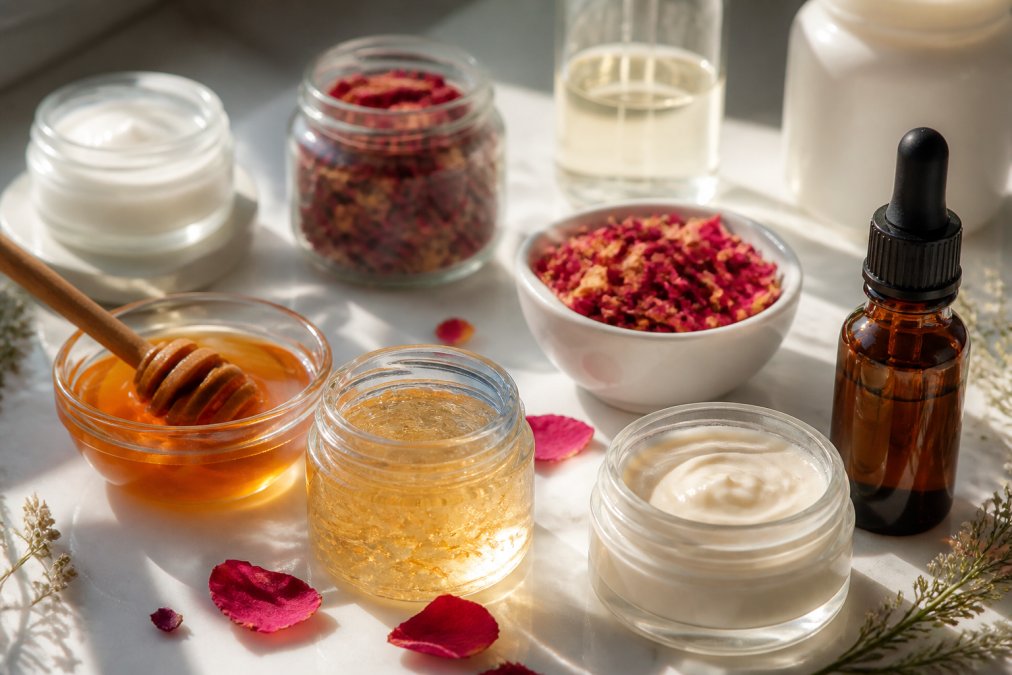
Ingredients That Trigger Irritation
The most common irritants in skincare are also the most commonly used.

- Fragrance (synthetic and natural): The single most common cause of contact dermatitis. "Natural fragrance" and essential oils are not safer alternatives.
- Alcohol denat (denatured alcohol): Disrupts the skin barrier and strips natural oils.
- Sulfates (SLS, SLES): Effective but overly stripping for sensitive skin.
- High-concentration exfoliating acids: At high concentrations or frequency, they degrade barrier integrity.
- Preservatives like methylisothiazolinone: Documented sensitizers in some products.
A fragrance-free, pH-balanced formula is the baseline requirement.
How to Patch Test Skincare Products the Right Way
Knowing how to patch test skincare products correctly is the single most underused skill in sensitive skin care. Most people either skip it or do it wrong, then wonder why they keep reacting to new products.
Patch testing for sensitive skin works like this:
- Choose the right test site. The area behind the ear or the inner curve of the elbow better mimics facial skin reactivity than the inner forearm.
- Apply a small amount. A pea-sized amount is sufficient. Apply to clean, dry skin.
- Leave it undisturbed for 24 hours. Do not wash the area or apply other products over it.
- Check at 24 and 48 hours. Immediate reactions suggest an irritant response. Reactions at 48-72 hours indicate allergic contact dermatitis.
- Assess the result. Redness, itching, swelling, or bumps indicate a reaction. Clear skin means the product is likely safe.
- Introduce one product at a time. Wait at least a week between new products so you can identify the cause of any reaction.
A clean patch test does not guarantee your full face will tolerate a product. Facial skin is thinner and more reactive. Introduce new products on a small area of your face first before applying all over.
According to the American Academy of Dermatology's guidance on patch testing, patch testing is the gold standard for identifying contact allergens before introducing any new leave-on product to sensitive skin.
| Step | Action | Duration |
|---|---|---|
| 1 | Apply to inner arm or behind ear | Day 1 |
| 2 | Leave undisturbed, no other products | 24 hours |
| 3 | First assessment | 24 hours |
| 4 | Second assessment | 48 hours |
| 5 | Introduce to small facial area | Day 4-7 |
| 6 | Full-face use if no reaction | Day 8+ |
Morning Skincare Routine for Sensitive Skin
A morning skincare routine for sensitive skin has one non-negotiable priority: protection. The morning routine is not the time for treatment actives. It is the time to hydrate, seal, and shield.
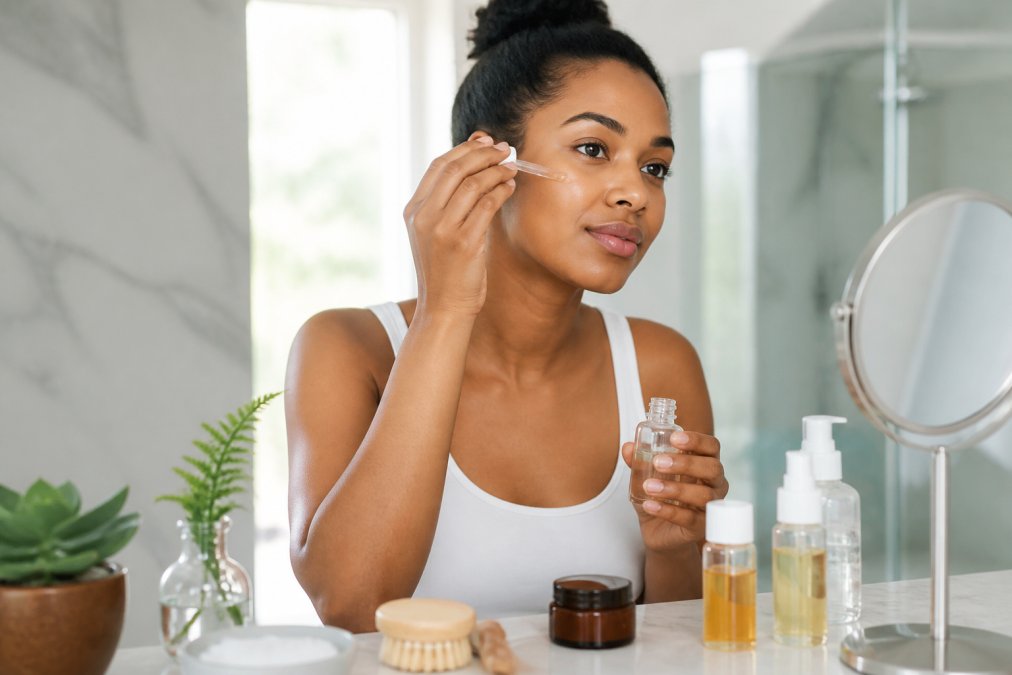
Step 1: Gentle Cleansing
Rinse with cool or lukewarm water only, or use a gentle, fragrance-free, pH-balanced cleanser. Hot water disrupts the skin barrier and triggers redness in rosacea-prone skin.
Step 2: Hydrating Serum
Apply a lightweight serum containing hyaluronic acid or a calming complex with centella asiatica or panthenol. The FAITH & RICH Collagen & Snail Essence Face Serum is formulated to moisturize, soften, and smooth skin with a lightweight texture that works well under SPF.

Step 3: Moisturizer
Layer a moisturizer with ceramides and emollients while skin is still slightly damp to lock in hydration. Occlusives like petrolatum or dimethicone create a physical seal that slows transepidermal water loss throughout the day.
Step 4: Mineral Sunscreen
UV exposure is the leading cause of skin barrier degradation over time. For sensitive skin, mineral sunscreen with zinc oxide or titanium dioxide is preferred, these physical filters sit on top of the skin rather than being absorbed, making them far less likely to cause irritation.
Evening Skincare Routine for Sensitive Skin
The evening routine is where repair happens. Skin cell turnover accelerates at night, and without the need for SPF, you have more flexibility to focus on barrier restoration.
Step 1: Oil-Based Cleanser or Gentle Cleanser
If you wear sunscreen or makeup, an oil-based cleanser as a first cleanse dissolves product buildup without stripping. Follow with a gentle water-based cleanser. For minimal product days, a single gentle cleanser is sufficient.
Step 2: Treatment (If Tolerated)
This is the only point where low-concentration actives belong. Niacinamide at 2-5% is the safest option for sensitive skin. If your barrier has recovered and you want to introduce retinoids, start at the lowest concentration, apply over moisturizer to buffer irritation, and limit use to twice weekly.
Step 3: Barrier Repair Moisturizer
Evening is the time for a richer emollient than your morning formula. Look for ceramides, fatty acids, and cholesterol. The FAITH & RICH Collagen & Snail Body Lotion extends the same nourishing approach to the body, supporting skin texture and hydration overnight.
Step 4: Occlusive (Optional)
A thin layer of a simple occlusive, petrolatum, squalane, or a dedicated sleeping mask, over your moisturizer seals everything in. This technique, sometimes called "slugging," is particularly effective for very dry or compromised barriers. Skip it if your skin is acne-prone.
Budget-Friendly vs. Medical-Grade Options for Reactive Skin
Budget-friendly drugstore options can be genuinely effective for sensitive skin. Many well-formulated fragrance-free moisturizers and gentle cleansers use the same active ingredients as products that cost significantly more. For the core steps, cleanser, basic moisturizer, mineral SPF, cost is not a reliable indicator of performance.
Where the gap widens is in targeted treatment and formulation sophistication. Medical-grade products often use higher concentrations of actives, more stable delivery systems, and more rigorous preservation standards. For conditions like rosacea-prone skin or persistent irritant contact dermatitis, that difference can be meaningful.
The practical framework:
- Cleanser and basic moisturizer: Budget options perform comparably. Prioritize fragrance-free, pH-balanced formulas.
- SPF: Mineral sunscreen quality varies significantly. Mid-range options often have better cosmetic elegance than drugstore versions.
- Targeted serums and treatments: This is where investing more often pays off. Stable actives and dermatologist-tested formulations justify the price difference.
- Post-procedure care: After professional treatment, the skin barrier is acutely compromised. Medical-grade barrier repair products are appropriate during recovery.
As noted by the American Academy of Dermatology's consumer skincare guidance, the most important factors in choosing skincare for sensitive skin are ingredient safety and formulation quality, not price point alone.
For those building a complete routine with targeted support, the FAITH & RICH Collagen & Snail Skincare Set offers a six-piece face and body kit designed to hydrate, nourish, and support skin appearance.

The Psychological Weight of Chronic Skin Sensitivity
Chronic skin sensitivity is not just a physical experience. For many women, it carries a real psychological burden, constant vigilance about what touches your skin, anxiety before trying anything new, frustration with unpredictable reactions, and social self-consciousness with visible redness or flares.
Research published through the National Institute of Arthritis and Musculoskeletal and Skin Diseases has documented the connection between chronic skin conditions and measurable impacts on quality of life, including anxiety, social withdrawal, and reduced self-esteem. The skin is not separate from mental health; they are deeply connected through the gut-skin-brain axis and through the emotional weight of living in an unpredictable body.
A few things that genuinely help beyond the product routine:
- Simplify deliberately. A five-step routine that works is infinitely better than a ten-step routine that keeps triggering reactions.
- Track your triggers. A simple notes app log of what you used, what you ate, your stress level, and your sleep quality can reveal patterns.
- Release the perfectionism. Sensitive skin responds to stress. The anxiety of trying to control every variable can itself become a trigger. A "good enough" routine maintained consistently outperforms a perfect routine followed with dread.
- Find community. Shared experience reduces the isolation that comes with chronic skin sensitivity. Knowing that other women navigate the same daily calculations is genuinely supportive.
The skincare routine for sensitive skin that works long-term is one you can sustain without it consuming your mental bandwidth. That is not a compromise. That is the goal.
Frequently Asked Questions
What is a good skincare routine for very sensitive skin?
A good sensitive skin routine keeps steps minimal and ingredients simple. Cleanse with a fragrance-free, pH-balanced gel or cream cleanser, follow with a hydrating serum containing hyaluronic acid or ceramides, then seal with an emollient moisturizer. In the morning, always finish with a mineral sunscreen containing zinc oxide or titanium dioxide. Introducing one product at a time and patch testing before full use helps you catch irritants before they cause a flare.
How can I tell if my skin is truly sensitive or just reactive?
Truly sensitive skin has a genetic or structural basis, meaning the skin barrier is naturally thinner and prone to transepidermal water loss, redness, and stinging regardless of what you apply. Reactive skin, by contrast, responds to specific external triggers like harsh cleansers, fragrances, or extreme temperatures. If your skin calms down once you remove the offending product or environment, it is likely reactive. Persistent redness, rosacea-prone flushing, or diagnosed conditions like irritant contact dermatitis point to structural sensitivity.
What is the best way to patch test new skincare products?
Apply a small amount of the new product to the inside of your forearm or behind your ear, two spots where skin is thin and reactive. Leave it on for 24 hours without washing. Check for redness, itching, swelling, or breakouts. If no reaction appears, repeat for a second day before applying to your face. Always patch test one product at a time so you can identify exactly which ingredient caused any reaction. This step matters most for leave-on products like serums, moisturizers, and sunscreens.
Which ingredients should be avoided if you have sensitive skin?
Fragrance (both synthetic and natural) is the most common irritant in skincare. Alcohol denat, sodium lauryl sulfate, and strong chemical exfoliants like glycolic acid at high concentrations can strip the skin barrier and worsen inflammation. Certain preservatives, including methylisothiazolinone, are also frequent triggers. Essential oils, despite their natural origin, contain volatile compounds that cause irritation in sensitive or rosacea-prone skin. Checking ingredient labels for these before purchasing saves significant trial and error.
How often should you exfoliate if you have sensitive skin?
For most people with a sensitive skin routine, exfoliating once a week is the safe ceiling, and many do better skipping it entirely during flare-ups. Choose a gentle lactic acid formula at a low concentration (around 5%) rather than physical scrubs, which create micro-tears. Always follow exfoliation with a barrier-repair moisturizer. If redness, stinging, or peeling appears after exfoliating, extend the gap between sessions or switch to an enzyme-based formula, which is typically milder on reactive skin.
Does post-procedure care differ for sensitive skin?
After procedures like chemical peels, microneedling, or laser treatments, sensitive skin needs an even simpler routine. Strip back to a gentle cleanser, a fragrance-free hyaluronic acid serum, a ceramide-rich moisturizer, and a mineral sunscreen with zinc oxide. Avoid all active ingredients, retinoids, and exfoliants until the skin has fully healed, which typically takes one to two weeks. Your provider should give specific guidance, but the general rule is to rebuild the skin barrier before reintroducing anything else.
Building a skincare routine for sensitive skin takes patience, but the path is clearer once you understand your skin barrier, your triggers, and which ingredients actually support repair. FAITH & RICH offers handcrafted skincare designed with that same philosophy: fewer, better ingredients that support your skin rather than challenge it. Explore the FAITH & RICH Collagen & Snail collection to find formulas built for hydration, barrier support, and visible results, without the guesswork.
This article was written using GrandRanker


