

How to Fade Stubborn Hyperpigmentation Naturally

Table of Contents
- Understanding Hyperpigmentation and Dark Spots
- Natural Ingredients for Dark Spots That Actually Work
- Step-by-Step Process to Fade Hyperpigmentation Naturally
- How Long to Fade Hyperpigmentation Naturally
- Best Practices for Skin Brightening and Prevention
- Common Mistakes to Avoid When Treating Dark Spots
- When to See a Dermatologist
- Conclusion
Last Updated: August 18, 2026
Understanding Hyperpigmentation and Dark Spots
Hyperpigmentation occurs when certain areas of your skin produce excess melanin, the pigment responsible for skin color. This results in dark spots, patches, or an uneven skin tone that can persist for months or years if left untreated. Understanding the root causes helps you choose the right approach to fade stubborn hyperpigmentation naturally.
Dark spots form through several mechanisms. Sun exposure triggers melanin overproduction as a protective response, creating solar lentigines. Inflammation from acne or injury can lead to post-inflammatory hyperpigmentation, where the skin darkens during healing. Hormonal shifts, particularly during pregnancy or from oral contraceptives, can trigger melasma, larger, symmetrical patches typically on the face. Genetics also play a role; some skin types are naturally more prone to uneven pigmentation.
The challenge with stubborn hyperpigmentation is that it doesn't fade on its own. Surface-level treatments often fail because the excess melanin sits deep in the epidermal layer. This is where natural ingredients that inhibit tyrosinase, the enzyme controlling melanin production, become valuable. They work by slowing the biological process that creates the pigment in the first place.
At FAITH & RICH, we understand that treating hyperpigmentation requires patience and consistency. The skin cell turnover cycle takes 28-40 days, meaning visible results typically appear after 4-8 weeks of regular treatment. This timeline is crucial to understand before starting any regimen, natural or otherwise.
Natural Ingredients for Dark Spots That Actually Work
Not all natural ingredients are equal when it comes to fading dark spots. Some have genuine research backing their effectiveness, while others rely more on tradition than science. The ingredients covered here have demonstrated ability to address melanin production and skin brightening through multiple mechanisms.
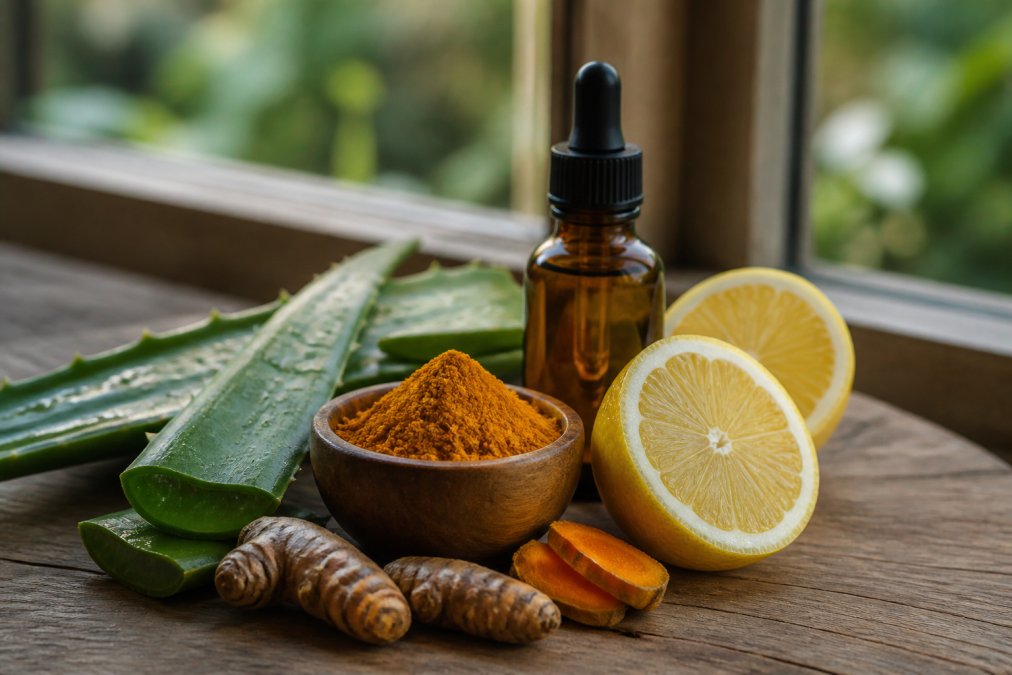
Turmeric and Lemon
Turmeric contains curcumin, a compound that inhibits tyrosinase activity and reduces inflammation that can worsen hyperpigmentation. Lemon provides vitamin C and citric acid, both of which promote skin cell turnover and have mild depigmenting properties. Together, they address hyperpigmentation from multiple angles.
The combination works by brightening the skin while reducing the inflammatory response that can trigger post-inflammatory hyperpigmentation. Turmeric's golden color might seem counterintuitive for lightening skin, but its active compounds work at the cellular level to slow melanin synthesis.
FAITH & RICH's Turmeric & Lemon Set ($79.99) combines these ingredients in a formulation designed for consistent application. The set includes a cleanser, mask, serum, and toner, each targeting different stages of treatment. For those wanting a comprehensive approach, the 6-Piece Skin Care Set ($89.99) adds additional supporting products to maximize results.

A practical note: lemon is photosensitizing, meaning it increases your skin's sensitivity to UV damage. This is why using turmeric and lemon treatments requires strict sunscreen discipline. Apply these treatments only in your evening routine, never before sun exposure.
Vitamin C and Licorice Root
Vitamin C works through multiple pathways to address hyperpigmentation. It inhibits tyrosinase activity, brightens existing dark spots, and provides antioxidant protection against future sun damage. Licorice root extract contains glabridin, which also inhibits tyrosinase while reducing inflammation and soothing irritated skin.
This pairing is particularly effective for sensitive skin because licorice root calms while vitamin C works. Many people experience irritation from vitamin C alone; licorice root balances this effect. The combination creates a gentler approach that still delivers results.
The advantage of vitamin C and licorice root is their compatibility with most skin types. Unlike lemon, vitamin C formulations are typically not photosensitizing when properly stabilized. This means you can use them morning and night, increasing treatment frequency and accelerating results.
Aloe Vera and Kojic Acid
Aloe vera soothes irritated skin and supports the skin barrier integrity during treatment. Kojic acid is a gentle depigmenting agent that inhibits tyrosinase without the harshness of stronger chemical exfoliants. Together, they provide a balanced approach to fading dark spots while protecting skin health.
Kojic acid works best in concentrations between 1-2%. Below that, efficacy drops significantly. Above that, irritation risk increases. This narrow window is why formulation matters, a poorly balanced kojic acid product may not deliver results or may cause sensitivity.
Aloe vera's role extends beyond soothing. It contains polysaccharides that promote skin cell turnover, supporting the natural process of replacing pigmented cells with fresh, evenly-toned ones. The combination accelerates this cycle without aggressive intervention.
Step-by-Step Process to Fade Hyperpigmentation Naturally
How to fade stubborn hyperpigmentation naturally requires a systematic approach. Skipping steps or rushing the process typically leads to irritation, poor results, or both. Follow this sequence to maximize effectiveness while protecting your skin barrier.

Step 1: Patch Test Before Full Application
Begin with a patch test on a small, inconspicuous area, the inside of your wrist or behind your ear work well. Apply your chosen natural treatment and wait 24 hours. Monitor for redness, itching, burning, or any adverse reaction.
This step matters because natural doesn't mean universally safe. Some people react to turmeric, others to lemon, still others to licorice root. Identifying your personal sensitivities before treating your entire face prevents wasted time and potential skin damage.
If irritation occurs during the patch test, discontinue use. If no reaction appears after 24 hours, you can proceed to full application. Even then, start with 2-3 applications per week rather than daily. This allows your skin to adapt gradually.
Step 2: Cleanse and Prepare Your Skin
Start with a gentle cleanser appropriate for your skin type. Remove all makeup, sunscreen, and environmental debris. Pat skin dry completely, applying treatments to damp skin dilutes their effectiveness and can cause irritation.
After cleansing, wait 5-10 minutes before applying your treatment. This allows your skin to return to its normal pH and moisture balance. Applying treatments to freshly-cleaned, slightly damp skin can disrupt the acid mantle, your skin's protective barrier.
For evening treatments, this is your final preparation step. For morning applications, ensure your skin is completely dry and your bathroom is well-lit so you can apply the treatment evenly.
Step 3: Apply Your Natural Treatment
Apply your chosen treatment in a thin, even layer to affected areas. Use your fingertip or a clean applicator to avoid introducing bacteria. Focus on dark spots and hyperpigmented patches rather than treating your entire face, which wastes product and increases irritation risk.
Allow the treatment to absorb for 10-15 minutes before applying additional products. Some treatments work better when left on for longer, check your specific product's instructions. The FAITH & RICH Turmeric Serum ($19.99), for example, absorbs quickly and can be layered with other products after just 5 minutes.

Common mistake: applying too much product hoping for faster results. More isn't better with skin treatments. A thin layer that absorbs properly outperforms thick applications that sit on the surface. Excess product often causes irritation without improving efficacy.
Step 4: Use Broad-Spectrum Sunscreen Daily
This step determines whether your treatment succeeds or fails. Sunscreen isn't optional, it's essential. UV exposure triggers melanin production, directly opposing your treatment efforts. Without sunscreen, you're working against your own skin's response to sun damage.
Use a broad-spectrum sunscreen with SPF 30 minimum, applied every morning. Reapply every two hours if you're outdoors. Many people underapply sunscreen; use about a quarter-teaspoon for your face. This ensures adequate photoprotection.
The relationship between treatment and sunscreen is critical: natural ingredients fade hyperpigmentation by reducing melanin production, but sun exposure restarts that process. Consistent sunscreen use allows your treatment to work unopposed. Without it, even the most effective treatment shows minimal results.
How Long to Fade Hyperpigmentation Naturally
The timeline for fading stubborn hyperpigmentation naturally varies based on several factors: the depth of the pigmentation, your skin type, treatment consistency, and the specific ingredients you're using.
Surface-level dark spots typically show improvement within 4-6 weeks of consistent treatment. You'll notice the spots becoming lighter and less defined. Deeper hyperpigmentation, particularly melasma, may require 8-12 weeks or longer. Some stubborn cases take 3-4 months to show significant fading.
Post-inflammatory hyperpigmentation tends to respond faster than sun-induced spots or melasma. This is because post-inflammatory darkening is partly inflammatory in nature; reducing inflammation accelerates fading. Sun-induced damage requires more sustained effort because the melanin is deeply entrenched in your skin.
Consistency matters enormously. Treating your hyperpigmentation 3-4 times weekly will show results, but daily treatment accelerates improvement. Missing applications or skipping weeks resets your progress. The skin cell turnover cycle doesn't pause; consistent treatment keeps that cycle working in your favor.
Best Practices for Skin Brightening and Prevention
Beyond active treatment, several practices amplify results and prevent future hyperpigmentation. These aren't optional add-ons, they're foundational to success.
Use sunscreen without exception. This cannot be overstated. Broad-spectrum SPF 30+ every single day, reapplied every two hours outdoors. Sunscreen prevents new dark spots from forming while your treatment fades existing ones. Skip sunscreen and you're essentially fighting a losing battle.
Layer treatments strategically. If using multiple natural ingredients, apply them in order of lightest to heaviest texture. Serums first, then creams or masks. This ensures each product absorbs properly and doesn't dilute the others.
Avoid additional irritants during treatment. Don't combine your natural hyperpigmentation treatment with other active ingredients like retinoids, strong acids, or vitamin A derivatives. These create excessive irritation and can worsen hyperpigmentation through post-inflammatory darkening. Wait until your hyperpigmentation has significantly faded before adding other active treatments.
Maintain hydration and barrier health. Hyperpigmentation treatments can be drying. Use a good moisturizer after your treatment absorbs. A healthy skin barrier supports faster healing and reduces irritation. Products like honey-based formulations help maintain hydration while supporting the skin's natural protective functions.
Limit sun exposure beyond sunscreen. Wear hats, seek shade during peak sun hours (10 AM-4 PM), and consider UV-protective clothing if you have severe hyperpigmentation. Sunscreen alone isn't enough for stubborn cases; behavioral changes amplify results.
Common Mistakes to Avoid When Treating Dark Spots
Most people fail to fade hyperpigmentation not because the treatment doesn't work, but because they make preventable mistakes. Awareness of these pitfalls dramatically improves outcomes.
Expecting overnight results. Hyperpigmentation takes weeks to fade because you're working against your skin's natural processes. Expecting visible improvement in days leads to abandoning treatment prematurely. Commit to at least 4-6 weeks before evaluating whether your approach is working.
Confusing irritation with the "purge." A common misconception is that skin treatments cause a purging phase where things get worse before improving. This isn't accurate for hyperpigmentation treatments. Redness, burning, or increased darkening indicates irritation, not purging. Stop the treatment if this occurs.
Skipping sunscreen or using insufficient SPF. This is the #1 reason treatments fail. People apply their natural treatment religiously but neglect sunscreen or use SPF 15 instead of 30+. The sun damage outpaces the treatment, and hyperpigmentation persists or worsens.
Using treatments that are too strong too frequently. Natural doesn't mean gentle. Lemon juice applied daily, for example, will damage your skin barrier and worsen hyperpigmentation through post-inflammatory darkening. More frequent application of harsh treatments backfires. Moderate strength, consistent application beats aggressive treatment.
Treating hyperpigmentation without addressing underlying causes. If your hyperpigmentation stems from hormonal shifts, treating only the spots leaves you vulnerable to recurrence. If melasma is triggered by sun exposure, sunscreen is as important as active treatment. Identify your specific trigger and address it.
Not patch testing new ingredients. Jumping directly to full application without testing causes unnecessary irritation and setbacks. A 24-hour patch test takes minimal time and prevents weeks of recovery from a bad reaction.
When to See a Dermatologist
Some hyperpigmentation requires professional intervention. Knowing when to seek dermatological evaluation prevents wasted time and ensures you're treating the right condition.
See a dermatologist if your hyperpigmentation is rapidly worsening, spreading to new areas, or accompanied by other symptoms like itching or bleeding. These can indicate conditions beyond simple dark spots, including skin cancer precursors or systemic issues.
If you've treated hyperpigmentation consistently for 3 months with no improvement, professional evaluation is warranted. A dermatologist can determine whether you have melasma (which sometimes requires stronger treatments), post-inflammatory hyperpigmentation (which may need different approaches), or a condition mimicking hyperpigmentation.
Dermatologists can offer treatments beyond natural remedies: prescription-strength depigmenting agents, chemical peels with higher concentrations of active ingredients, laser therapy, or microdermabrasion. These options work faster than natural treatments and are appropriate for severe or resistant cases.
If you're pregnant or nursing, consult a dermatologist before starting any hyperpigmentation treatment. Some ingredients, while natural, may not be appropriate during pregnancy. A professional can recommend safe alternatives.
Hyperpigmentation is frustrating, but it's also treatable. The approach you choose, whether natural ingredients like turmeric and vitamin C, or professional treatments, depends on your specific situation, skin type, and patience for results. FAITH & RICH's handcrafted skincare products, including the Turmeric & Lemon Set and specialized serums, provide a natural foundation for addressing dark spots while supporting overall skin health. Consistency matters more than intensity. Commit to your chosen treatment for at least 4-6 weeks, protect your skin with daily sunscreen, and adjust based on your skin's response. Most cases of stubborn hyperpigmentation fade with the right approach and unwavering sun protection.
Frequently Asked Questions
What natural ingredients are proven to lighten dark spots?
Turmeric contains curcumin, which inhibits tyrosinase and reduces melanin production. Vitamin C acts as a topical antioxidant that brightens the epidermal layer. Licorice root extract and kojic acid are depigmenting agents that fade post-inflammatory hyperpigmentation and solar lentigines. Aloe vera supports skin cell turnover and barrier integrity. Lemon's citric acid promotes chemical exfoliation. Start with one ingredient and patch test for 48 hours to ensure skin sensitivity doesn't cause irritation or purging.
How long does it take to fade hyperpigmentation naturally?
Most natural remedies show visible results in 4 to 12 weeks of consistent use. Post-inflammatory hyperpigmentation typically fades faster than melasma or solar lentigines, which may take 3 to 6 months. Results depend on pigmentation depth, skin type, and ingredient concentration. Broad-spectrum sunscreen (SPF 30+) accelerates fading by preventing photoprotection failure. Consistency matters more than speed; skipping applications resets your progress and extends the timeline significantly.
What's the difference between the 'purge' and skin irritation?
A purge occurs when active ingredients like vitamin C or chemical exfoliants increase skin cell turnover, bringing existing congestion to the surface temporarily. This typically lasts 2 to 4 weeks and appears as small breakouts in areas prone to congestion. True irritation causes redness, burning, stinging, or a compromised acid mantle that worsens hyperpigmentation. If irritation persists beyond one week or worsens, discontinue the ingredient. A purge improves skin clarity over time; irritation does not.
Is it safe to treat hyperpigmentation at home?
Yes, when you follow safety precautions. Always patch test new ingredients for 48 hours on a small area. Avoid mixing acidic ingredients (lemon, vitamin C) with alkaline products, as this disrupts your acid mantle and increases hypopigmentation risk. Never use undiluted lemon juice directly on skin. Start with lower concentrations and increase gradually. If hyperpigmentation worsens, you develop blistering, or skin sensitivity becomes severe, stop treatment and consult a dermatologist. Melasma and certain post-inflammatory hyperpigmentation may require professional evaluation.
This article was written using GrandRanker


