

Skincare for Loss of Elasticity: Best Firming Routine

Table of Contents
- What Causes Skin Laxity and Loss of Elasticity?
-
Best Ingredients for Skin Firming: What Science Supports
- Retinoids: The Gold Standard for Collagen Stimulation
- Vitamin C: The Antioxidant That Builds Collagen
- Peptides: Signaling Molecules with a Caveat
- Hyaluronic Acid: The Plumping Agent
- The Supporting Cast: Exfoliants and Niacinamide
- Ingredient Synergy: What to Layer and What to Avoid
- How to Choose a Firming Product
- Natural Ways to Improve Skin Elasticity at Home
- Your Skincare Routine for Aging Skin: A Step-by-Step Guide
- How to Rebuild Skin Elasticity: Professional Procedures
- Daily Habits That Accelerate Skin Elasticity Loss
- The Bottom Line on Firming Your Skin
- Frequently Asked Questions
Last Updated: September 9, 2026
What Causes Skin Laxity and Loss of Elasticity?
Skin laxity and loss of elasticity happen when the skin's supportive structure weakens, causing it to sag and bounce back more slowly when stretched. The pace depends on genetics, lifestyle, and environmental exposure.
Sun damage accelerates the process dramatically; UV exposure breaks down the fibers that keep skin taut, making daily sunscreen the single most effective anti-aging habit (peer-reviewed research). Hormonal shifts, particularly the decline in estrogen during perimenopause and menopause, also reduce collagen production and thin the skin.
Collagen and Elastin: The Building Blocks of Firm Skin
Collagen and elastin are the two proteins responsible for keeping skin firm and springy. Collagen forms the dense structural framework of the dermis, while elastin fibers allow skin to stretch and snap back into place.
As we age, the body produces less of both proteins, and the fibers it does make become fragmented and disorganized. This process begins in our mid-20s and accelerates with UV exposure.
Best Ingredients for Skin Firming: What Science Supports
The most effective firming ingredients work by stimulating new collagen production, protecting existing fibers from degradation, or plumping the skin. Not all forms are equally potent, and concentration matters as much as the ingredient itself.
Retinoids: The Gold Standard for Collagen Stimulation
Retinoids are the most rigorously studied anti-aging compounds. They bind to retinoic acid receptors in the skin, increasing collagen synthesis and normalizing cell turnover. Over-the-counter retinol must be converted twice before it becomes active, so a 0.5% retinol product delivers far less active compound than a 0.025% prescription tretinoin cream (PubMed).
Dermatologists recommend starting with a low concentration (0.25% to 0.5% retinol) two to three nights per week, then gradually increasing frequency over four to six weeks. The most common side effect is retinoid dermatitis, redness, peeling, and stinging, which occurs when users apply too much too quickly.
Vitamin C: The Antioxidant That Builds Collagen
Vitamin C serves a dual role in skin firmness. As an antioxidant, it neutralizes free radicals generated by UV exposure before they can degrade collagen and elastin fibers. As a cofactor, it is required for the enzymatic hydroxylation of proline and lysine, essential for stable triple-helix collagen.

The challenge with vitamin C is stability. L-ascorbic acid, the most bioavailable form, oxidizes rapidly when exposed to light and air. Formulators address this with anhydrous bases, opaque packaging, or stabilized derivatives. Clinical studies typically use 10% to 20% L-ascorbic acid at a pH below 3.5 for optimal penetration (PubMed).
Peptides: Signaling Molecules with a Caveat
Peptides are short chains of amino acids that act as signaling molecules. The most studied for skin firming are matrikines, such as palmitoyl pentapeptide-4 (Matrixyl) and copper peptides (GHK-Cu), which signal fibroblasts to ramp up new collagen and elastin production.
Peptides are generally well-tolerated but not a quick fix; visible results typically require eight to twelve weeks of consistent use. Concentration in most commercial products is low (often under 1%), and the delivery vehicle matters more than the raw percentage.
Hyaluronic Acid: The Plumping Agent
Hyaluronic acid is a glycosaminoglycan that can hold up to 1,000 times its weight in water, providing hydration and a plump appearance that visually offsets sagging. However, topically applied hyaluronic acid does not penetrate deeply enough to replace what is lost in the dermis; its primary benefit is surface hydration.
For maximum benefit, apply hyaluronic acid serums to damp skin and follow immediately with an occlusive moisturizer. In dry environments, hyaluronic acid can actually draw moisture out of the skin if not sealed in, a phenomenon called transepidermal water loss.
The Supporting Cast: Exfoliants and Niacinamide
Alpha-hydroxy acids (AHAs) like glycolic acid and lactic acid, and beta-hydroxy acid (BHA) like salicylic acid, do not directly stimulate collagen. Instead, they remove the stratum corneum's outer layer of dead cells, improving penetration of other actives and giving skin a smoother surface. Glycolic acid at 10% to 20% has been shown in some studies to increase dermal thickness, but this effect is modest compared to retinoids.
Niacinamide (vitamin B3) supports the skin barrier, reduces inflammation, and increases ceramide synthesis. A 2% to 5% concentration is typical in firming formulations. It also inhibits melanosome transfer to keratinocytes, addressing hyperpigmentation.
Ingredient Synergy: What to Layer and What to Avoid
Layering ingredients correctly can amplify results, but incorrect layering can cause irritation. A critical conflict exists between retinoids and AHAs/BHAs, as both increase cell turnover. A safer approach is to alternate nights: exfoliate on night one, use retinoid on night two, and rest on night three.
Copper peptides can oxidize L-ascorbic acid, reducing its efficacy; if using both, apply vitamin C in the morning and copper peptides at night. Niacinamide and vitamin C were once thought incompatible, but research shows they can be used together at typical concentrations. The real issue is pH: L-ascorbic acid requires a low pH (below 3.5), while niacinamide is most stable around pH 5 to 7. If layering separate products, apply vitamin C first and wait 10 to 15 minutes before applying niacinamide.
| Ingredient | Optimal Concentration | Key Mechanism | Common Conflicts |
|---|---|---|---|
| Retinol / Tretinoin | 0.25%-1% OTC; 0.025%-0.1% Rx | Stimulates collagen synthesis | Avoid with AHAs/BHAs in same routine |
| L-Ascorbic Acid | 10%-20% | Antioxidant; collagen cofactor | Oxidizes with copper peptides |
| Peptides | 0.5%-2% | Signals fibroblast activity | Copper peptides + vitamin C |
| Hyaluronic Acid | 0.1%-2% | Hydration and plumpness | None significant |
| Glycolic Acid | 5%-15% (home use) | Exfoliation; penetration enhancer | Avoid with retinoids on same night |
How to Choose a Firming Product
When evaluating a firming product, check the ingredient list: ingredients are listed in descending order of concentration, so an active near the bottom is present in trace amounts. Look for retinoids, vitamin C, or peptides within the first five to seven ingredients. Consider the delivery vehicle, a serum penetrates better than a heavy cream, but a cream may suit dry skin.
Avoid products that rely on "firming" plant extracts or caffeine as primary actives. These provide temporary tightening via mild vasoconstriction or protein precipitation on the skin's surface, but they do not stimulate collagen production and do not address underlying structural loss.
Natural Ways to Improve Skin Elasticity at Home
Natural ways to improve skin elasticity center on supporting your skin barrier through hydration, gentle exfoliation, and nourishing ingredients. When the barrier is compromised, skin loses water rapidly, making it look dull and accentuating existing laxity.
A well-formulated moisturizer with humectants like glycerin or hyaluronic acid, paired with occlusives that seal in hydration, makes an immediate difference in how firm skin feels. Honey is a particularly effective natural humectant, drawing moisture in while providing antioxidant protection.
Diet also matters. Protein provides the amino acid building blocks for collagen, while vitamin C from citrus, berries, and leafy greens supports its production. Antioxidant-rich foods combat free radical damage.
Your Skincare Routine for Aging Skin: A Step-by-Step Guide
A routine for loss of elasticity must balance active ingredients with barrier support. The most common mistake is overloading the skin with too many actives at once, leading to irritation and, paradoxically, further collagen degradation. The routine below builds tolerance gradually.
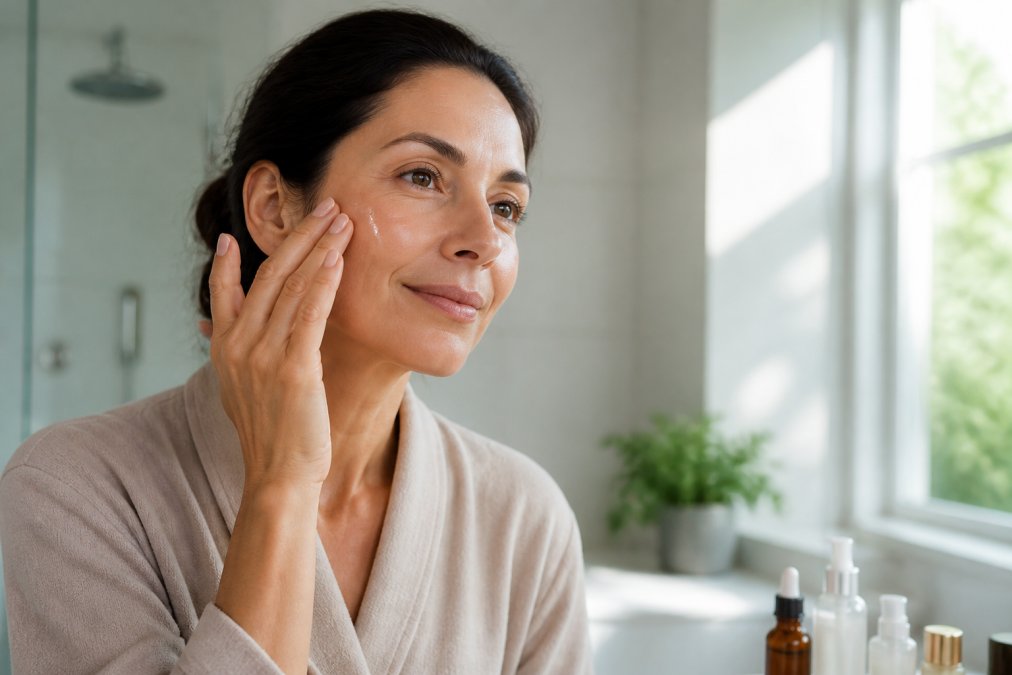
Morning Routine: Protection and Prevention
-
Cleanse with water or a gentle low-pH cleanser. If you used a retinoid the night before, your skin may be sensitive; rinsing with lukewarm water is sufficient for most skin types. If you need a cleanser, choose one with a pH between 4.5 and 5.5, with ceramides or glycerin.
-
Apply vitamin C serum to dry skin. Wait 5 to 10 minutes after cleansing to allow the skin's pH to normalize; L-ascorbic acid penetrates best at a low pH. Use three to four drops for the entire face, and extend down the neck and chest.
-
Layer a peptide or niacinamide serum if desired. If your vitamin C serum does not already contain them, apply a separate product after the vitamin C has fully absorbed (about 2 to 3 minutes). Niacinamide at 5% supports the barrier and reduces redness.
-
Moisturize with a barrier-supporting cream. Look for ceramides, squalane, or shea butter. If your skin is oily, a gel-cream with hyaluronic acid may be sufficient; if dry or using a prescription retinoid, choose a richer formulation.
-
Finish with broad-spectrum sunscreen of SPF 30 or higher. This is non-negotiable, UV exposure is the single largest environmental contributor to collagen breakdown. Chemical sunscreens need 15 minutes before sun exposure; mineral sunscreens work immediately. Reapply every two hours outdoors. For daily office wear, a moisturizer with SPF 30 is acceptable, but for extended outdoor time, use a dedicated sunscreen.

Sunscreen
Evening Routine: Repair and Rebuild
-
Double cleanse if you wore sunscreen or makeup. Start with an oil-based cleanser or cleansing balm to dissolve sunscreen and sebum, then follow with a water-based cleanser. If you did not wear sunscreen, a single gentle cleanse is sufficient, over-cleansing strips the barrier.
-
Apply a retinoid two to three nights per week to start. Begin with a pea-sized amount of 0.25% to 0.5% retinol on completely dry skin, damp skin increases penetration and irritation. Wait 20 to 30 minutes after cleansing. If irritation occurs, use the "sandwich method": apply a light moisturizer, wait 10 minutes, apply retinoid, then follow with a heavier moisturizer.
-
On non-retinoid nights, use a hydrating serum or a gentle exfoliant. Reserve AHAs or BHAs for nights when you are not using retinoids. A 5% to 10% glycolic acid toner or a 2% salicylic acid treatment can be used once or twice per week; on other nights, use a hyaluronic acid or peptide serum.
-
Seal everything with a night cream or facial oil. Night creams contain occlusive ingredients like petrolatum, dimethicone, or plant oils that prevent transepidermal water loss overnight. If you have dry skin, press a few drops of squalane or jojoba oil into the skin as a final step.
How to Adapt This Routine to Your Skin Type and Tolerance
Sensitive skin: Reduce retinoid frequency to once per week for the first month. Use a 0.1% retinol or a retinaldehyde product, which converts to retinoic acid in one step and is less irritating. Skip AHA/BHA for the first two months and focus on barrier repair.
Oily or acne-prone skin: You may tolerate daily retinoid use more quickly. Use a gel-based moisturizer and consider a niacinamide serum to control sebum. BHAs can be used in the morning on non-retinoid days.
Dry or mature skin: Prioritize hydration. Apply a hyaluronic acid serum to damp skin before your retinoid, use a heavier night cream, and consider a bedroom humidifier during winter.
Realistic Expectations: What This Routine Can and Cannot Do
A topical routine can improve skin firmness, but results are gradual and modest. Clinical studies on retinoids show measurable increases in dermal collagen after 6 to 12 months of consistent use; vitamin C studies show improvements after 12 weeks. However, no topical product can replicate a facelift or a series of microneedling treatments. If you have significant sagging, particularly along the jawline or under the eyes, topicals alone will not be sufficient.
The Unique Angle: Ingredient Scheduling to Avoid Conflicts
Most routine guides tell you what to apply but not when to avoid certain combinations. The following schedule minimizes irritation while maximizing efficacy:
- Monday: Retinoid night (no exfoliants)
- Tuesday: Hydration night (hyaluronic acid, peptides, no actives)
- Wednesday: Exfoliant night (AHA or BHA, no retinoid)
- Thursday: Retinoid night
- Friday: Hydration night
- Saturday: Exfoliant night (if tolerated) or hydration night
- Sunday: Rest night (only cleanse, moisturize, and sunscreen)
This pattern gives your skin two full days of recovery between retinoid applications and prevents cumulative irritation. If your skin is resilient, you can increase retinoid frequency to every other night, but always keep at least one full rest night per week.
How to Rebuild Skin Elasticity: Professional Procedures
For significant skin laxity, professional procedures deliver results that topical products alone cannot achieve. In-office treatments trigger the skin's own repair mechanisms, prompting new collagen and elastin production at a depth creams cannot reach.

Microneedling uses tiny needles to create controlled micro-injuries in the dermis, stimulating collagen and elastin production. Radiofrequency treatments heat deeper skin layers to tighten existing collagen fibers. Laser resurfacing removes damaged outer layers and heats the dermis. For more advanced sagging, injectable fillers can restore volume, while surgical options like a facelift physically reposition underlying tissues.
The right choice depends on the degree of laxity and your budget. Maintenance procedures like microneedling typically require multiple sessions, while more intensive treatments offer longer-lasting results with higher costs and longer recovery times. A board-certified dermatologist can assess your skin and recommend an appropriate plan.
Daily Habits That Accelerate Skin Elasticity Loss
Several everyday habits quietly accelerate the loss of elasticity. Smoking is among the worst offenders; it restricts blood flow to the skin and introduces thousands of chemicals that degrade collagen and elastin. The repetitive pursing of lips while smoking also creates deep wrinkles around the mouth.
Sleep deprivation takes a toll. During deep sleep, the body releases growth hormone, which supports cellular repair and collagen production; consistently short sleep disrupts this process. High sugar intake triggers glycation, where sugar molecules bind to collagen and elastin fibers, making them stiff and brittle.
Even your pillowcase matters. Cotton pillowcases create friction and absorb moisture from your skin overnight. Sleeping on your back with a silk or satin pillowcase reduces mechanical stress and helps preserve the skin's moisture barrier.
The Bottom Line on Firming Your Skin
Loss of elasticity is a gradual process driven by collagen and elastin breakdown, but it is not entirely beyond your control. The most effective approach combines daily sun protection, a consistent routine with collagen-supporting ingredients, and healthy lifestyle habits. For those seeking more dramatic results, professional procedures offer a path to more significant improvement.
At FAITH & RICH, we believe skincare is an act of self-care. Our handcrafted collagen and snail formulations hydrate, nourish, and support the skin's natural elasticity, while our honey-based products gently cleanse without compromising your skin barrier. The Collagen & Snail Skincare Set offers a complete face and body routine designed to moisturize, soften, and improve the appearance of your skin for a smoother, healthier complexion, suitable for all skin types.
Frequently Asked Questions
How can I regain elasticity in my skin?
Regaining elasticity requires a consistent routine with proven firming ingredients. Look for products with retinoids, peptides, and vitamin C to stimulate collagen production. Daily sunscreen is non-negotiable to prevent further breakdown of elastin fibers. Hydration from a moisturizer with hyaluronic acid also helps plump the skin, reducing the appearance of laxity. For deeper restoration, professional procedures like microneedling or laser therapy can trigger new collagen formation.
Can saggy skin tighten back up?
Yes, but results depend on the degree of laxity and your age. Topical skincare can improve mild sagging by boosting collagen production and skin thickness. Ingredients like retinoids and peptides are your best options for a firmer look. For moderate to severe sagging, topical products alone will not provide dramatic lifting. Professional treatments such as radiofrequency or ultrasound therapy are more effective at tightening loose skin.
What ingredients help with skin elasticity?
The most effective ingredients for skin elasticity are retinoids, which accelerate cellular turnover and collagen production. Peptides signal your skin to build more collagen, while vitamin C is a powerful antioxidant that stabilizes collagen molecules. Hyaluronic acid hydrates the skin, improving plumpness and the appearance of fine lines. Niacinamide also supports the skin barrier and improves elasticity over time.
At what age does skin start losing elasticity?
Skin elasticity begins to decline noticeably in our late 20s to early 30s. Collagen production slows by about 1% each year after age 20, and elastin production follows a similar pattern. The first signs often appear as fine lines around the eyes and mouth. By your 40s, the cumulative effects of UV exposure and slower cellular turnover become more visible as skin laxity increases.
Firming your skin is less about finding a miracle product and more about building a consistent, layered routine that supports collagen production and protects what you already have. Start with daily sunscreen, add a retinoid and vitamin C, and give your skin barrier the hydration it craves. For a full routine that addresses elasticity from every angle, explore the FAITH & RICH collagen and snail collection and give your skin the nourishment it deserves.


