

Natural Skincare vs Luxury Brands: Which Delivers Results

Table of Contents
- Natural Skincare vs Luxury Brands: What's Actually Different
- Ingredient Quality and Sourcing: Natural Extracts vs Synthetic Compounds
- Benefits of Organic Skincare Ingredients
- Is Expensive Skincare Worth It: Cost-Per-Use and Clinical Efficacy
- How to Build a Self-Care Routine with the Right Products
- The Clean Luxury Intersection: Handcrafted and Ethical Sourcing
- Natural Skincare vs Luxury Brands: Which Wins for Your Skin Goals
- Conclusion
Last Updated: August 26, 2026
Natural Skincare vs Luxury Brands: What's Actually Different
The skincare industry has split into two camps: brands emphasizing natural ingredients and botanical extracts, and luxury formulations built on cosmetic science and delivery systems designed to maximize bioavailability. But the choice isn't really about natural versus synthetic. It's about formulation philosophy, ingredient sourcing standards, and what you're actually paying for.
At FAITH & RICH, we've built our entire approach around this intersection, creating handcrafted, luxury skincare that honors natural ingredients while using formulation science to ensure those ingredients actually penetrate and work. The real question isn't which category wins. It's which approach solves YOUR specific skin concerns.
Defining Natural vs Luxury Skincare
Natural skincare prioritizes plant-based, minimally processed ingredients sourced from botanical extracts, oils, and minerals, emphasizing transparency about sourcing and avoiding synthetic preservatives when possible.
Luxury skincare focuses on formulation sophistication, clinical efficacy, and premium positioning through advanced delivery systems that help active ingredients penetrate the skin barrier and reach deeper layers where they work.
The critical distinction: natural doesn't automatically mean less effective, and luxury doesn't automatically mean better. What matters is whether the formulation delivers results. A natural oil with poor bioavailability will sit on your skin's surface. A luxury serum with advanced delivery systems will actually reach the dermis where collagen production happens.
Key Differences in Formulation and Philosophy
Natural brands typically build formulas around whole plant extracts and essential oils, trusting that nature's complexity delivers results. Turmeric, for instance, contains curcumin (the antioxidant powerhouse) alongside other compounds that enhance absorption and reduce inflammation.
Luxury brands isolate specific active ingredients and engineer delivery systems around them. They might use stabilized vitamin C, encapsulated retinol, or peptide complexes designed to trigger specific skin responses.
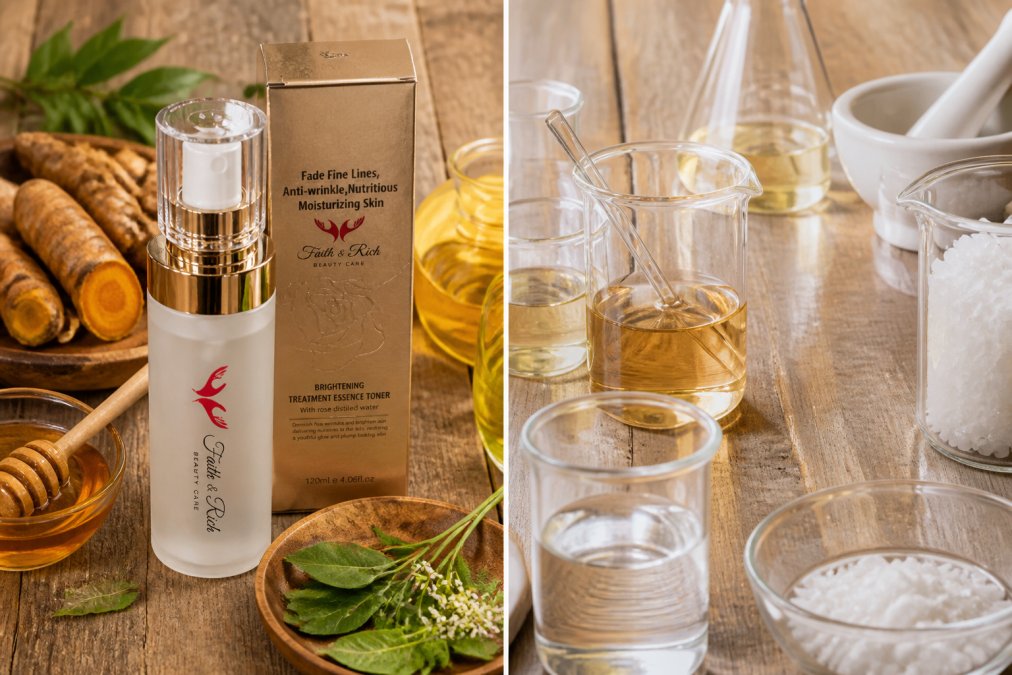
These approaches aren't mutually exclusive. FAITH & RICH's Turmeric Toner harnesses turmeric's natural antioxidant power while using formulation techniques that ensure the active compounds actually penetrate the skin barrier. That's the clean luxury intersection, respecting natural ingredients while refusing to compromise on efficacy.

Ingredient Quality and Sourcing: Natural Extracts vs Synthetic Compounds
Natural extracts come from plants, minerals, and botanical sources. Synthetic compounds are created in laboratories, often designed to mimic or enhance what nature produces. What matters is purity, potency, and whether the ingredient does what the brand claims. A natural botanical extract can be contaminated with pesticides or heavy metals if sourcing standards are lax. A synthetic compound can be manufactured to pharmaceutical-grade purity. What separates effective natural skincare from greenwashing is rigorous sourcing and testing.
Bioavailability and Delivery Systems
Bioavailability measures how much of an active ingredient your skin can actually absorb and use. An ingredient sitting on your skin's surface delivers zero results, regardless of how natural or expensive it is.
Natural oils have limited bioavailability on their own. Honey is hydrating, antimicrobial, and soothing, but its molecular weight makes deep penetration difficult. Luxury brands solve this through liposomal encapsulation (wrapping actives in lipid spheres that mimic skin cells), nano-emulsions (breaking ingredients into microscopic particles), and peptide carriers that actively transport other compounds across the skin barrier.
FAITH & RICH's Whitening Plant Essence Toner combines natural plant extracts with formulation techniques that maximize penetration depth, delivering clinical efficacy with a luxurious feel.

Preservative Systems and Product Stability
Natural brands often avoid synthetic preservatives, relying instead on essential oils, vitamin E, or fermentation. The trade-off: limited shelf stability and higher contamination risk. Luxury brands use preservative systems that prevent degradation and contamination while keeping formulas stable for years. Many luxury brands now use hybrid systems, combining natural antimicrobials with minimal synthetic preservatives to balance efficacy and safety.
Benefits of Organic Skincare Ingredients
Organic ingredients are grown without synthetic pesticides or fertilizers, correlating with higher ethical standards and more rigorous testing. Organic sourcing often indicates brands care about the entire supply chain, from farmer practices to extraction methods.
Antioxidant Properties and Skin Barrier Health
Natural botanical extracts are rich in antioxidants. Turmeric contains curcumin. Green tea contains catechins. Honey contains polyphenols. These compounds neutralize free radicals that damage skin cells and accelerate aging while supporting the skin barrier, the lipid layer that prevents moisture loss and keeps irritants out.
Antioxidants oxidize over time, however. A natural serum exposed to light and air loses potency within weeks. Luxury brands solve this through dark packaging, stabilizing agents, and formulation techniques that protect antioxidants from degradation.
Hypoallergenic and Patch Testing Standards
Hypoallergenic means lower likelihood of triggering allergic reactions, but natural doesn't equal hypoallergenic (the FDA). Plant proteins, essential oils, and botanical extracts are common allergens. Contact dermatitis from natural skincare is common, especially for people with sensitive skin or existing conditions like eczema.
Luxury brands often conduct patch testing on sensitive skin populations before launch. If you have sensitive skin or a history of contact dermatitis, patch test any new product on a small area of skin before full application.
Is Expensive Skincare Worth It: Cost-Per-Use and Clinical Efficacy
The price difference between natural and luxury skincare can be significant. A natural brand might charge $15 for a toner while a luxury brand charges $60 for the same size. The question: does the luxury version deliver proportional results?
Sometimes yes. Sometimes no. It depends on formulation, concentration of active ingredients, and whether the product addresses your specific skin concern.
Dermatologist-Tested Claims and Real Results
"Dermatologist-tested" means a dermatologist evaluated the product, not that it underwent clinical trials proving efficacy. Real clinical validation involves controlled studies with before-and-after measurements, control groups, and statistical analysis. Most skincare skips this step because it's expensive.
What matters more is whether the product contains proven active ingredients at effective concentrations. Vitamin C at 10-20% concentration fades hyperpigmentation (peer-reviewed research). Niacinamide at 4-5% reduces pore size and sebum production (peer-reviewed research). Peptides at sufficient concentrations stimulate collagen production.
Price vs Performance Analysis
A $20 toner from FAITH & RICH (like the Turmeric Toner at $19.99) delivers antioxidant and anti-inflammatory benefits through natural turmeric extract. A $60 luxury toner might offer similar benefits but with enhanced delivery systems and stabilized actives.
The real cost-per-use calculation considers how long the product lasts and how much you use per application. A concentrated serum might last three months; a lightweight toner might last two weeks. The expensive serum, spread across 90 days of use, costs less per application than the cheaper toner used daily.
For hyperpigmentation, the most cost-effective approach combines affordable natural toners (like FAITH & RICH's Whitening Plant Essence Toner at $19.99) with targeted luxury actives rather than investing in an all-luxury routine.
How to Build a Self-Care Routine with the Right Products
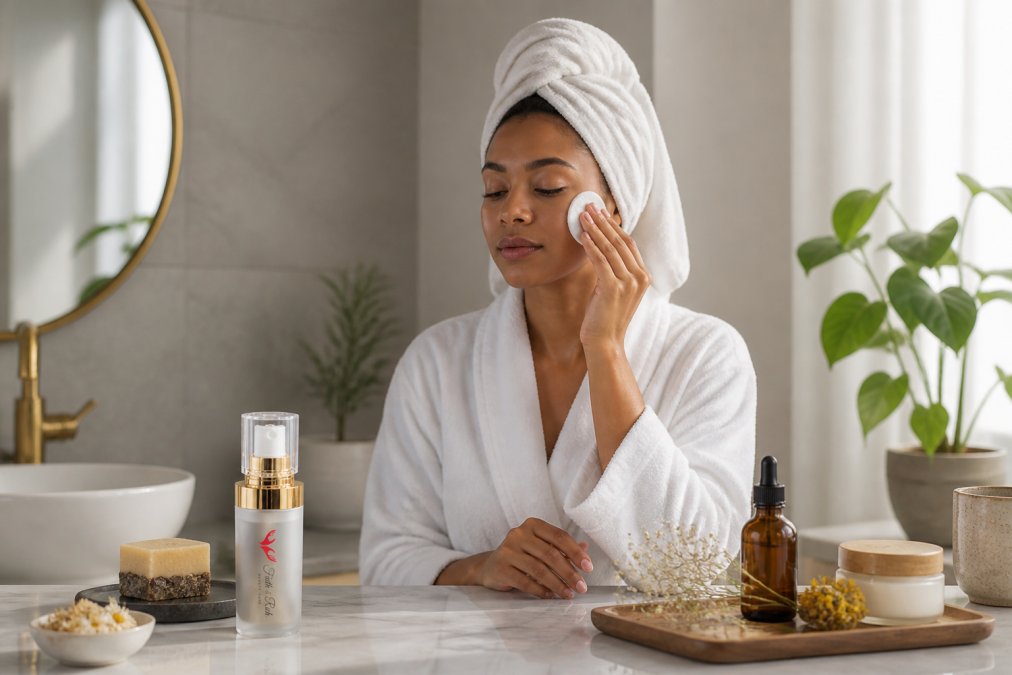
The best skincare routine isn't the most expensive one. It's the one you'll actually use consistently and that addresses your specific skin concerns. Most people fail with skincare not because they're using the wrong products, but because they're using too many products or products that don't work together.
Assessing Your Skin Type and Concerns
Start by identifying your primary skin concern: hyperpigmentation and uneven tone, sensitivity and inflammation, signs of aging, fine lines, or acne. Your routine should center on products that directly address this concern.
Natural skincare excels at addressing inflammation, sensitivity, and barrier health. Luxury skincare excels at targeting specific aging concerns with clinical actives. The smartest approach: use natural products for foundational skin health and layer in luxury actives for targeted concerns.
For sensitive skin prone to contact dermatitis, start with a minimal routine: a gentle cleanser, a hydrating toner, and a moisturizer. Test each product on a small patch of skin first. Add actives slowly, one new product every two weeks.
Layering Natural and Luxury Products for Maximum Impact
Layering means applying products in an order that maximizes absorption and efficacy. The general rule: lightest to heaviest. Toners first, then serums, then moisturizers, then oils.
A typical routine:
- Step 1: Cleanser (removes dirt and oil)
- Step 2: Toner (balances pH and preps skin for absorption)
- Step 3: Active serum (vitamin C, niacinamide, peptides)
- Step 4: Moisturizer (locks in hydration)
- Step 5: Oil or occlusive (seals everything in)
FAITH & RICH's toners work beautifully in this sequence. The Turmeric Toner at $19.99 preps skin and delivers antioxidants. The Whitening Plant Essence Toner at $19.99 targets hyperpigmentation and hydration. For anti-aging, the Collagen & Snail Skincare Set at $119.99 combines hydration with collagen-supporting actives across face and body.

The Clean Luxury Intersection: Handcrafted and Ethical Sourcing
The fastest-growing segment in skincare is "clean luxury", products that use natural, ethically sourced ingredients but apply luxury formulation standards and pricing. This is where FAITH & RICH operates.
Ethical Sourcing and Sustainability Standards
Ethical sourcing means ingredients are obtained fairly, farmers are paid fairly, labor practices are humane, and environmental impact is minimized. Look for brands that transparently name their suppliers, specify where ingredients originate, and can explain their sourcing practices.
Consistency in Handcrafted Formulas
Handcrafted skincare raises questions about batch consistency. Slight variations in handcrafted products are normal and don't indicate poor quality. What matters is that the formula stays within acceptable ranges for active ingredient concentration and performs consistently. FAITH & RICH maintains consistency through documented formulation processes and quality testing, even though products are handcrafted.
Natural Skincare vs Luxury Brands: Which Wins for Your Skin Goals
The honest answer: it depends on your specific goal. Neither category universally wins. What matters is matching the product category to your skin concern.
For Hyperpigmentation and Uneven Tone
Hyperpigmentation requires consistent, targeted treatment over months. Natural ingredients like turmeric, licorice root, and vitamin C help, but they work slowly and require high concentration to be effective.
Luxury brands often use clinical actives like hydroquinone, kojic acid, or stabilized vitamin C at 15-20% concentration that fade dark spots faster. The practical approach: start with FAITH & RICH's Whitening Plant Essence Toner ($19.99) or Turmeric Toner ($19.99) as your foundation. Layer in a luxury vitamin C serum if you need faster results. Combine with sunscreen daily. For serious hyperpigmentation, the Double Glutathione Set at $124.99 offers a comprehensive approach.
For Sensitive Skin and Contact Dermatitis
Sensitive skin and contact dermatitis require gentle, minimal routines. Natural skincare often wins here because it avoids harsh synthetics and focuses on barrier repair. But not all natural products are gentle; essential oils and plant proteins can trigger reactions.
The safest approach: start with a minimal routine of fragrance-free, hypoallergenic products. Patch test everything. Add one new product every two weeks. Avoid essential oils and botanical extracts until you've identified your triggers.
For Anti-Aging and Collagen Production
Anti-aging requires actives that stimulate collagen production or prevent collagen breakdown. Retinol, peptides, and vitamin C are the most proven. Natural alternatives like rosehip oil and plant peptides exist, but they're less potent than synthetic versions.
If anti-aging is your priority, luxury skincare often delivers better results. But you don't need all luxury. FAITH & RICH's Collagen & Snail Skincare Set at $119.99 combines natural-origin actives with genuine anti-aging benefits across a full routine.
The choice between natural skincare vs luxury brands isn't binary. The best approach is strategic: use natural products for foundational health and barrier repair, layer in luxury actives for targeted concerns, and choose brands like FAITH & RICH that bridge both worlds. Our handcrafted toners and skincare sets combine natural ingredients with formulation science that actually delivers results. Whether you're addressing hyperpigmentation, sensitivity, or signs of aging, FAITH & RICH offers community-driven luxury skincare designed to enhance your natural beauty and inspire confidence. Explore our collection and discover the products that transform your skin.
Frequently Asked Questions
Q: Are natural skincare products actually better for your skin than luxury brands?
A: Natural and luxury skincare each have distinct advantages. Natural products often excel at supporting long-term skin barrier health through botanical extracts. Luxury brands typically invest in advanced delivery systems and clinical testing to ensure higher bioavailability of active ingredients. The best choice depends on your skin type and concerns, sensitive skin often benefits from natural ingredients, while stubborn hyperpigmentation or anti-aging goals may require the concentrated formulas and potency of luxury lines. Many users find success blending both approaches.
Q: Does expensive skincare really make a difference in results?
A: Expensive skincare can deliver measurable results, but price alone doesn't guarantee efficacy. What matters is formulation science, active ingredient concentration, and delivery systems that allow ingredients to penetrate effectively. A $19.99 toner with potent plant extracts, like FAITH & RICH's Turmeric Toner with antioxidant turmeric, can address uneven skin tone and inflammation. The real cost-per-use advantage comes from concentration: a smaller amount of a highly potent formula often outlasts larger bottles of diluted products. Dermatologist-tested claims and clinical efficacy data matter more than the price tag.
Q: What are the benefits of organic skincare ingredients compared to synthetic formulas?
A: Organic skincare ingredients offer several science-backed benefits. Natural botanical extracts typically have lower rates of triggering contact dermatitis, making them ideal for sensitive skin. They support the skin microbiome and provide antioxidant properties that protect against environmental damage. Ingredients like turmeric reduce inflammation and promote even skin tone, while honey-based formulas enhance moisture retention. Synthetic ingredients, by contrast, are often more stable and have higher bioavailability for targeted results. The optimal approach combines both: natural ingredients for skin barrier support and comfort, plus strategically chosen synthetic actives for potent, measurable anti-aging and spot-fading results.
Q: Can natural ingredients fade hyperpigmentation and dark spots as effectively as luxury clinical-grade products?
A: Natural ingredients can address hyperpigmentation, but results depend on concentration and consistency. Plant extracts with antioxidant properties, turmeric, botanical whitening agents, work gradually by reducing inflammation and promoting even melanin distribution. FAITH & RICH's Whitening Plant Essence Toner combines plant extracts specifically formulated to fade signs of aging and even skin tone. However, luxury clinical-grade products often contain higher concentrations of proven actives and advanced delivery systems that penetrate deeper. For stubborn, long-term hyperpigmentation from sun damage, many dermatologists recommend starting with natural toners to support skin barrier health, then layering in clinical-strength serums for accelerated results.
Q: How do I know if a handcrafted skincare product will have consistent quality between batches?
A: Handcrafted products can maintain consistency through standardized formulation protocols and quality control testing. FAITH & RICH's handcrafted toners use precise ingredient measurements and batch testing to ensure each bottle delivers the same potency and performance. Look for brands that publish preservative systems information, conduct patch testing, and provide clear shelf-life guidance. Handcrafted doesn't mean inconsistent, it means artisanal production methods combined with rigorous quality assurance.
This article was written using GrandRanker


