

What Causes Hyperpigmentation and Natural Remedies

Table of Contents
- Understanding Hyperpigmentation: Causes and Types
- Hyperpigmentation Causes and Prevention: What Actually Triggers Dark Spots
- Best Natural Ingredients for Dark Spots: Turmeric, Lemon, and Beyond
- Natural Skincare Routine for Uneven Skin Tone: Morning and Evening Steps
- When to See a Dermatologist and How Natural Remedies Fit with Medical Treatments
- Frequently Asked Questions
Last Updated: September 29, 2026
Understanding Hyperpigmentation: Causes and Types
Dark spots rarely appear for one tidy reason. What causes hyperpigmentation and natural remedies that fade it depends on which mechanism drives your patches, and treating the wrong one wastes months. Hyperpigmentation is the overproduction and uneven deposit of melanin, made by melanocytes in your skin's basal layer, and it shows up in at least four clinically distinct forms.
Types of Hyperpigmentation
Post-inflammatory hyperpigmentation (PIH) follows injury: acne, eczema, insect bites, burns, or picking. It is most common in medium and deep skin tones, where melanocytes respond more aggressively to inflammation.
Hyperpigmentation Causes and Prevention: What Actually Triggers Dark Spots
Prevention beats correction, and the triggers are more varied than the sun alone. Causes fall into distinct categories because the category determines the fix, a medication-induced patch will not respond to a brightening serum, and a systemic cause needs a blood panel, not a toner.
- Antimalarials such as hydroxychloroquine and chloroquine, which can cause blue-gray discoloration on the shins and face
- Anti-seizure medications including phenytoin and carbamazepine
- Tetracycline antibiotics such as minocycline, linked to blue-black pigment on the shins and in scars
- Chemotherapy agents including bleomycin and busulfan
- Amiodarone, a heart rhythm drug associated with slate-gray facial pigment
- Heavy metals such as silver (argyria) and gold salts
Lifestyle and Dietary Triggers
Most articles skip this, and it is where the practical use sits.
- Refined sugar and high-glycemic diets drive glycation and inflammation, worsening pigment production over time.
- Chronic sleep deprivation raises cortisol, and cortisol dysregulation is associated with melasma flares.
- Alcohol dehydrates skin and impairs barrier repair.
- Heat exposure from cooking, saunas, and hot yoga can trigger melasma even without sun. Melasma is heat-sensitive, not just UV-sensitive.
- Tobacco smoke generates oxidative stress that accelerates melanocyte activity.
- Vitamin D and B12 deficiencies are common in people who avoid sun entirely or follow restrictive diets, and both can contribute to pigment changes.
Best Natural Ingredients for Dark Spots: Turmeric, Lemon, and Beyond
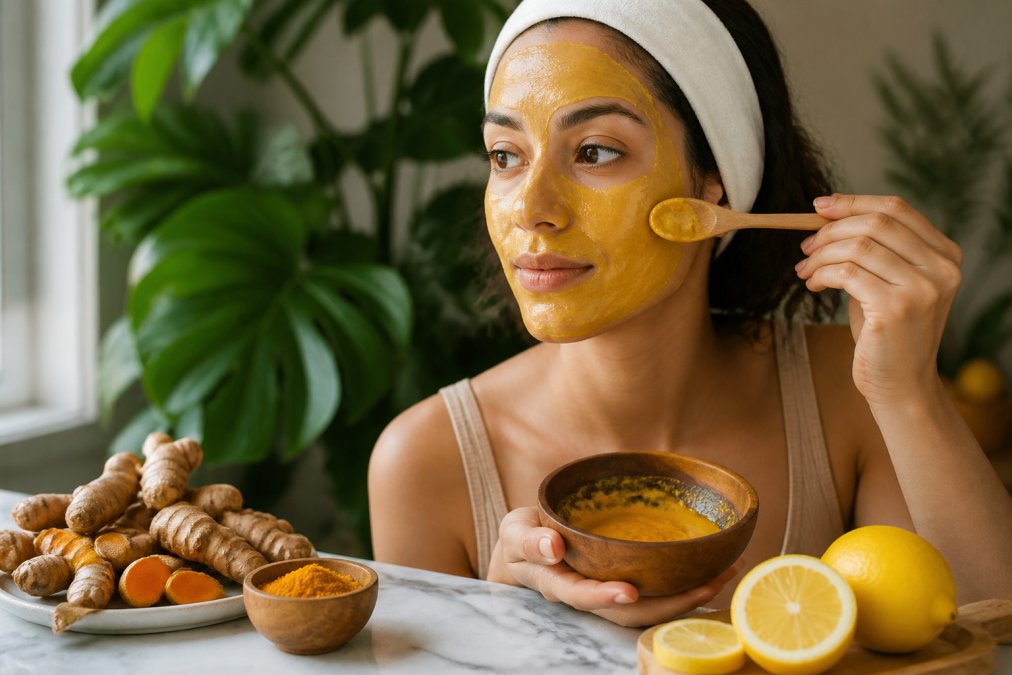
Turmeric and lemon are the most searched natural ingredients for dark spots, and both have a real mechanism, though neither is a miracle. Turmeric's curcumin works partly through tyrosinase inhibition, the same pathway targeted by prescription lighteners. Lemon brings natural vitamin C, an antioxidant that interrupts the oxidative chain driving pigment production.
How to Patch Test Natural Ingredients Safely
Patch testing is non-negotiable, and it is the step almost everyone skips. Lemon juice is highly acidic and can cause phytophotodermatitis, a burn-like reaction that creates more pigmentation when treated skin meets sunlight.
Here is a protocol that works:
- Mix a small amount of the ingredient at the dilution you plan to use
- Apply a dime-sized amount to the inner forearm or behind the ear
- Leave it for 24 hours without washing the area aggressively
- Check for redness, itching, burning, or swelling at 24 and 48 hours
- If clear, test again on a small patch of facial skin for 24 hours
- Introduce one new ingredient at a time, never two
Other Ingredients Worth Knowing
Licorice root contains glabridin, which has demonstrated tyrosinase inhibition in laboratory research. Green tea extract delivers EGCG, an antioxidant that calms inflammation. Soybean extract has shown modest effects on pigment dispersion. Aloe vera soothes and supports barrier repair, though it does not lighten pigment directly.
Natural Skincare Routine for Uneven Skin Tone: Morning and Evening Steps
Morning:
- Rinse with lukewarm water or a gentle cleanser
- Apply a vitamin C-rich antioxidant serum
- Moisturize to support the skin barrier
- Apply broad-spectrum sunscreen, SPF 30 or higher, as the final step
Evening:
- Cleanse to remove sunscreen and buildup
- Apply your treatment layer, such as a turmeric-based serum
- Moisturize
- Use a hydrating mask or oil two to three times weekly
For readers who want a ready-made version of this routine, FAITH & RICH offers a Turmeric & Lemon Set built around turmeric for fading dark spots and lemon for natural lightening, and a Turmeric Serum designed to support healthy cell turnover and balance oil. Their Sunscreen covers the prevention step that makes everything else work.


When to See a Dermatologist and How Natural Remedies Fit with Medical Treatments
Natural remedies and medical treatment are not competing camps, and framing them as rivals is the biggest mistake in this space. The gap most guides leave open is the how: sequencing botanicals with prescription actives and in-office procedures without triggering irritation that creates new pigment.
When to See a Dermatologist
Book an appointment if any of the following applies:
- A spot changes shape, color, size, or border, or develops irregular edges, this warrants a skin cancer evaluation, not a brightening routine
- A spot bleeds, itches, crusts, or does not heal
- Pigmentation appears suddenly without an obvious trigger, or spreads diffusely
- Darkening appears in skin creases, on the gums, or in scars alongside fatigue or weight change
- A home routine shows no measurable change after three months of consistent use
- You are pregnant or breastfeeding and considering lightening actives, many prescription options are contraindicated
- You have medium to deep skin tone and are considering a laser or peel, because improper settings can cause rebound hyperpigmentation or hypopigmentation
The Integration Framework
Prescription treatments such as hydroquinone, tretinoin, azelaic acid, and tranexamic acid work faster and deeper than botanicals, but increase photosensitivity and irritation risk. Natural ingredients complement them by supporting the barrier and reducing inflammation, often what makes prescription treatment tolerable in the first place.
A common practitioner-guided pattern looks like this:
- Stabilize the barrier first. Before starting any active, prescription or botanical, get the barrier calm with a gentle cleanser, a ceramide or fatty-acid moisturizer, and daily sunscreen. Starting actives on a compromised barrier is the fastest route to PIH.
- Introduce one active at a time. Alternate nights rather than layering. A typical sequence is prescription active two to three nights per week, botanical or barrier-support night in between.
- Separate irritating actives from each other. Do not apply tretinoin and a strong acid on the same night. Do not apply hydroquinone over freshly exfoliated skin.
- Keep antioxidant botanicals in the morning. Green tea extract and vitamin C-rich ingredients pair well under sunscreen because they add oxidative protection without adding photosensitivity.
- Pause before procedures. Most dermatologists ask patients to stop retinoids and strong exfoliating acids roughly one week before a chemical peel or laser session, and to stop hydroquinone in the days surrounding the procedure. Follow your provider's specific instructions, this window varies by treatment and skin type.
- Protect aggressively after procedures. Post-procedure skin is highly photosensitive. Sunscreen, shade, and hats are non-negotiable for weeks afterward, or the procedure can leave you with more pigment than you started with.
Where Botanicals Fit, and Where They Don't
- Licorice root (glabridin) and soybean extract have the strongest laboratory and modest clinical support for pigment dispersion.
- Green tea extract (EGCG) is best positioned as an anti-inflammatory and antioxidant adjunct, not a primary lightener.
- Aloe vera supports barrier repair and soothes post-procedure skin, but does not lighten pigment directly.
- Turmeric (curcumin) shows tyrosinase inhibition in lab studies; clinical evidence in humans is limited, and it can stain skin and fabric.
- Lemon juice and baking soda have no clinical support and carry real risk, phytophotodermatitis from citrus and barrier damage from high-pH pastes. Skip them.
One more point on evidence: anecdotal evidence runs far ahead of clinical evidence for most botanicals. That is not a reason to avoid them, it is a reason to keep expectations calibrated and treat them as the maintenance layer of a routine that includes sunscreen and, when needed, prescription care.
Frequently Asked Questions
What naturally gets rid of hyperpigmentation?
Natural remedies like turmeric, lemon, licorice root, and soybean extract can help fade hyperpigmentation by inhibiting tyrosinase and reducing melanin production. A consistent routine that includes sun protection, gentle exfoliation, and antioxidant-rich ingredients supports skin cell turnover. For example, a turmeric and lemon set can brighten skin tone and reduce dark spots over time. Results vary, and stubborn cases may need dermatological assessment.
What vitamin deficiency causes dark spots on the skin?
Vitamin B12 deficiency is linked to hyperpigmentation, often appearing as dark spots on the face and hands. Other deficiencies, such as vitamin D or iron, may also contribute to uneven skin tone. If you suspect a deficiency, a blood test can confirm. Addressing the underlying deficiency through diet or supplements, under medical guidance, may help improve skin discoloration.
How does sun exposure contribute to skin discoloration?
UV exposure triggers melanocytes to produce more melanin, leading to dark spots and uneven skin tone. Sun damage can also worsen existing hyperpigmentation, such as melasma. Daily use of a broad-spectrum sunscreen with SPF 30 or higher is essential for prevention. Reapply every two hours when outdoors, and wear protective clothing to minimize UV exposure.
Are natural remedies safe for all skin tones?
Most natural remedies are safe, but some ingredients like lemon juice can irritate sensitive skin or cause photosensitivity. Always perform a patch test on a small area before applying to your face. If you have a darker skin tone, certain remedies may cause hypopigmentation or uneven results. Consult a dermatologist if you are unsure, especially if you have conditions like melasma.
How long does it take to see results from natural skin treatments?
Natural treatments typically take 4 to 12 weeks to show visible improvement because they work with your skin's natural turnover cycle. Consistent use of ingredients like turmeric, vitamin C, and sunscreen is key. Some people notice gradual brightening within a month, while deeper hyperpigmentation may require several months. Patience and daily sun protection are critical for lasting results.


