

Natural Oils for Dark Spot Removal: How to Use Them

Table of Contents
- What You'll Need Before You Start
- How to Treat Hyperpigmentation Naturally with Oils
- Step-by-Step: How to Use Natural Oils for Dark Spot Removal
- Safety Tips for Using Essential Oils on Face
- How Long Does It Take to Fade Dark Spots with Natural Oils?
- Matching Oils to Your Skin Type
- Common Mistakes to Avoid
- Frequently Asked Questions
Last Updated: September 26, 2026
What You'll Need Before You Start
Natural oils for dark spots work best as a consistent routine, not a quick fix.
Before you touch a single bottle, gather these basics:
- A gentle cleanser (no scrubbing grains)
- Two oils: one carrier, one essential
- A small amber dropper bottle for mixing
- Cotton swabs or clean fingertips
- Sunscreen, SPF 30 or higher
- A notebook to track your progress
How to Treat Hyperpigmentation Naturally with Oils
You can treat hyperpigmentation naturally with oils by targeting two things at once: slowing excess melanin production and supporting the skin barrier. Oils do both, but only when you pick the right ones and use them correctly.
How Dark Spots Form and Where Oils Fit In
Hyperpigmentation is the overproduction of melanin in a specific area of skin, triggered by sun exposure, inflammation, or hormonal shifts. Melanocytes go into overdrive and leave behind patches that outlast the original trigger.
The Chemistry: Which Compounds Actually Do the Work
Here are the compounds in common oils and what each contributes:
- Linoleic acid (omega-6). High in rosehip, grapeseed, and safflower oil. It is a precursor to ceramides, the lipids that hold the skin barrier together. A compromised barrier leaks water and stays inflamed, and inflammation drives post-inflammatory hyperpigmentation.
- Oleic acid (omega-9). Dominant in olive, almond, and avocado oil. Heavier and more occlusive than linoleic acid. Good for dry skin, but a higher comedogenic risk for acne-prone faces.
- Vitamin E (tocopherol). Present in wheat germ, sunflower, and rosehip oil. A fat-soluble antioxidant that neutralizes UV-generated free radicals before they trigger new melanin production, and extends shelf life.
- Vitamin A precursors. Rosehip oil contains small amounts of trans-retinoic acid, a natural relative of prescription tretinoin. It supports cell turnover, which is how pigmented cells get shed, but at a far lower concentration than a retinoid serum.
- Curcumin. The active in turmeric. A polyphenol studied for its antioxidant and anti-inflammatory activity, poorly absorbed on its own, which is why pairing it with a carrier oil matters.
- Vitamin C. Lemon and other citrus oils contain small amounts of ascorbic acid, a well-known tyrosinase inhibitor. The catch is phototoxicity, covered below.
Why the Carrier Oil Is Not Just a Delivery Vehicle
A common mistake is treating the carrier oil as filler. It determines how fast the active absorbs, how much irritation it causes, and whether the mixture clogs pores. A few rules follow:
- Linoleic-acid-rich carriers (rosehip, grapeseed, safflower) suit oily and acne-prone skin. They are thin, absorb quickly, and support barrier repair without heaviness.
- Oleic-acid-rich carriers (olive, avocado, almond) suit dry and mature skin. They are richer and more occlusive, which helps when the barrier is already compromised.
- Jojoba is technically a liquid wax ester, not a triglyceride. Its structure closely resembles human sebum, which is why it rarely triggers breakouts and works as a neutral base for almost any skin type.
What Oils Cannot Do
Oils will not bleach a spot overnight, and they will not outrun unprotected sun exposure. They work with your skin's regeneration cycle, roughly 28 days in your twenties and longer with age. The compounds above need eight to twelve weeks of consistent use to show visible change.
Carrier Oils vs. Essential Oils: What Each One Does
Carrier oils and essential oils play completely different roles, and mixing them up is a common mistake.
| Type | Role | Examples | How to Use |
|---|---|---|---|
| Carrier oil | Base, moisturizes, delivers | Jojoba, rosehip, castor | Use undiluted or as the base |
| Essential oil | Active, brightens, targets | Turmeric, lemon, carrot seed | Always dilute in a carrier |
Step-by-Step: How to Use Natural Oils for Dark Spot Removal
Here is the exact process, start to finish. Set aside ten minutes for your first session.
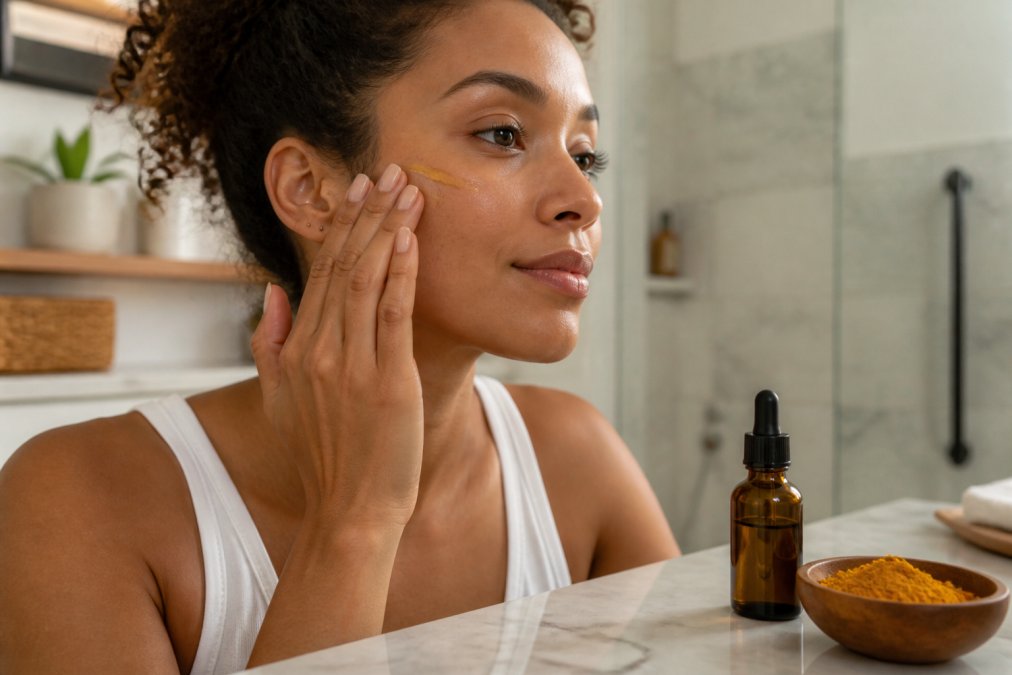
Step 1: Patch Test Before Anything Else
Apply one diluted drop to the inside of your forearm. Wait 24 hours and check for redness, itching, or swelling. If your skin reacts, stop; if not, move to your face. This step takes a day but saves a week of irritation.
Step 2: Dilute, Apply, and Massage
Mix your oils in the palm of your hand, not directly on your face. A safe starting dilution for facial use is roughly one drop of essential oil to one teaspoon of carrier oil. For sensitive skin, start lower.
Then:
- Cleanse and pat dry
- Warm two to three drops between your palms
- Press gently onto the dark spots
- Massage in small circles for 30 seconds
- Leave on for at least 20 minutes, or overnight
- Follow with sunscreen in the morning
Safety Tips for Using Essential Oils on Face
Safety tips for using essential oils on face come down to three rules: dilute, patch test, and protect from sun. Break one and you risk making your dark spots worse.
Keep these in mind:
- Never exceed a 1% dilution for facial use
- Avoid citrus oils if you will be in the sun within 12 hours
- Do not mix more than two essential oils at once
- Stop use if you notice peeling, burning, or new discoloration
- Keep oils away from your eyes and lip line
How Long Does It Take to Fade Dark Spots with Natural Oils?
Most people see visible fading in 8 to 12 weeks with consistent use, tracking with your skin's renewal cycle, which slows with age.
What speeds it up:
- Daily sunscreen use
- Consistent nightly application
- Gentle exfoliation once or twice a week
- Staying hydrated
What slows it down:
- Skipping days
- Sun exposure without protection
- Picking at spots or scars
Matching Oils to Your Skin Type
Not every oil suits every face, this is the difference between results and breakouts. Below, each skin type is paired with a carrier oil, an essential oil, a dilution rate, and a time of day.
Oily and Acne-Prone Skin
- Carrier: Grapeseed or safflower. Both are high in linoleic acid with low comedogenic ratings, so they are unlikely to clog pores. Jojoba is the safest neutral base if unsure.
- Essential: Carrot seed or turmeric. Both are non-phototoxic, so they can be used morning or night.
- Dilution: 0.5% to 1%. Start at 0.5% (roughly one drop of essential oil per two teaspoons of carrier) and increase only if your skin tolerates it.
- Timing: Evening. Oily skin produces enough sebum overnight that a heavier morning layer is unnecessary.
- Watch for: Any carrier high in oleic acid, olive, avocado, coconut, can feel greasy and may trigger breakouts on this skin type.
Dry Skin
- Carrier: Rosehip or sweet almond. Rosehip brings vitamin A precursors and vitamin E alongside its fatty acids; sweet almond is rich in oleic acid and absorbs slowly, which dry skin needs.
- Essential: Carrot seed or frankincense. Both are gentle and non-phototoxic.
- Dilution: 1% (roughly one drop of essential oil per teaspoon of carrier). Dry skin tolerates slightly higher dilution than oily skin, but do not exceed 1% on the face.
- Timing: Evening, applied to slightly damp skin after cleansing. The water underneath helps the oil seal in moisture rather than sit on top.
- Watch for: Castor oil is often recommended for dry skin, but it is thick and can be drying in high concentrations. Use it as a small fraction of a blend, not the whole base.
Sensitive Skin
- Carrier: Jojoba or sweet almond. Both are low-irritation and unlikely to provoke a reaction.
- Essential: Carrot seed only, at least for the first month. Turmeric and citrus oils are more likely to sting reactive skin.
- Dilution: 0.25% to 0.5%. This is half the standard facial dilution. Measure carefully, a single extra drop changes the percentage meaningfully at this scale.
- Timing: Evening. Patch test on the inner forearm for 48 hours, not 24, before applying to the face.
- Watch for: Any tingling, warmth, or redness lasting more than a few minutes. Stop and wait a week before trying a different oil.
Combination Skin
- Carrier: Jojoba as the base. It behaves like sebum and rarely over-moisturizes the T-zone or under-moisturizes the cheeks.
- Essential: Turmeric or carrot seed. Add a single drop of lemon essential oil at night only if you want the vitamin C effect and will commit to daily sunscreen.
- Dilution: 1%.
- Timing: Evening. If your cheeks feel tight in the morning, add a thin layer of rosehip to the dry areas only.
If You Already Use Vitamin C, Retinol, or Exfoliating Acids
Oils are occlusive, and an occlusive layer over an active ingredient increases how much of that active penetrates, helpful or irritating depending on the active.
- Vitamin C. Apply your vitamin C serum first, wait five minutes, then apply your oil blend. Do not mix them in the same step, vitamin C is water-soluble and oil will not carry it.
- Retinol. Apply retinol first, wait until fully absorbed, then apply a barrier-supporting carrier oil like rosehip or jojoba. Do not add essential oils on retinol nights. The combination of increased penetration and a potentially irritating essential oil is a common cause of redness and peeling.
- AHAs and BHAs. Use them on separate nights from your essential oil blend, at least for the first month. Once adjusted, you can layer a plain carrier oil over an acid, but keep essential oils on their own nights.
- Prescription hydroquinone or tretinoin. Ask your dermatologist before adding any essential oil. These treatments already increase photosensitivity, and adding a phototoxic oil compounds the risk.
A Note on Comedogenic Ratings
Comedogenic ratings run from 0 to 5, with 0 least likely to clog pores and 5 most likely. The scale is a rough guide, not a guarantee. For facial use on acne-prone skin, stay at 2 or below, jojoba, grapeseed, safflower, and rosehip all sit in that range. Coconut oil sits at 4 and suits the body better.
Common Mistakes to Avoid
The biggest mistake is using essential oils undiluted because "natural" feels safe. Natural does not mean gentle. Undiluted oils can burn skin and trigger new inflammation, which creates fresh dark spots.
Other traps to dodge:
- Applying oils and skipping sunscreen the next morning
- Expecting results in a week
- Mixing five oils at once and not knowing which one caused a reaction
- Using the same routine on your face as your body without adjusting dilution
Frequently Asked Questions
What natural oil fades dark spots?
Turmeric and lemon oils are often used because turmeric contains curcumin, which may help reduce dark spots and uneven skin tone, while lemon provides natural vitamin C for brightening. Cold-pressed carrier oils like Castro oil can also support skin hydration and glow. For best results, dilute essential oils properly and apply consistently. Always patch test first, since natural ingredients can still irritate sensitive skin.
How long does it take for natural oils to lighten dark spots?
Most people notice gradual changes over 4 to 12 weeks with regular use. Results depend on your skin type, the cause of the dark spots, and how consistently you apply the oils. Sun exposure can slow progress, so daily UV protection is important. If you see no change after three months, consider adjusting your routine or speaking with a dermatologist about other options.
Are essential oils safe for treating hyperpigmentation?
Essential oils can be safe when diluted properly, usually to a 1-2% concentration in a carrier oil. Never apply them undiluted to your face. Some oils, like citrus-based ones, can increase sun sensitivity, so use them at night and wear sunscreen during the day. If you have sensitive skin or a skin condition, check with a dermatologist before starting.
What is the difference between carrier oils and essential oils for skin?
Carrier oils, such as Castro oil or jojoba, are pressed from nuts, seeds, or fruits and can be applied directly to skin to moisturize and deliver nutrients. Essential oils are highly concentrated plant extracts that must be diluted before use. For dark spot removal, carrier oils often form the base while a few drops of essential oil add brightening or antioxidant benefits.


