

Natural Remedies for Hormonal Hyperpigmentation

Table of Contents
- What Is Hormonal Hyperpigmentation and Why It Happens
- Natural Ingredients That Target Melanin Production
- The Best Skincare Routine for Hyperpigmentation
- How Long to See Results from Natural Skincare
- How to Prevent Hormonal Dark Spots
- Internal vs. External Approaches for Hormonal Hyperpigmentation
- Conclusion
- Frequently Asked Questions
Last Updated: September 25, 2026
What Is Hormonal Hyperpigmentation and Why It Happens
Hormonal hyperpigmentation is a form of skin discoloration triggered by shifts in estrogen and progesterone that stimulate excess melanin production. It shows up most often as melasma: symmetrical brown or gray-brown patches on the cheeks, upper lip, forehead, and jawline.
This guide breaks down which natural remedies actually address the mechanism behind hormonal dark spots, and which ones just sit on the surface.
The mechanism matters more than most guides admit. Melanocytes, the pigment-producing cells in your epidermal layer, carry receptors that respond to estrogen and progesterone. When those hormones fluctuate, the receptors send a signal that ramps up melanin production. That is why the same sunscreen and the same vitamin C serum that worked in your twenties can suddenly stop working at 34.

Estrogen, Progesterone, and Melanin Production
Pregnancy, oral contraceptives, hormone replacement therapy, and perimenopause all produce the same result: a spike in circulating hormones that binds to melanocyte receptors and increases pigment regulation activity. Post-inflammatory hyperpigmentation follows the same pathway once inflammation is involved, which is why a healed breakout can leave a mark that outlasts the pimple by months.
The distinction that changes your approach: hormonal hyperpigmentation is driven from inside the body, not from the surface. A brightening agent applied topically can interrupt tyrosinase activity, but it cannot stop the hormonal signal feeding it. That is the tension running through every remedy below.
Natural Ingredients That Target Melanin Production
Natural extracts work on hyperpigmentation through three pathways: tyrosinase inhibition, antioxidant defense against free radical damage, and gentle exfoliation of pigmented epidermal cells. The ingredients with the strongest traditional track record are turmeric, green tea, licorice root, and red onion.
Turmeric and Lemon for Dark Spots
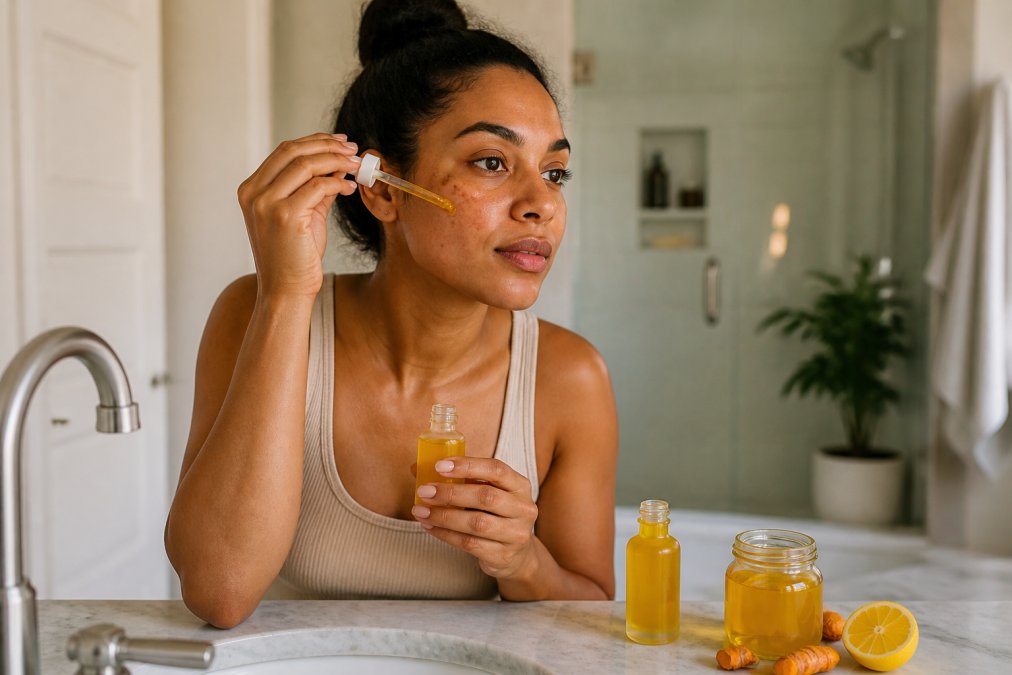
Turmeric's active compound, curcumin, is a tyrosinase inhibitor and a potent antioxidant. It slows the enzyme that converts tyrosine into melanin while reducing the inflammation that drives post-inflammatory hyperpigmentation. Lemon brings vitamin C, which interrupts melanin synthesis and provides mild exfoliation.
The pairing is not folklore. The NIH National Center for Complementary and Integrative Health overview of turmeric documents curcumin's anti-inflammatory activity, which is the exact mechanism relevant to pigment calming.
A practical caution most guides skip: undiluted lemon juice is acidic enough to irritate a compromised skin barrier. Dilute it, use it at night, and never apply it before sun exposure. If your skin is reactive, start with turmeric alone.
FAITH & RICH's Turmeric & Lemon Set pairs both ingredients in a format that removes the guesswork around dilution.

Green Tea, Licorice, and Red Onion Extract
Green tea delivers EGCG, an antioxidant that scavenges free radical damage before it reaches the melanocyte. Licorice root contains glabridin, which has demonstrated tyrosinase inhibition in laboratory settings. Red onion extract is the sleeper: it is rich in quercetin and sulfur compounds, and traditional use centers on fading dark spots and supporting collagen synthesis.
| Ingredient | Active Compound | Primary Action | Best For |
|---|---|---|---|
| Turmeric | Curcumin | Tyrosinase inhibition, anti-inflammatory | Stubborn dark spots, acne scars |
| Lemon | Vitamin C | Melanin synthesis interruption, exfoliation | Overall complexion brightening |
| Green tea | EGCG | Antioxidant, free radical defense | Prevention, sensitive skin |
| Licorice root | Glabridin | Tyrosinase inhibition | Melasma patches, even skin tone |
| Red onion | Quercetin | Pigment fading, collagen support | Post-inflammatory marks |
Patch testing is non-negotiable with this group. Apply a small amount behind the ear or on the inner forearm, wait 24 hours, and check for redness or irritation before committing to your face. Sensitive skin reacts to natural extracts just as readily as to synthetic ones.
The Best Skincare Routine for Hyperpigmentation
The best skincare routine for hyperpigmentation follows a fixed order: cleanse, treat, moisturize, protect. Consistency across four to six weeks matters more than the strength of any single product.
Morning
- Gentle cleanse with lukewarm water
- Antioxidant serum (green tea or vitamin C)
- Lightweight moisturizer
- Broad-spectrum sunscreen, SPF 30 or higher, reapplied every two hours outdoors (the American Academy of Dermatology)
Evening
- Remove sunscreen and makeup completely
- Turmeric or licorice treatment on pigmented areas
- Nourishing moisturizer to support the skin barrier
Three rules hold this together. Do not layer multiple strong actives in one session. Do not skip sunscreen because you are indoors near a window. And do not add a new ingredient every week, because you will never know which one is working.
How Long to See Results from Natural Skincare
Expect the first visible change in four to six weeks and meaningful fading in three to six months. Natural ingredients work at lower concentrations than prescription actives, so the timeline is longer by design. But the timeline is not the same for every type of pigment, and treating it as one number is where most routines fail.
Melasma vs. Post-Inflammatory Hyperpigmentation: Two Different Clocks
This is the distinction most guides skip, and it changes what "results" even means.
Post-inflammatory hyperpigmentation (PIH) is pigment left behind by injury or inflammation: a healed breakout, a picked pimple, a burn, a waxing reaction.
Why Hormonal Pigment Moves Slower
Skin cell turnover runs on roughly a 28-day cycle in younger adults and slows with age. A pigmented cell has to travel from the basal layer to the surface before it sheds. That transit is the reason no topical product, natural or clinical, produces overnight results.
What to Track, and When to Change Course
A reasonable decision framework:
- Weeks 4-6: Look for reduced redness and a slightly more even tone, not dramatic fading. If you see irritation instead, stop the active and reassess.
- Weeks 8-12: PIH should be visibly lighter. Melasma should be at least stable, meaning not darker than when you started.
- Week 12: If there is zero change, the formula or the concentration is wrong for your skin, not the approach. Rotate the active rather than stacking a second one.
- Week 16 and beyond: If melasma is still darkening despite daily sunscreen and consistent topicals, that is a signal to bring in clinical options, not to add more kitchen ingredients.
One more reality check: if you are pregnant, breastfeeding, or on hormonal contraception, the hormonal driver is still active, and no topical routine will fully override it. In those cases, the goal shifts from fading to preventing new pigment and holding the line until the hormonal picture changes.
How to Prevent Hormonal Dark Spots
Prevention targets the trigger, not just the pigment. Photoprotection is the single highest-impact habit, because UV exposure amplifies melanocyte activity that hormones have already primed. But prevention also means knowing what not to put on your face, and that is the part most natural-remedy guides leave out.
The Non-Negotiables
- Apply broad-spectrum sunscreen daily, year-round, and reapply after sweating or swimming. Look for a formula that lists zinc oxide or titanium dioxide, or a chemical filter blend rated broad-spectrum, and choose SPF 30 or higher.
- Wear a hat and seek shade during peak UV hours, generally late morning through mid-afternoon.
- Manage hormonal triggers with your clinician if you use oral contraceptives or hormone therapy. Sometimes a different formulation changes the picture.
- Treat inflammation fast: do not pick at breakouts, since post-inflammatory hyperpigmentation follows.
- Support the skin barrier with moisturizer so irritation does not trigger new pigment.
The American Academy of Dermatology guidance on sunscreen and pigmentation is direct on this point: daily sunscreen use is the foundation of any hyperpigmentation treatment plan, and skipping it undermines everything else.
What NOT to Use: A Safety-First List
FAITH & RICH's Sunscreen is a straightforward daily option to anchor the routine.
Internal vs. External Approaches for Hormonal Hyperpigmentation
Topical treatment alone rarely resolves hormonally driven melasma, and internal changes alone rarely fade pigment that already exists. The two approaches address different halves of the same problem.
Conclusion
Hormonal hyperpigmentation is stubborn because it has two drivers, and most routines only address one. Build a fixed daily routine with a turmeric or licorice treatment, anchor it with daily sunscreen, and give it twelve weeks before you judge the result.
Frequently Asked Questions
How to get rid of hyperpigmentation caused by hormones?
Hormonal hyperpigmentation fades gradually with consistent care. Use botanical ingredients that regulate melanin production, such as turmeric and lemon, and protect your skin with daily sunscreen to prevent further darkening. A routine combining a brightening serum, gentle exfoliation, and SPF can help. Results take time because hormonal fluctuations keep triggering pigment cells, so consistency matters more than intensity.
How long does it take for natural remedies to fade dark spots?
Natural remedies typically need 8 to 12 weeks of daily use before you notice visible fading. Turmeric and lemon work by slowing melanin production and encouraging cell turnover, which is a gradual process. Take photos every two weeks to track progress accurately. If spots remain after three months of consistent use, a dermatologist can recommend stronger options.
Are there lifestyle changes that help with hormonal skin discoloration?
Yes. Managing stress, getting consistent sleep, and avoiding prolonged sun exposure all reduce the hormonal fluctuations that trigger melanin production. Eating antioxidant-rich foods supports skin repair from the inside. Pair these habits with a topical routine that includes sunscreen and brightening ingredients for the best chance of preventing new dark spots from forming.
When should you see a dermatologist for hyperpigmentation?
See a dermatologist if dark spots spread rapidly, change shape or color, or do not improve after three months of consistent natural care. A dermatologist can rule out other conditions and prescribe treatments like hydroquinone or retinoids. For melasma linked to hormonal fluctuations, professional guidance helps you avoid ingredients that could irritate sensitive skin or worsen discoloration.


