

Natural Hyperpigmentation Cream Reviews 2026: Top Picks

Table of Contents
- How We Tested These Natural Hyperpigmentation Creams
- Comparison Table: Natural Hyperpigmentation Creams at a Glance
- Best Natural Ingredients for Dark Spots
- How to Treat Hyperpigmentation Naturally
- How Long Does It Take to Fade Hyperpigmentation?
- Conclusion
- Frequently Asked Questions
Last Updated: September 12, 2026
How We Tested These Natural Hyperpigmentation Creams
Finding a natural hyperpigmentation cream that actually fades dark spots comes down to ingredient quality and consistent use. This guide explains what to look for in every formula, so you can judge these natural hyperpigmentation cream reviews 2026 on clear criteria instead of marketing claims.
We recommend evaluating products on four factors: whether they target melanin production at the source, how well they support skin barrier health, whether they avoid harsh bleaching agents, and how realistic the price is for a full routine. A cream that brightens for a week then irritates your barrier fails, and so does one priced too high to repurchase long enough to see results.
Below, we show how each FAITH & RICH pick aligns with those criteria, and which suits stubborn dark spots versus everyday maintenance.

Comparison Table: Natural Hyperpigmentation Creams at a Glance
Here's how the top natural options stack up on price, best use case, and key ingredients.
| Product | Price | Best For | Key Ingredients |
|---|---|---|---|
| Turmeric & Lemon 6 Piece Skin Care Set | $89.99 | Best overall routine | Turmeric, lemon, vitamin C |
| Turmeric Lemon Set | $34.99 | Best value starter set | Turmeric, lemon |
| Faith & Rich Double Glutathione Set | $124.99 | Stubborn dark spots | Glutathione, plant extracts |
| Turmeric & Lemon Body Oil | $34.99 | Body hyperpigmentation | Curcumin, vitamin C |
| Turmeric Lemon Soap | $9.99 | Best entry point | Turmeric, lemon |
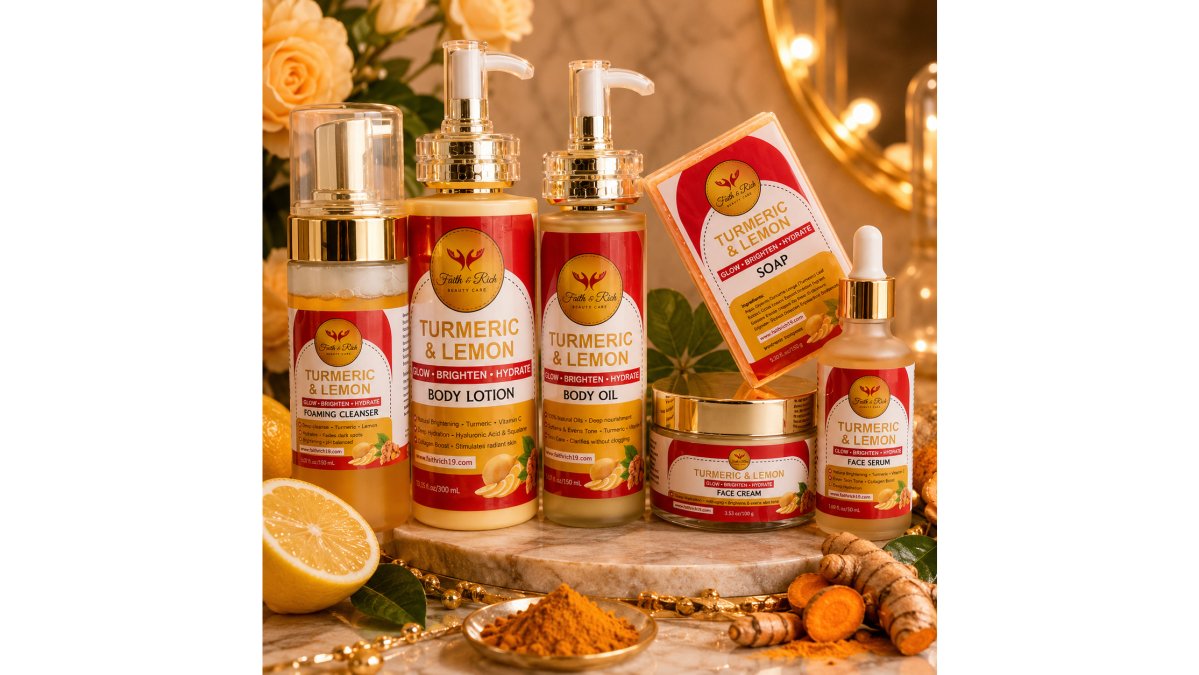
Best Overall: Turmeric & Lemon 6 Piece Skin Care Set
Turmeric & Lemon 6 Piece Skin Care Set is the most complete option in these natural hyperpigmentation cream reviews 2026, covering cleansing, toning, and treatment in one purchase. Turmeric fades dark spots and acne scars while lemon, rich in vitamin C, lightens hyperpigmentation and gently exfoliates dead skin cells, with antioxidants that help slow visible signs of aging.

At $89.99, it costs more upfront than a single cream but replaces three or four products. The trade-off: commit to the full routine for several weeks before judging results, since skipping steps weakens the effect.
Best Value: Turmeric Lemon Set
For a lower entry price, the Turmeric Lemon Set at $34.99 delivers the same turmeric-and-lemon pairing in a compact format, ideal for testing how your skin responds to curcumin and vitamin C before investing in a larger routine.
The limitation is coverage. It won't address body hyperpigmentation or deliver the layered hydration a full six-piece routine provides, so treat it as a starting point rather than a complete solution.
Best for Stubborn Dark Spots: Faith & Rich Double Glutathione Set
Stubborn, long-standing dark spots from years of sun damage call for more than brightening alone. The Faith & Rich Double Glutathione Set at $124.99 pairs glutathione with plant extracts to improve uneven skin tone while hydrating and supporting barrier health.
Glutathione works differently from turmeric or vitamin C: rather than only inhibiting tyrosinase, it supports the skin's own antioxidant defenses, which many find helpful for deeper pigmentation. The caveat: it's the priciest pick, and stubborn spots take two to three months of daily use.
Best Body Treatment: Turmeric & Lemon Body Oil
Facial creams rarely work for post-inflammatory hyperpigmentation on the arms, legs, or back. The Turmeric & Lemon Body Oil at $34.99 uses curcumin to reduce dark spots and uneven tone, with lemon enhancing brightening through natural vitamin C.
It also smooths skin and helps with body acne and ingrown hairs, a common trigger for post-inflammatory hyperpigmentation. Body skin is thicker than facial skin, so it needs consistent daily application over a longer stretch before pigment fades.
Best Entry Point: Turmeric Lemon Soap
For a low-risk natural start, the Turmeric Lemon Soap at $9.99 is the easiest entry point. It brightens and evens skin tone, reduces dark spots and blemishes, and cleanses without stripping your skin barrier.
The catch is that a cleanser's contact time with skin is short. Expect it to support a routine, not replace a leave-on treatment for serious hyperpigmentation.
Best Natural Ingredients for Dark Spots
The best natural ingredients for dark spots work through one of three pathways: inhibiting tyrosinase (the enzyme that drives melanin synthesis), accelerating cell turnover so pigmented cells shed faster, or calming the inflammation behind post-inflammatory hyperpigmentation. Most botanicals do one well and the other two weakly, which is why single-ingredient creams underperform layered routines.
Here's how the ingredients in these natural hyperpigmentation cream reviews 2026 behave, and where each hits a ceiling.
Tyrosinase inhibitors
- Turmeric (curcumin). Curcumin suppresses tyrosinase and scavenges free radicals, but its real strength is anti-inflammatory, key because post-inflammatory hyperpigmentation (brown marks from acne, ingrown hairs, or eczema) is driven by inflammation first. It absorbs poorly raw, so formulas pairing it with a carrier oil or fermented base outperform dry powders.
- Alpha-arbutin. A synthetic bearberry derivative, alpha-arbutin is one of the most studied OTC tyrosinase inhibitors. It's gentler than hydroquinone with no rebound-pigmentation risk. Look for 1-2% on a label; below that, it's decorative.
- Niacinamide. A form of vitamin B3 rather than a botanical, niacinamide blocks melanin transfer from melanocytes to surrounding cells. It's one of few brightening actives that also strengthens the barrier, making it a strong pairing with turmeric or glutathione.
- Lemon and other citrus. Lemon delivers natural vitamin C, which interrupts melanin synthesis and supports collagen. But citrus oils and juices are phototoxic, so a lemon cream used without daily SPF can leave spots darker than they started.
Antioxidant support
- Glutathione. Rather than blocking tyrosinase directly, glutathione supports the skin's antioxidant defenses and shifts melanin toward lighter pigment, often chosen for melasma and age spots. Oral and topical forms aren't interchangeable, topicals act where applied, and deeper pigment takes two to three months.
- Vitamin C (L-ascorbic acid and stable derivatives). Vitamin C reduces existing pigment and prevents new melanin formation. It's unstable in water-based formulas, so a serum turned orange or brown has oxidized and lost potency.
What to avoid
Hydroquinone, mercury-containing lighteners, and unlabeled "whitening" creams are the three categories dermatologists most often flag. Hydroquinone is effective but needs medical supervision and can cause rebound darkening unsupervised (PubMed). Mercury is banned in cosmetics yet still appears in some imports. A cream listing no ingredients is a disqualifier.
Natural vs. clinical-grade actives: the honest performance delta
This is the comparison most reviews skip. Clinical-grade actives, prescription tretinoin, hydroquinone, azelaic acid, tranexamic acid, fade pigment faster and more predictably than botanicals because they're standardized to known concentrations with decades of trial data. Botanicals win on tolerability and long-term daily use, not raw speed.
Practically: a well-formulated turmeric-and-niacinamide routine may take 10-12 weeks to match what a prescription regimen achieves in 6-8. The gap is small for surface sun spots but widens for melasma or dermal pigment, where a natural routine works best alongside, not instead of, professional treatment.
Skin tone matters more than most guides admit
Fitzpatrick skin types IV, V, and VI carry a higher risk of post-inflammatory hyperpigmentation from irritation itself, so aggressive exfoliation, high-concentration acids, and phototoxic citrus can create the exact darkening users are trying to fade. For deeper tones, the safer stack is turmeric, niacinamide, and glutathione used consistently, with exfoliation once or twice weekly and SPF non-negotiable.
The American Academy of Dermatology's guidance on dark spot treatments recommends pairing any brightening routine with daily broad-spectrum SPF, since UV exposure undoes much of the progress a cream makes.
How to Treat Hyperpigmentation Naturally
Treating hyperpigmentation naturally means combining three habits: gentle exfoliation to speed cell turnover, consistent brightening agents, and daily sunscreen. No single cream fades dark spots alone.
Here's the routine we recommend, based on how these products are designed to work together:
- Cleanse morning and night with a turmeric-based cleanser to remove impurities without stripping the skin barrier.
- Apply a brightening toner while skin is still damp to prep absorption.
- Layer a turmeric or glutathione serum on areas with visible pigment.
- Follow with a moisturizer or face cream to seal in hydration.
- Apply broad-spectrum SPF every morning, reapplying if you're outdoors.
- Patch test any new product on your inner arm for 48 hours before full use.
Consistency beats intensity: a strong product used twice weekly rarely outperforms a gentler one used daily, and over-exfoliating can trigger new post-inflammatory hyperpigmentation.
How Long Does It Take to Fade Hyperpigmentation?
Hyperpigmentation typically takes 8 to 12 weeks of consistent treatment to fade noticeably, since pigment sits in the epidermal and dermal layers and skin renews on a roughly 28-day cycle (the American Academy of Dermatology). Surface sun spots respond faster than melasma or deep post-inflammatory hyperpigmentation, but the real variable is how deep the pigment sits.
Depth, not product strength, sets the clock
Epidermal pigment, flat brown patches from a healed pimple or a summer of sun, lives in the top layer and sheds with normal cell turnover. Most people see meaningful change in 4 to 8 weeks with a consistent brightening routine.
Dermal pigment sits below the epidermis, where topicals penetrate poorly. Melasma, some age spots, and hormonal pigmentation fall here: they can take 3 to 6 months of daily use to shift at all, and some cases need in-office peels or lasers alongside a home routine. No cream, natural or clinical, reaches dermal pigment quickly.
A realistic week-by-week schedule
- Weeks 1-2: skin feels smoother and more hydrated. Little to no visible pigment change. This is normal, do not switch products yet.
- Weeks 4-6: early brightening, most visible on sun spots and recent post-inflammatory marks.
- Weeks 8-12: clearer fading on surface pigment. This is the point where most people can fairly judge whether a product is working.
- Months 3-6: stubborn or deeper spots continue to lighten with daily use. Melasma may plateau and require professional treatment.
Why your results may be slower than someone else's
Three factors explain most of the variation between users on the same product:
- Skin tone. Fitzpatrick types IV-VI are more prone to post-inflammatory hyperpigmentation, which means any irritation from the routine itself can add new pigment while the old pigment fades. Progress looks slower because two processes are running at once.
- Sun exposure. UV radiation reactivates melanocytes. A routine used without daily broad-spectrum SPF will often stall at week six and stay there.
- Consistency. A strong product used twice a week rarely outperforms a gentler one used daily. Skipping days resets the cell-turnover clock.
How to tell if a product is failing
If you see no change after eight weeks of daily use and sunscreen, the issue is usually one of three things: the pigment is dermal, the active concentration is too low, or sun exposure is undermining the routine. Audit those three variables; if all check out and there's still zero movement at twelve weeks, move on.
Conclusion
Fading hyperpigmentation is a test of patience, not a search for a miracle cream. The products that work are the ones you'll use every day, backed by sunscreen and realistic expectations.
At FAITH & RICH, we built our turmeric, lemon, and glutathione lines around that idea: handcrafted formulas that brighten and even skin tone while supporting your barrier rather than stripping it. Whether you start with the $9.99 Turmeric Lemon Soap or commit to the full Turmeric & Lemon 6 Piece Skin Care Set, each product works as part of a consistent routine. Explore FAITH & RICH and give your skin the steady, gentle care real results require.

Frequently Asked Questions
What natural ingredients are most effective for hyperpigmentation?
Turmeric and lemon are two of the most researched natural ingredients for dark spots. Turmeric contains curcumin, which helps reduce melanin production and calm inflammation that leads to post-inflammatory hyperpigmentation. Lemon provides natural vitamin C, which supports cell turnover and brightening. For best results, look for products that combine multiple brightening agents rather than relying on a single ingredient.
How long does it take for natural hyperpigmentation creams to work?
Most natural hyperpigmentation creams show visible improvement in 4 to 8 weeks with daily use. Dark spots from sun damage may take 8 to 12 weeks to fade noticeably because the pigment sits in deeper epidermal layers. Post-inflammatory hyperpigmentation from acne often responds faster, sometimes within 3 to 4 weeks. Consistency matters more than strength. Skipping days or switching products too quickly resets your progress. Pair any natural hyperpigmentation cream with broad-spectrum SPF every morning, or UV exposure will keep triggering new melanin production.
Are natural dark spot correctors as effective as chemical treatments?
Natural dark spot correctors can be effective, but they work differently than prescription-strength treatments. Natural options like turmeric, vitamin C, and glutathione work more gradually by supporting cell turnover and reducing inflammation. For mild to moderate hyperpigmentation, a consistent natural routine can deliver comparable results over 8 to 12 weeks. For deep melasma or stubborn dermal pigment, a dermatologist may recommend combining natural brightening agents with clinical treatments.
Is it safe to use natural brightening creams daily?
Yes, most natural brightening creams are formulated for daily use, but you should patch test first, especially if you have sensitive or acne-prone skin. Apply a small amount behind your ear or on your inner forearm and wait 24 hours. If no redness or irritation appears, introduce the product to your face once daily, preferably at night. Some natural ingredients like lemon can increase sun sensitivity, so always follow with broad-spectrum SPF in the morning. If you experience persistent stinging or peeling, reduce frequency to every other day.
What should I look for in a natural hyperpigmentation cream?
Look for creams that combine multiple brightening agents rather than a single botanical extract. Key ingredients to scan for include turmeric or curcumin, vitamin C, and glutathione. Check that the formula is non-comedogenic if you are acne-prone, and hypoallergenic if your skin reacts easily. A good natural hyperpigmentation cream should also support skin barrier health with antioxidants and hydrating ingredients, not just bleach pigment. Avoid products that list alcohol or fragrance high on the ingredient list, as these can irritate skin and worsen dark spots over time.


