

How to Treat Hyperpigmentation on Sensitive Skin

Table of Contents
- Why Sensitive Skin Needs a Different Approach to Hyperpigmentation
- Hyperpigmentation Ingredients for Sensitive Skin: What Works Gently
- Ingredients to Avoid for Sensitive Skin (and Gentler Swaps)
- A Step-by-Step Hyperpigmentation Routine for Sensitive Skin
- What to Do When a Product Causes Irritation
- How Long Does Hyperpigmentation Take to Fade?
- Sun Protection for Pigment-Prone Skin: The Non-Negotiable Step
- When to See a Dermatologist About Stubborn Dark Spots
- Frequently Asked Questions
Last Updated: October 8, 2026
Why Sensitive Skin Needs a Different Approach to Hyperpigmentation
Learning how to treat hyperpigmentation on sensitive skin starts with one hard truth: the strongest products often make the problem worse. Sensitive skin reacts to strong actives by flaring up, and that flare-up creates fresh pigment. So the goal isn't the fastest fade.
Here's the core tension: pigment responds to treatment, but it also responds to irritation. Push too hard and you feed the problem.
How Hyperpigmentation Develops and Why It Returns
Hyperpigmentation is the overproduction of melanin by melanocytes, the pigment-making cells in your skin. When those cells get triggered, they release extra melanin that darkens patches of skin.
Triggers include UV exposure, heat, inflammation, and hormonal shifts. Melasma, age spots, and post-inflammatory hyperpigmentation all trace back to this process.
The reason spots return is simple. If the trigger stays, so does the pigment.
The Irritation Loop: When Treatment Makes Dark Spots Worse
This is the part most guides skip. A strong product irritates the skin barrier. That irritation causes inflammation. Inflammation tells melanocytes to produce more melanin.
So you treat a dark spot, the skin reacts, and a darker spot appears in its place. This is the irritation loop, and sensitive skin falls into it fast.
Hyperpigmentation Ingredients for Sensitive Skin: What Works Gently
The best hyperpigmentation ingredients for sensitive skin are the ones your barrier can tolerate long enough to work.
Here is how the gentler options actually compare, including where each one tends to go wrong on reactive skin.
- Niacinamide: Supports the barrier and helps even tone by interfering with the transfer of pigment from melanocytes to surface skin cells. It is one of the best-tolerated brighteners, and most sensitive-skin users can start at 4-5% rather than the 10%+ concentrations common in mass-market serums. Higher percentages raise the odds of flushing and stinging without fading pigment faster.
- Vitamin C: An antioxidant that brightens and defends against UV stress. The catch is form. L-ascorbic acid is the most studied but also the most likely to sting, and it is unstable. For reactive skin, gentler derivatives such as sodium ascorbyl phosphate or tetrahexyldecyl ascorbate (THD ascorbate) are usually better tolerated, even though the evidence base is smaller.
- Tranexamic acid: A gentle option for stubborn patches, including melasma. It works on the inflammation-to-pigment signaling pathway rather than by exfoliating, which is why it tends to suit sensitive skin. It is often paired with niacinamide.
Turmeric deserves a closer look for reactive skin. Our Turmeric Serum promotes healthy cell turnover and helps balance oil, which matters when inflammation is driving your spots.
How to Introduce an Active Without Triggering a Flare
This is where sensitive skin is won or lost, and it is the step most guides skip entirely.
- Patch test first. Apply a small amount behind your ear or on your inner forearm for three to five nights before it ever touches your face. A reaction there is far cheaper than a reaction on your cheeks.
- Start with one active, not three. Add a single new product and give it two full weeks before introducing anything else. If your skin flares, you know exactly what caused it.
- Start low and slow. Begin at two nights per week, not nightly. If your skin stays calm for two weeks, add a third night. This is the single biggest lever you have over irritation.
- Buffer if you need to. Applying a moisturizer before your active, sometimes called buffering, reduces how much of it penetrates at once and softens the reaction for many people.
- Shorten contact time. If a leave-on product stings, some people tolerate it as a short-contact treatment: apply, leave it on for a few minutes, then rinse. Ask a dermatologist before doing this with prescription actives.
More is not faster. Layering niacinamide, vitamin C, tranexamic acid, and an exfoliating acid in the same routine does not fade pigment four times quicker, it multiplies your irritation risk, and irritation itself drives new pigment. Pick one primary brightener and let it work.
What the Evidence Actually Supports
Not every ingredient on a label has the same strength of evidence behind it, and sensitive skin raises the stakes on choosing well. Niacinamide, azelaic acid, and tranexamic acid have the most consistent support for both brightening and tolerability, which is why they show up repeatedly in sensitive-skin routines. Vitamin C has strong evidence but a narrower tolerability window depending on the form.
Ingredients to Avoid for Sensitive Skin (and Gentler Swaps)
Knowing what to avoid is as important as knowing what to use. Some popular brighteners are simply too aggressive for a reactive barrier.
| Avoid | Why It Causes Trouble | Gentler Swap |
|---|---|---|
| High-strength glycolic acid | Strips the barrier, triggers inflammation | Low-strength lactic acid, used weekly |
| Daily retinol at full strength | Causes peeling and redness | Retinol buffered with a moisturizer |
| Fragrance-heavy formulas | Common irritant for sensitive skin | Fragrance-free brightening products |
| Harsh scrubs and brushes | Physical irritation feeds pigment | Gentle cleanser with fingertips |
Hydroquinone is a prescription-strength option that works for many people, but it needs a doctor's guidance, especially on sensitive or darker skin. We'll cover that below.
A Step-by-Step Hyperpigmentation Routine for Sensitive Skin
A hyperpigmentation routine for sensitive skin works best when it is split by time of day and built in tiers, so you can start at the level your skin tolerates and move up only when it stays calm.
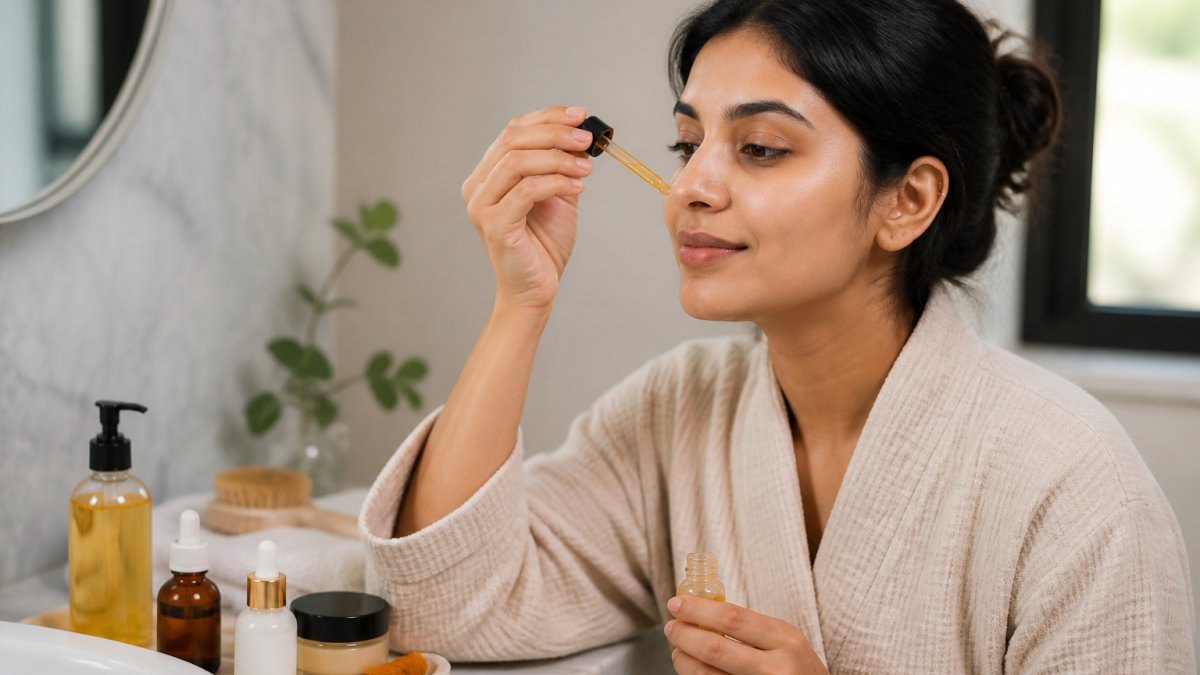
Start with our Turmeric Face Cleanser, which removes dirt toxins and impurities from your face ,Leaving it refreshed and purified.

Morning: Protect and Prevent
- Cleanse gently with lukewarm water. Hot water strips the barrier and is a common, avoidable trigger.
- Apply an antioxidant serum, vitamin C or our Turmeric Serum. If your skin is very reactive, you can skip this step for the first two weeks and add it once your barrier feels stable.
- Moisturize to support the barrier.
- Finish with sunscreen, every single day. This is the one step you never skip, even indoors near windows.
Evening: Treat and Repair
- Cleanse to remove sunscreen and buildup.
- Apply a brightening toner, like our Turmeric Toner, which helps even tone and minimize pores.
- Follow with a gentle moisturizer.
- Add a treatment active only two to three nights a week at first.
Choose Your Tier Before You Choose Your Products
Most routines fail because people jump straight to the strongest version. Pick the tier that matches your skin right now, and only move up when you have had two calm weeks.

- Tier 1, Barrier first (weeks 1-2). Cleanser, moisturizer, sunscreen, and nothing else. No brightening actives at all. This sounds like wasted time, but it is the foundation everything else sits on. If your barrier is compromised, every active you add afterward will sting.
- Tier 2, One gentle brightener (weeks 3-6). Add a single well-tolerated active such as niacinamide or azelaic acid, two to three nights per week. Keep everything else the same.
- Tier 3, Add a second active, separated (weeks 7+). If your skin has stayed calm, you can add a second brightener, but separate them. Use one in the morning and one at night, or alternate nights. Do not stack two new actives in the same application.
How to Combine or Separate Actives
Combining actives is where sensitive skin gets into trouble, so treat these as rules rather than suggestions.
- Separate by time of day. Vitamin C in the morning, a pigment-focused active like tranexamic acid or azelaic acid at night. This reduces the chance of a compounded reaction.
- Alternate nights for exfoliating acids. If you use a gentle lactic acid, do not use it on the same night as a retinoid or a strong brightener.
- Do not stack two new products at once. One new variable at a time is the only way to know what is helping and what is hurting.
If you are unsure whether your skin can handle a step, leave it out for a week and see whether your skin actually looks worse. Most sensitive-skin routines improve when you remove something, not when you add it.
A Note on Consistency Over Intensity
A routine you can follow for six months at Tier 2 will outperform a Tier 3 routine you abandon after three weeks because your skin is angry. Fading pigment is a slow process, and the sensitive-skin version of it is slower still. The goal is not the most aggressive routine you can survive, it is the calmest routine you can sustain.
What to Do When a Product Causes Irritation
Stop the product the moment you notice stinging, redness, or new spots. Don't push through it. That's the single most common mistake we see.
Then do this:
- Pause all actives for at least a week
- Cleanse with water or a gentle cleanser only
- Moisturize twice a day to rebuild the barrier
If irritation doesn't settle within a week or two, see a dermatologist before restarting anything.
How Long Does Hyperpigmentation Take to Fade?
Most people see visible fading in eight to twelve weeks with consistent, gentle care. Stubborn patches and melasma can take several months.
Progress depends on the cause, your skin tone, and how well you protect against UV. Darker skin tones often need longer, because pigment sits deeper.
Track progress with photos in the same lighting every two weeks. It's the only honest way to see change.
Sun Protection for Pigment-Prone Skin: The Non-Negotiable Step
Without sun protection, every other step is wasted. UV exposure and visible light both trigger melanin production, so unprotected skin keeps making new spots.
The American Academy of Dermatology recommends broad-spectrum sunscreen with SPF 30 or higher, reapplied every two hours outdoors (the American Academy of Dermatology).
Our Rosewater Sunscreen is a daily option at $9.99. Reapply it, wear a hat, and avoid peak sun when you can.

When to See a Dermatologist About Stubborn Dark Spots
See a dermatologist if spots don't improve after three months of consistent care, or if a spot changes shape, color, or size. A doctor can also confirm whether you're dealing with melasma, which needs a different plan.
Prescription options like hydroquinone, tretinoin, and oral tranexamic acid can work well, but they carry real risks for sensitive skin. Professional procedures, including chemical peels and laser treatment, also carry a risk of rebound pigment, especially on darker skin.
Gentle, consistent care beats aggressive treatment every time for sensitive skin. If progress stalls, get a professional diagnosis before adding stronger products.
Stubborn dark spots can feel impossible when your skin reacts to everything. FAITH & RICH makes handcrafted skincare for exactly this problem, from our turmeric-based cleanser and toner to our rosewater sunscreen. Explore the Turmeric Toner and Turmeric Serum to start a routine your sensitive skin can actually tolerate.
Frequently Asked Questions
How can I fade hyperpigmentation without irritating my sensitive skin?
Start with one gentle brightening ingredient at a time, such as niacinamide or turmeric, and apply it every other day before building up to daily use. Always follow with a moisturizer to support your skin barrier. Sunscreen every morning is essential because UV exposure can undo your progress. If your skin stings, turns red, or flakes, stop the product for a week and restart with less frequent application.
Which ingredients are gentle enough for sensitive skin and dark spots?
Niacinamide, vitamin C in low concentrations, tranexamic acid, licorice extract, and turmeric are generally well tolerated by sensitive skin. These ingredients help even skin tone while supporting the skin barrier. Avoid starting with high-strength acids or prescription-strength hydroquinone unless a dermatologist recommends them. Patch test any new product on your inner arm for three days before applying it to your face.
Can sunscreen help prevent hyperpigmentation from getting darker?
Yes. Daily sunscreen is the single most important step for fading dark spots and preventing new ones. UV exposure triggers melanocytes to produce more melanin, which darkens existing spots and creates new ones. Choose a mineral sunscreen with zinc oxide or titanium dioxide, which tends to be gentler on sensitive skin, and reapply every two hours when you are outdoors. Even on cloudy days, UV rays reach your skin.
When should I see a dermatologist about hyperpigmentation?
See a dermatologist if dark spots do not improve after three to six months of consistent gentle treatment, if a spot changes shape, color, or size, or if you have melasma that covers a large area. A dermatologist can identify the cause, rule out other conditions, and recommend prescription options like hydroquinone or procedures such as chemical peels and laser treatment when appropriate for your skin type.


