

How to Choose a Hydrating Lip Gloss for Chapped Lips

Table of Contents
- What to Look for in a Hydrating Lip Gloss
- Lip Gloss Ingredients to Avoid for Chapped Lips
- Lip Balm vs Lip Gloss for Hydration
- How to Prep Lips for Makeup
- Choosing the Right Finish for Chapped Lips
- Application Tips for Flaking and Peeling Lips
- How Active Acne Treatments and Environment Affect Your Lips
- Frequently Asked Questions
Last Updated: September 24, 2026
What to Look for in a Hydrating Lip Gloss
A hydrating lip gloss is a lip product built to add shine while pulling moisture into dry, cracked lips. The best ones pair occlusives that seal in water with humectants that attract it. This guide from FAITH & RICH breaks down exactly how to choose a hydrating lip gloss for chapped lips, from ingredient labels to finish and application.

Here's the part most guides skip: gloss gets a bad reputation for being purely cosmetic. That's only true when the formula is thin on real moisturizers.
Key Moisturizing Ingredients That Heal
Look for three ingredient families on the label: humectants, emollients, and occlusives. Each does a different job.
- Humectants like hyaluronic acid and glycerin draw water into the lip tissue.
- Emollients like shea butter, jojoba oil, and coconut oil soften rough texture.
- Occlusives like ceramides and vitamin E seal moisture in so it stays put.
A gloss with all three supports barrier repair instead of just coating the surface. Peptide-infused formulas can also help over time by supporting the skin barrier.
How to Spot a Non-Sticky Formula
A non-sticky formula glides on smoothly and feels comfortable within seconds of application. Sticky gloss usually signals heavy waxes or too much tackifier, which can tug at flaking skin.
Test it on the back of your hand first. Press your lips together. If they cling, it will feel worse on chapped lips.
Lip Gloss Ingredients to Avoid for Chapped Lips
Certain ingredients make chapped lips worse, even inside a gloss that claims to hydrate. Watch for these:
- Drying alcohols like denatured alcohol, which strip moisture.
- Menthol, camphor, and peppermint oil, which tingle but can irritate cracked skin.
- Heavy synthetic fragrance, a common trigger for sensitive skin.
- Added exfoliating acids, which sting on open, flaking lips.
If your lips are raw or bleeding, skip flavored or plumping glosses until they heal. Plain, soothing formulas are safer.
Lip Balm vs Lip Gloss for Hydration
Lip balm and lip gloss for hydration are not the same product, though they overlap. Balm is built for treatment. Gloss is built for shine with a moisture bonus.
| Feature | Lip Balm | Lip Gloss |
|---|---|---|
| Main goal | Heal and protect | Shine and finish |
| Typical texture | Thick, waxy | Smooth, glossy |
| Best for | Overnight repair | Daytime wear |
| Layering | Base layer | Top layer |
The smart move is to use both. Apply balm first to treat, then a hydrating lip gloss on top for finish.
How to Prep Lips for Makeup
Prepping lips for makeup starts with gentle exfoliation, then hydration, then a base. Rushing this step is why gloss looks patchy on dry lips.
Follow these steps:
- Soften lips with a warm, damp cloth for one minute.
- Gently buff with a sugar scrub using light circles.
- Rinse and pat dry. Never rub.
- Apply a thin layer of balm and let it absorb.
- Blot any excess before gloss.
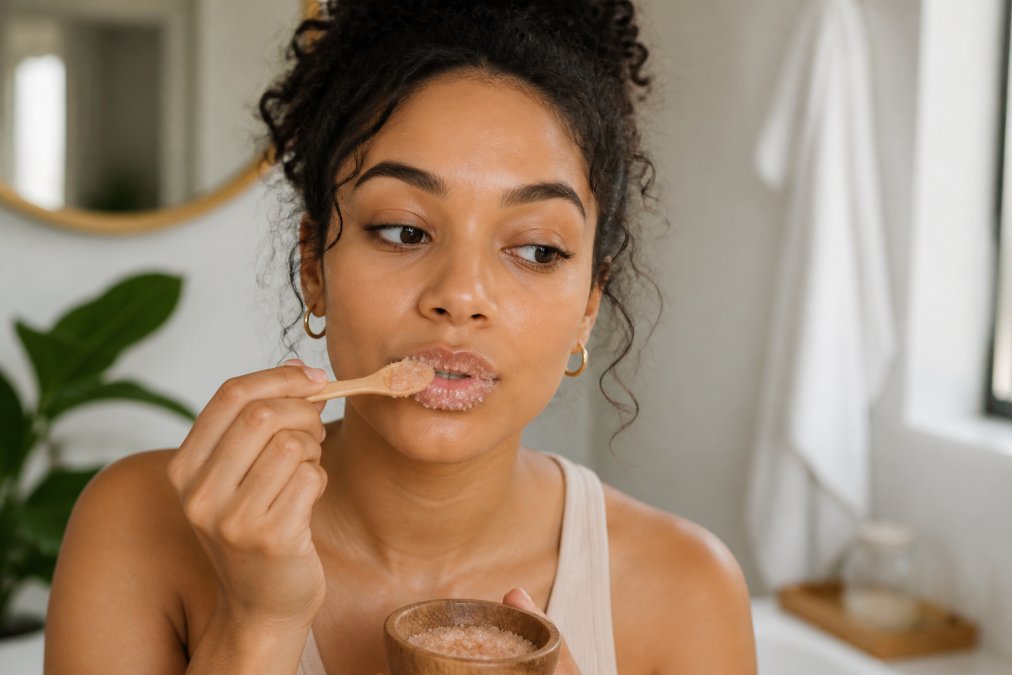
Skip exfoliation if your lips are cracked open. Hydrate instead and wait a day or two.
Choosing the Right Finish for Chapped Lips
Finish is not just a style choice on chapped lips, it is a functional one. The way a gloss reflects light determines how much texture and flaking the eye can see.
Why Shine Hides Texture
Matte and satin finishes scatter light in many directions, which is why every ridge, flake, and vertical lip line shows up in sharp relief. High-shine finishes do the opposite: they create a smooth, continuous reflective surface that bounces light back in a single direction. The eye reads that as smoothness, even when the lip surface underneath is not perfectly even.
This is the same principle behind glossy furniture hiding scratches better than matte finishes. On chapped lips, it is the single most useful thing to understand about finish.
Matching Finish to Your Situation
- Sheer tint: Best for everyday wear and subtle color. The low pigment load means flakes do not get outlined by color, and the slight shine softens texture. Good for lips that are dry but not actively peeling.
- High-shine clear or near-clear: The most forgiving option for chapped lips. Maximum light reflection, minimum pigment to settle into cracks. This is the safest pick when lips are flaking.
- High-shine with color: Works well if the color is sheer to medium. A bold, opaque color draws attention to texture because the pigment sits in every line.
- Shimmer and glitter: Fine if lips are smooth, but shimmer particles are physical objects that lodge in cracks and flakes. On chapped lips, they act like tiny highlighter pens pointing at every rough patch.
- Matte: Avoid until lips fully heal. Matte formulas pull moisture from the surface to achieve their finish, which is the opposite of what chapped lips need.
The Shine-vs-Wear Trade-off
Here is the trade-off most guides skip: the ingredients that create long wear are usually the same ones that create tack and reduce shine. Film-formers and heavy waxes lock color in place, but they also flatten the reflective surface and grip flakes.
That means a long-wearing glossy finish is often a compromise, it holds color longer but looks less glossy and feels grippier as the day goes on. If your priority is healing chapped lips, choose shine and comfort over wear time, and plan to reapply every two to three hours.
Finish and Reapplication
A high-shine finish fades faster than a matte one because the oils that create shine also migrate and absorb. On chapped lips, that is actually helpful: it gives you a natural cue to reapply before lips dry out. A matte finish can look intact for hours while lips underneath are getting drier, which is why matte is a poor choice for compromised lips.
Application Tips for Flaking and Peeling Lips
Flaking skin needs a lighter touch, not more product. Heavy layers of gloss sit on top of flakes and make them more visible.
Try these techniques:
- Use a lip brush instead of the wand for more control.
- Dab, don't swipe, over flaking areas.
- Build in thin layers rather than one thick coat.
- Avoid pressing lips together right after applying.
- Reapply every few hours to keep lips from drying out.
For stubborn peeling, apply a thick balm at night and let it work while you sleep. Then use gloss during the day.
How Active Acne Treatments and Environment Affect Your Lips
Two things quietly wreck lip hydration: acne treatments and the environment. Most lip gloss guides ignore both.
Active acne ingredients like benzoyl peroxide, salicylic acid, and retinoids migrate to the lips. They dry and irritate the skin barrier there, even if you never apply them directly. If you use these treatments, treat your lips like sensitive skin and reach for soothing, non-comedogenic glosses. Maintaining this level of care across your entire face often requires selecting a winter moisturizer for sensitive skin that reinforces the lipid barrier against environmental stressors.
The environment matters just as much. Cold air, indoor heating, wind, and low humidity pull moisture from your lips all day. According to the American Academy of Dermatology's guidance on dry skin, protecting the skin barrier is key to preventing dryness and irritation. A gloss with occlusives helps block that moisture loss.
If you want a formula built for this, FAITH & RICH offers a Let's Be Clear lip gloss with all-day hydration and a non-sticky feel.
Frequently Asked Questions
What is the best lip gloss for chapped lips?
The best hydrating lip gloss for chapped lips contains ingredients that repair the skin barrier, such as shea butter, ceramides, and hyaluronic acid. Look for a non-sticky formula that provides long-wearing moisture without irritating flaking skin. FAITH & RICH lip glosses, like Let's Be Clear, deliver all-day hydration and a smooth glide, making them a solid choice for dry, chapped lips.
Is lip gloss or lip balm better for chapped lips?
Lip balm is generally better for healing chapped lips because it creates an occlusive barrier that locks in moisture. Lip gloss can also help if it contains moisturizing ingredients like jojoba oil or vitamin E, but glosses with drying alcohols or fragrances can make chapping worse. For the best results, apply a nourishing lip balm first, then layer a hydrating lip gloss for shine.
What ingredients should I avoid in lip gloss for chapped lips?
Avoid lip gloss ingredients like menthol, camphor, phenol, and drying alcohols, which can irritate already compromised skin. Also skip heavy fragrances and artificial dyes if your lips are sensitive. Instead, look for emollients and humectants such as shea butter, coconut oil, and hyaluronic acid that support barrier repair and soothe flaking.
How do I prep my lips before applying gloss?
Start by gently exfoliating with a soft lip scrub to remove dead skin. Rinse and pat dry, then apply a thin layer of lip balm and wait two minutes. This preps lips for makeup and prevents gloss from settling into flakes. Finally, apply your hydrating lip gloss for a smooth, high-shine finish that lasts.
Chapped lips don't have to mean giving up gloss. The trick is choosing formulas that treat while they shine, then prepping and reapplying with care. At FAITH & RICH, we build lip glosses with all-day hydration, vibrant shades for every skin tone, and a non-sticky formula that feels comfortable on sensitive lips. Explore the collection and find the shade that makes you feel like yourself.


