

How to Hydrate Dry Lips Naturally: 7 Fixes

Table of Contents
- Why Your Lips Get Dry: Internal vs. External Causes
- What You Need for a Natural Lip Hydration Routine
- Step 1: Hydrate from the Inside Out
- Step 2: The Right Way to Exfoliate Dry Lips Naturally
- Step 3: Best Natural Ingredients for Lip Hydration
- Common Mistakes That Worsen Dry Lips
- When to See a Dermatologist for Chronic Dry Lips
- Conclusion: Your Path to Lasting Lip Hydration
- Frequently Asked Questions
Last Updated: September 5, 2026
Why Your Lips Get Dry: Internal vs. External Causes
Dry lips happen when the lip barrier loses moisture faster than it can replenish it. Unlike the rest of your skin, lips lack oil glands and melanin, making them highly vulnerable to transepidermal water loss (peer-reviewed research). The result is chapped, flaky, and sometimes painful lips that no amount of balm seems to fix.
The root causes split into two categories. External triggers include cold, dry air, wind, sun exposure, and indoor heating that strips humidity. Internal factors matter just as much: dehydration, certain medications, vitamin deficiencies, and even mouth breathing while you sleep. Many people focus only on topical fixes while ignoring the internal side, which is why their lips never fully recover.
Understanding this internal versus external balance changes your approach. You cannot hydrate dry lips naturally with balm alone if your body is dehydrated, and you cannot fix weather-induced damage with water alone. This guide pairs internal habits with external care. Below, we'll show you exactly how to hydrate dry lips naturally using both strategies.
What You Need for a Natural Lip Hydration Routine
A natural lip care routine requires surprisingly few items, but each one serves a specific purpose.
| Tool | Purpose | Frequency |
|---|---|---|
| Gentle lip scrub or soft washcloth | Exfoliation | 1-2 times weekly |
| Humectant (honey, aloe vera) | Draw moisture in | Daily |
| Occlusive (beeswax, shea butter) | Lock moisture in | Several times daily |
| Hydrating lip gloss | All-day moisture and shine | As needed |
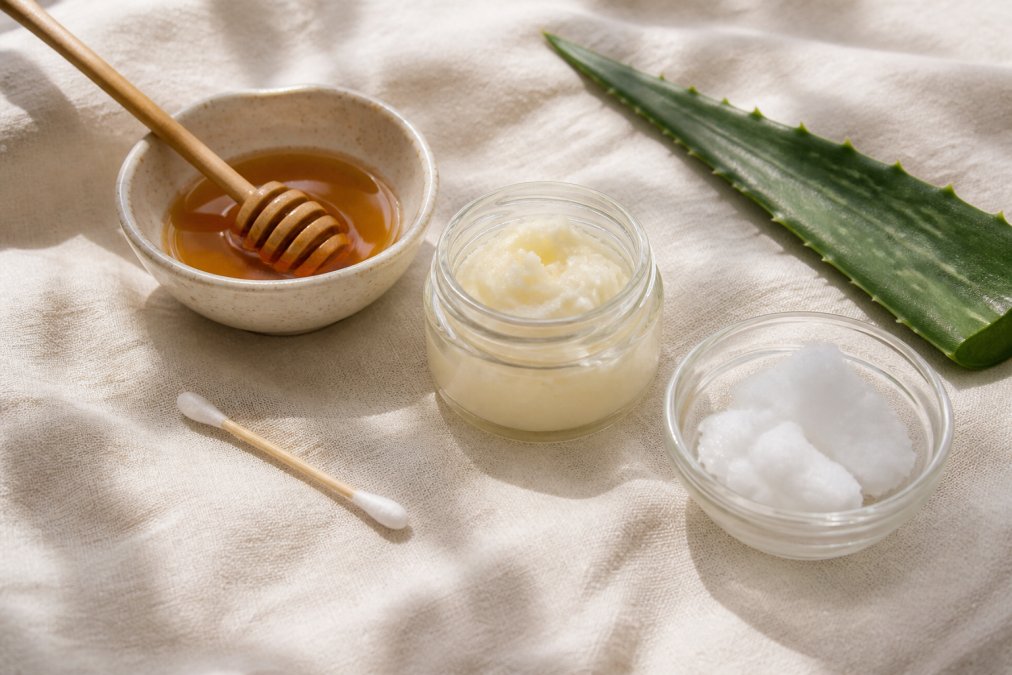
The key distinction is between humectants and occlusives. A humectant like honey or aloe vera pulls water into the outer skin layer. An occlusive like beeswax or shea butter seals that moisture in by forming a protective barrier. You need both for lasting results, and many natural lip balms combine them effectively.
Step 1: Hydrate from the Inside Out
Your lip skin is the last place your body sends water, so internal hydration directly affects lip health. When you are even mildly dehydrated, your lips show it before other skin does.
Start by increasing your daily water intake, especially in dry climates or during winter months when indoor heating accelerates moisture loss. Herbal teas and water-rich foods like cucumber and watermelon also contribute to overall hydration. Caffeine and alcohol have a mild diuretic effect, so balance them with extra water.
Beyond water, consider your environment. Running a humidifier in your bedroom during dry months adds moisture to the air, which reduces transepidermal water loss from your lips while you sleep. This single change often produces noticeable improvement within a week.
Step 2: The Right Way to Exfoliate Dry Lips Naturally
Exfoliation removes dead skin cells so that hydrating ingredients can actually penetrate. However, most people exfoliate too aggressively, which damages the delicate lip barrier and makes dryness worse.
The safe method involves a gentle homemade scrub. Mix one teaspoon of honey with one teaspoon of brown sugar, then massage the mixture onto your lips in small circular motions for about sixty seconds. Rinse with warm water and immediately apply a moisturizing balm or gloss. This routine should happen no more than twice weekly, since over-exfoliation strips the protective barrier.
What not to do matters equally. Avoid commercial scrubs with large, jagged particles, and never pick or bite at flaking skin. Picking creates micro-tears that invite infection and prolong healing. If your lips are cracked or bleeding, skip exfoliation entirely and focus on moisturizing until they heal.
Step 3: Best Natural Ingredients for Lip Hydration
The most effective natural ingredients for lip hydration fall into three categories based on how they work. Choosing products with these ingredients ensures your lips receive both immediate relief and long-term barrier repair.
Humectants draw moisture into the skin. Honey is a standout choice because it is both a humectant and a natural antibacterial, making it ideal for damaged lips. Aloe vera provides soothing hydration, while hyaluronic acid, though not plant-based, is a powerful moisture magnet used in many natural formulations.
Emollients smooth the lip surface by filling gaps between skin cells. Shea butter and coconut oil are rich emollients that soften and condition. Sunflower seed oil is lightweight and absorbs quickly without feeling greasy, making it excellent for daytime wear.
Occlusives form a protective seal that prevents moisture loss. Beeswax is the gold standard, creating a breathable barrier that locks in hydration. Plant-based waxes like candelilla offer a vegan alternative with similar occlusive properties.
When shopping for lip products, look for formulas that combine all three categories. A gloss that layers humectants with occlusive oils delivers all-day hydration while adding a flattering shine. FAITH & RICH lip glosses, available in shades like Crystal Clear and Ruby Rose, pair nourishing ingredients with vibrant color for $7.99 each.

Common Mistakes That Worsen Dry Lips
Several habits undermine even the best natural lip care routine. The most common mistake is relying solely on balm without addressing the underlying cause of dryness. If your lips stay chapped despite frequent application, the problem is likely internal dehydration or an irritant in your products.
Licking your lips is counterproductive. Saliva evaporates quickly and takes natural moisture with it, leaving lips drier than before. Many people lick unconsciously, especially in cold or windy weather. Breaking this habit alone can resolve chronic mild chapping.
Using irritating ingredients hides in many commercial lip products. Fragrances, artificial colors, menthol, camphor, and phenol provide a cooling sensation but actually dry out lips over time. Dermatologist-recommended guidance consistently points to fragrance-free, hypoallergenic formulas for sensitive skin. Check ingredient labels and avoid anything with a strong scent or tingling effect.
Skipping sun protection accelerates lip aging and dryness. Lips need SPF protection just like the rest of your skin, particularly during outdoor activities. Look for natural balms containing zinc oxide or titanium dioxide for broad-spectrum coverage.
When to See a Dermatologist for Chronic Dry Lips
Most dry lips resolve with consistent natural care, but persistent cases warrant professional evaluation. If your lips remain chapped for more than two to three weeks despite proper hydration and gentle care, consult a dermatologist.
Chronic dry lips can signal underlying conditions. The American Academy of Dermatology's guidance on chapped lips notes that persistent dryness may indicate allergic contact dermatitis, a reaction to ingredients in lip products or toothpaste. Certain medications, including some acne treatments and diuretics, also cause lip dryness as a side effect.
Additional warning signs include painful cracking at the corners of the mouth, which may indicate a fungal infection or vitamin B deficiency. Swelling, bleeding, or crusting that does not heal requires prompt medical attention. A dermatologist can identify the specific cause through patch testing or blood work and recommend targeted treatment.
Conclusion: Your Path to Lasting Lip Hydration
Caring for dry lips naturally requires patience and consistency, but the results are worth it. Start by increasing your water intake and adding a humidifier to your environment. Exfoliate gently once or twice weekly, then lock in moisture with products that combine humectants, emollients, and occlusives. Avoid licking your lips and steer clear of irritating ingredients.
The challenge most women face is finding products that deliver genuine hydration without compromising on beauty. FAITH & RICH solves this with lip glosses formulated to keep lips soft and supple while providing vibrant, buildable color. Each $7.99 gloss combines nourishing ingredients with a dazzling shine, so you never choose between lip health and your look. The National Institutes of Health's overview of skin barrier function confirms that consistent barrier support is the foundation of healthy skin, and your lips deserve the same attention as the rest of your face.
Get started with FAITH & RICH and discover lip care that celebrates your natural beauty while keeping your lips hydrated all day.
Frequently Asked Questions
How to rehydrate extremely dry lips?
For extremely dry lips, start by applying a thick occlusive layer, like pure shea butter or beeswax balm, immediately after gently patting your lips with water. This seals in moisture. Avoid licking your lips, as saliva evaporates and worsens dryness. Use a humidifier in your bedroom to add moisture to the air while you sleep. Consistency matters: reapply the balm several times a day, especially after eating or drinking.
What is your body lacking when your lips are dry?
Persistent dry lips can signal a deficiency in certain nutrients. Iron, zinc, and B vitamins, particularly B2 (riboflavin) and B12, are common culprits. Dehydration is the most frequent cause, so check your water intake first. While a deficiency can contribute, the lip barrier is also vulnerable to external factors like cold, dry air and irritants in lip products. If you suspect a deficiency, talk to your doctor about a blood test.
What is the most hydrating thing to put on your lips?
The most effective approach combines a humectant to draw in moisture with an occlusive to lock it in. Look for natural humectants like honey or aloe vera, and follow with an occlusive like beeswax or shea butter to prevent transepidermal water loss. This two-layer strategy repairs the lip barrier more effectively than any single ingredient. For an all-in-one boost, a natural lip gloss with nourishing oils offers both hydration and a protective seal.
Can natural oils effectively heal chapped lips?
Yes, certain natural oils are effective for healing chapped lips because they act as emollients and occlusives. Coconut oil, sunflower seed oil, and jojoba oil help soften the lip barrier and lock in moisture. However, they are not all equal. Oils high in linoleic acid, like sunflower seed oil, are often better for repairing the skin barrier than heavier oils. Apply the oil to damp lips to maximize moisture retention.
This article was written using GrandRanker


