

Best Plant-Based Serums for Anti-Aging: 2026 Guide

Table of Contents
- What Makes a Serum Truly Plant-Based?
- Plant-Based Serum for Fine Lines and Wrinkles: What Actually Works
- Choosing a Serum for Hyperpigmentation and Uneven Skin Tone
- Natural Anti-Aging Skincare Ingredients: A Practical Checklist
- How to Layer Face Serum Without Irritation
- Setting Realistic Expectations for Plant-Based Serums
- Conclusion: Building a Routine That Fits Your Skin
- Frequently Asked Questions
Last Updated: October 12, 2026
What Makes a Serum Truly Plant-Based?
A plant-based serum is a concentrated skincare formula whose active and supporting ingredients come from plants rather than synthetic or animal-derived sources. That distinction sounds simple, but the label on the bottle rarely tells the whole story.
Three terms get used interchangeably, and they shouldn't be:
- Vegan means no animal ingredients and no animal testing. A formula can be vegan and still be built on lab-made molecules.
- Plant-based means the ingredients are sourced from plants. A formula can be plant-based and still contain beeswax or honey, which are animal products.
- Cruelty-free speaks only to testing practices. It says nothing about what's inside.
At FAITH & RICH, we build our skincare around plant extracts, honey, and handcrafted formulas, so we read ingredient lists closely. The U.S. Food and Drug Administration's cosmetics labeling guidance is worth checking if you want to understand what "natural" legally can and cannot claim.
Here's the part most guides skip: plant-based does not automatically mean gentle. Essential oils and botanical extracts can irritate sensitive skin just as easily as synthetic actives. Sourcing matters more than the marketing.
| Label Term | What It Guarantees | What It Doesn't |
|---|---|---|
| Vegan | No animal ingredients or testing | Plant origin of ingredients |
| Plant-based | Plant-derived ingredients | Absence of animal byproducts like honey |
| Cruelty-free | No animal testing | Anything about ingredients |
| Natural | Loosely regulated term | Safety or effectiveness |
Plant-Based Serum for Fine Lines and Wrinkles: What Actually Works
The ingredients that genuinely soften fine lines and wrinkles fall into a few reliable categories, and it helps to know what each one is actually doing rather than trusting the front of the bottle.
Peptides. Short chains of amino acids, Matrixyl (palmitoyl pentapeptide-4), Argireline (acetyl hexapeptide-8), and Syn-Coll (palmitoyl tripeptide-5) are the most studied names, act as signaling molecules. They tell fibroblasts to ramp up collagen and elastin production.
Humectants. Hyaluronic acid, glycerin, aloe, and beta-glucan pull water into the upper layers of the skin. The effect is real but temporary, think hours, not weeks. That plumping is why fine lines look softer the morning after you apply a good humectant serum, and why they reappear by evening.
Antioxidants. Vitamin C (L-ascorbic acid, or the gentler derivatives like sodium ascorbyl phosphate and tetrahexyldecyl ascorbate), turmeric, green tea, and ferulic acid neutralize the free radicals generated by UV exposure and pollution. Over months, that defense translates into slower appearance of new lines rather than erasure of existing ones.
What plant-based serums cannot do. They will not match a prescription retinoid for deep wrinkle remodeling. Tretinoin has decades of clinical evidence behind it; no botanical has that body of research.
Evidence quality varies widely. Some actives, niacinamide, vitamin C, and hyaluronic acid among them, have solid peer-reviewed support. Others, including many "botanical stem cell" and exotic plant extract claims, rest mostly on in-vitro studies or tradition.
Combining actives without irritation. A common pattern is to pair one humectant with one peptide or antioxidant rather than stacking three actives at once. If you want to add vitamin C and a peptide, use them in the same routine only after each has been tolerated alone for about two weeks.
Our Turmeric Serum ($19.99) fits the antioxidant-and-turnover category: it supports healthy cell turnover and helps balance oil, which matters if you want a smoother-looking surface without a heavy finish. For a hydration-first option, our Collagen & Snail Essence Face Serum ($24.99) absorbs quickly and works for both morning and evening use.

Choosing a Serum for Hyperpigmentation and Uneven Skin Tone
Dark spots and discoloration need a different approach than fine lines, because the underlying mechanism is different. Pigment forms when melanocytes produce excess melanin in response to UV exposure, hormonal shifts, inflammation, or past acne. A serum that only hydrates will not touch that process.
The plant-derived actives worth knowing.
- Vitamin C. Inhibits tyrosinase, the enzyme that drives melanin production, and doubles as an antioxidant. L-ascorbic acid is the most studied form but also the least stable; derivatives like sodium ascorbyl phosphate and tetrahexyldecyl ascorbate are gentler and more shelf-stable, though generally less potent.
- Licorice root extract. Contains glabridin, which also inhibits tyrosinase. Often used at low percentages because it is well tolerated.
- Niacinamide. A form of vitamin B3 that interferes with the transfer of melanin from melanocytes to surrounding skin cells. It is one of the better-evidenced brighteners and is usually well tolerated, though some people flush at high concentrations.
- Alpha arbutin and kojic acid. Both tyrosinase inhibitors derived from plant sources. Effective but often unstable in light, so packaging matters.
Timing and routine placement. Brightening serums belong in your morning routine, because pigment concerns and sun exposure are linked. Apply after cleansing and toning, before moisturizer. If you also use vitamin C, they can share the same step, many brightening serums already contain it. Pair everything with a broad-spectrum sunscreen of at least SPF 30, reapplied through the day. No serum, plant-based or otherwise, outruns unprotected UV exposure; without sunscreen, you are refilling the pigment you are trying to fade.
Realistic timelines. Most people see the first visible change in uneven tone after six to twelve weeks of daily use. Deeper or older spots can take three to six months. Consistency beats intensity: gentle daily use over several months generally outperforms aggressive weekly treatments, which tend to trigger inflammation, and inflammation itself can leave behind more pigment than you started with.
When to stop. If a product stings, burns, or turns your skin red, that is not "it working." That is irritation. Discontinue, let your barrier recover for a week or two, and reintroduce at half the frequency. If you have melasma or pigment that appeared suddenly or changed shape, see a dermatologist rather than experimenting with serums.
Natural Anti-Aging Skincare Ingredients: A Practical Checklist
Use this checklist when you're reading labels or comparing plant-based serums online. It's the same filter we'd apply to any formula.
- A named humectant: hyaluronic acid, glycerin, or aloe
- A peptide or plant collagen-supporting extract
- An antioxidant: vitamin C, turmeric, or green tea
- No alcohol denat in the first five ingredients if your skin is dry
- Fragrance listed, not hidden behind "parfum" plus botanicals
- A pump or dropper, not an open jar, to protect active ingredients
- A realistic claim: "reduce the appearance of" beats "eliminate wrinkles"
That last point matters. Under Federal Trade Commission advertising rules for health and beauty claims, a brand has to be able to back up what it promises. Vague, sweeping claims are a red flag.
For more on how ingredients are evaluated for safety, the Cosmetic Ingredient Review's safety assessments is a solid independent resource.
How to Layer Face Serum Without Irritation
Layer from thinnest to thickest, and give each product about a minute to settle before the next. That single rule prevents most of the pilling, stinging, and congestion people blame on the serum itself.
The order that works for most routines:
- Cleanser
- Toner, if you use one
- Water-based serum
- Oil-based serum or facial oil
- Moisturizer
- Sunscreen, in the morning
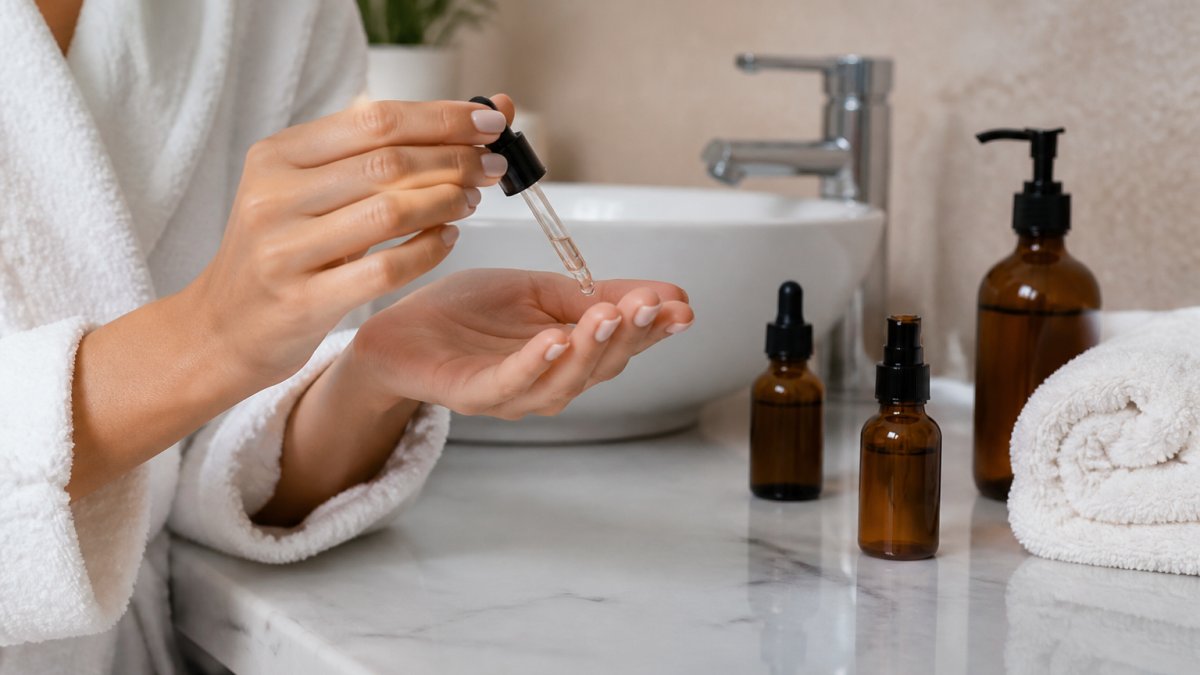
Two mistakes show up constantly. First, people layer vitamin C and retinol in the same step and wonder why their skin burns. Use one in the morning and the other at night. Second, people apply serum to bone-dry skin and lose half the absorption. Damp skin is better.
If you're introducing a new active, add it alone for two weeks before combining it with anything. Your skin needs time to tell you whether it agrees.
Setting Realistic Expectations for Plant-Based Serums
Plant-based serums improve hydration, plumping, brightness, and the appearance of fine lines. They do not reverse deep wrinkles or erase years of sun damage, and no honest brand will tell you they do.
Timelines matter. Hydration and glow often show up within a couple of weeks. Fine lines and uneven tone typically take two to three months of consistent use before you'd notice a real difference. That's the nature of working with your skin's own renewal cycle rather than forcing it.
Evidence quality varies widely across the category. Some botanical actives have solid research behind them; others ride on tradition and marketing. When you're comparing products, favor formulas that name their actives and their concentrations over ones that lean on vague "botanical complex" language.
Cost per use is the honest way to compare value. A $20 serum you use daily for two months costs about the same per day as a $60 jar you abandon after a week.
Conclusion: Building a Routine That Fits Your Skin
The hardest part of anti-aging skincare isn't finding products. It's building a routine you'll actually keep, with ingredients that suit your skin type and concerns instead of the ones trending this month.
That's the space FAITH & RICH was built for. Our handcrafted toners, honey-based soaps, and plant-forward serums are designed to work as a routine, not a shelf of mismatched experiments. The Turmeric Serum handles oil balance and cell turnover. The Collagen & Snail Essence Face Serum delivers lightweight daily hydration. Together with a good sunscreen, they cover the basics that actually move the needle.

Start with one product, use it consistently for a month, and let your skin answer before you add the next.
Frequently Asked Questions
Are plant-based serums as effective as other anti-aging serums?
Plant-based serums can be effective when they include proven actives like vitamin C, peptides, or hyaluronic acid, whether those actives are plant-derived or lab-made. The key is the ingredient blend, not the plant label. A serum with a stable vitamin C source and humectants will support brightening and hydration regardless of origin. Check the ingredient list for actives that target your specific skin concerns rather than relying on the plant-based claim alone.
Can plant-based serums help with hyperpigmentation?
Yes, certain plant-based ingredients can help fade the appearance of dark spots and uneven skin tone over time. Look for serums containing vitamin C, turmeric, or other plant extracts known for brightening. Consistency matters more than strength: daily use over eight to twelve weeks typically shows more improvement than occasional application of a high-concentration product. Pair with daily sunscreen, since UV exposure will undo much of the progress.
How do I layer a face serum with my other products?
Apply your serum after cleansing and toning, but before moisturizer. Start with the thinnest consistency and work toward thicker ones. If you use more than one serum, apply water-based formulas first, then oil-based ones. Wait about 30 to 60 seconds between layers so each product absorbs. A lightweight serum like the Collagen & Snail Essence Face Serum works well in both morning and evening routines.
How often should I use an anti-aging serum?
Most plant-based anti-aging serums are designed for daily use, typically once in the morning and once at night. If your skin is sensitive, start with once daily and build up over two weeks. Ingredients like retinol alternatives or exfoliating acids may need a slower introduction. If you notice redness, stinging, or peeling, reduce frequency and reintroduce gradually. Consistency over months, not days, is what drives visible results.
Building a routine that respects your skin takes patience, and it takes products you trust. FAITH & RICH offers handcrafted, plant-forward skincare made to support your natural beauty rather than fight it: a community-driven brand with honey-based formulas, handcrafted toners, and serums designed for daily use. Explore the collection and find the routine that fits your skin.
EXPLORE


