

Best Natural Skincare for Aging: 2026 Product Picks

Table of Contents
- How We Chose the Best Natural Skincare for Aging
- Comparison Table: Best Natural Skincare for Aging at a Glance
- 1. Collagen & Snail Skincare Set: Best Complete Routine
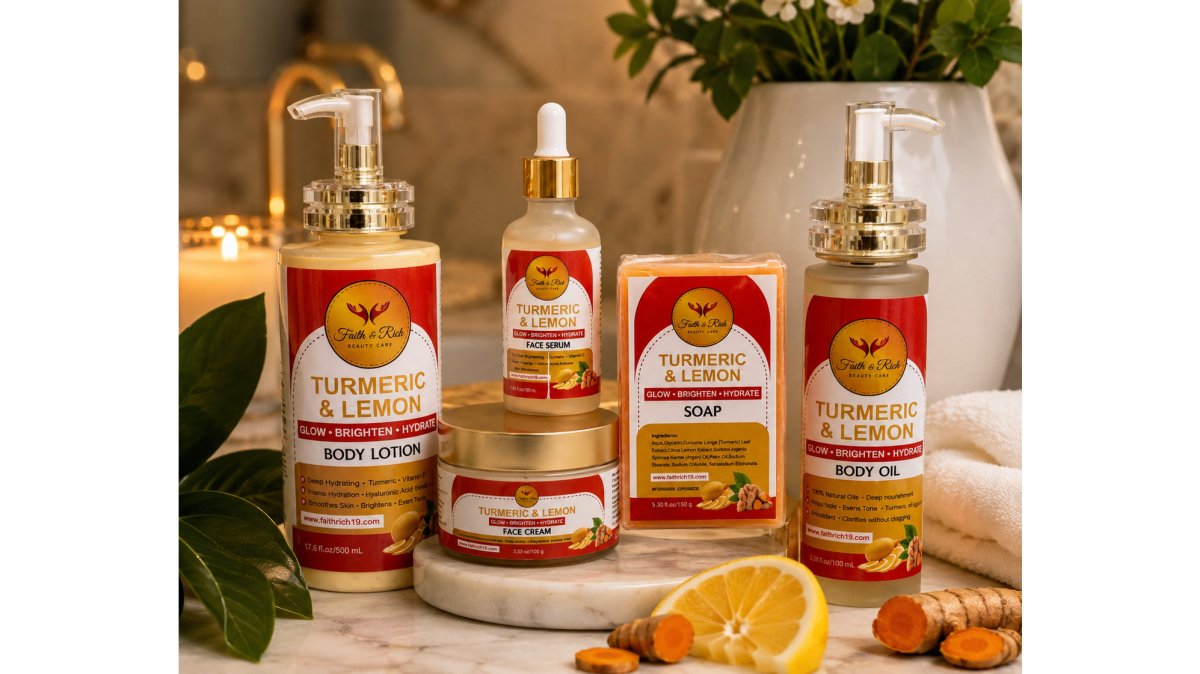
- 2. Turmeric & Lemon Set: Best for Dark Spots and Uneven Tone
- 3. Turmeric Serum: Best Lightweight Brightening Serum
- Natural Anti-Aging Ingredients That Actually Work
- How to Build a Skincare Routine for Aging Skin
- Ingredient Synergy and What Not to Mix
- Frequently Asked Questions
Last Updated: September 13, 2026
How We Chose the Best Natural Skincare for Aging
The best natural skincare for aging targets specific concerns: collagen production, dark spots, and skin elasticity. This guide from FAITH & RICH evaluates products on ingredient quality, safety, and real results, not marketing claims.
According to Dermatology research on botanical antioxidants, plant-based compounds like turmeric and lemon offer measurable anti-inflammatory benefits. We prioritized products with transparent ingredient lists and proven active botanicals.
Below, we break down the top picks for building an effective natural anti-aging routine.
Comparison Table: Best Natural Skincare for Aging at a Glance
| Product | Price | Best For | Key Ingredients |
|---|---|---|---|
| Collagen & Snail Set | $119.99 | Complete routine | Collagen, snail extract |
| Turmeric & Lemon Set | $79.99 | Dark spots | Turmeric, lemon, vitamin C |
| Turmeric Serum | $19.99 | Lightweight brightening | Turmeric, antioxidants |
1. Collagen & Snail Skincare Set: Best Complete Routine
This six-piece kit covers face and body with collagen and snail extract to support moisture barrier function and skin elasticity. It suits all skin types and simplifies routines into one purchase.


What works: The set includes serum, lotion, and body care, so you avoid mixing incompatible products. Collagen helps maintain firmness while snail extract supports cellular regeneration.
What doesn't: The price point is higher than buying individual items, though the bundle covers more ground.
Pros and Cons
Pros:
- Complete face and body routine in one kit
- Suitable for all skin types
- Targets texture and elasticity
Cons:
- Higher upfront cost
- Requires consistent use for visible results
American Academy of Dermatology skincare guidance
2. Turmeric & Lemon Set: Best for Dark Spots and Uneven Tone
Turmeric and lemon combine to fade hyperpigmentation and brighten skin tone. Curcumin in turmeric reduces inflammation while lemon's vitamin C gently exfoliates and lightens dark spots.
What works: This set directly addresses stubborn hyperpigmentation and acne scars. The antioxidant content helps slow free radical damage linked to premature aging.
What doesn't: Lemon can increase sun sensitivity, so daily mineral sunscreen is essential.
Pros and Cons
Pros:
- Targets dark spots and uneven tone
- Rich in antioxidants
- Includes multiple products
Cons:
- Requires sun protection during use
- Not ideal for very sensitive skin
3. Turmeric Serum: Best Lightweight Brightening Serum
This serum promotes healthy cell turnover and balances oil without feeling heavy. At $19.99, it's an accessible entry point for anyone testing turmeric-based skincare.
What works: It absorbs quickly and layers well under moisturizer. The formula helps control oil while improving circulation for a brighter complexion.
What doesn't: It's a single product, not a full routine, so pair it with a cleanser and moisturizer.
Pros and Cons
Pros:
- Affordable at $19.99
- Lightweight, non-greasy
- Balances oil production
Cons:
- Not a complete routine
- Results take consistent use
Natural Anti-Aging Ingredients That Actually Work
The most effective natural anti-aging ingredients earn that label because they act on a specific pathway in mature skin, not because they sound botanical. Below is what each one actually does, how it is typically used, and where the evidence is strongest.
Vitamin C (from lemon, kakadu plum, or stabilized ascorbic acid). Vitamin C is a cofactor for the enzymes that build collagen, and it interrupts the oxidative chain that breaks collagen down. That dual role is why it shows up in almost every anti-aging routine. The catch with lemon juice is concentration and pH: raw lemon is far too acidic for daily facial use and its ascorbic acid degrades quickly in light. A stabilized vitamin C serum in the 10-20% range is the form most practitioners reach for; lemon works better as a supporting ingredient in a formulated product than as a DIY treatment.
Turmeric (curcumin). Curcumin suppresses inflammatory signaling that accelerates collagen breakdown and melanin overproduction. It is fat-soluble, so it absorbs best from an oil or emulsified base rather than a water-based toner. Curcumin is also a photosensitizer in high concentrations, which is why it belongs in evening routines or in low-percentage daytime formulas paired with SPF.
Bakuchiol. This is the plant-derived retinol alternative most worth knowing about. Bakuchiol comes from the seeds of Psoralea corylifolia and appears to modulate retinoic-acid-responsive genes without the irritation profile of retinol. Several small split-face studies have found comparable improvements in fine lines and hyperpigmentation with less peeling and redness. It is a reasonable option for mature skin that cannot tolerate retinoids, though it is not a one-to-one substitute, expect gentler, slower results.
Collagen (topical). Topical collagen does not replace the collagen in your dermis; the molecule is too large to penetrate. What it does well is act as a humectant and film-former, temporarily plumping the surface and reducing transepidermal water loss. Treat it as a moisturizing ingredient, not a structural rebuild.
Snail extract (snail mucin). Snail secretion filtrate is rich in glycoproteins, hyaluronic acid, and growth-factor-like peptides. It supports barrier repair and hydration, which indirectly helps the appearance of fine lines. It is not a collagen stimulator, and anyone with a dust-mite or shellfish allergy should patch-test first.
Niacinamide. Often overlooked in "natural" guides because it is a single molecule rather than a plant, niacinamide strengthens the barrier, reduces redness, and helps even tone at 2-5%. It layers cleanly with almost everything on this list.
Hyaluronic acid and glycerin. These are humectants, not actives. They pull water into the upper layers of skin and make everything above them look smoother. They work best applied to damp skin and sealed with an emollient.
A common pattern in mature skin is that barrier function declines at the same time collagen does. That is why the strongest routines pair one collagen-supporting active (vitamin C or bakuchiol) with one barrier-supporting ingredient (niacinamide, snail mucin, or a ceramide-rich moisturizer) rather than stacking five actives at once.
Dermatology research on botanical antioxidants
How to Build a Skincare Routine for Aging Skin
The four-step framework, cleanse, treat, moisturize, protect, is the skeleton. What most guides skip is that the same framework produces very different routines depending on where you are in the aging process. Below is how to adapt it by decade, plus the morning and evening split.
The four steps, in order
- Cleanse. A gentle, non-foaming cleanser. Harsh surfactants strip the lipids that mature skin already produces less of. If your skin feels tight after washing, the cleanser is too strong.
- Treat. One targeted active per concern. Apply to slightly damp skin so humectants can pull water in.
- Moisturize. An emollient or cream that seals in water and delivers ceramides, fatty acids, or cholesterol. This is the step that makes the actives tolerable.
- Protect. Mineral SPF every morning, reapplied every two hours outdoors. This is non-negotiable if you are using vitamin C, turmeric, or any exfoliant.
Morning versus evening
Morning: cleanse (or just rinse), vitamin C serum, moisturizer, mineral SPF. Antioxidants in the morning work with your sunscreen to blunt UV-driven free radicals.
Evening: cleanse, treatment active (bakuchiol, a gentle AHA, or a turmeric serum), moisturizer. Evening is when you use anything photosensitizing and when barrier repair does its best work.

Adapting the routine by decade
In your 40s. Collagen production is still meaningful, so this is the decade to be consistent rather than aggressive. A vitamin C serum in the morning and a bakuchiol or low-strength retinoid at night covers most concerns. Add a niacinamide serum if redness or uneven tone is the main complaint. Do not add exfoliation more than twice a week.
In your 50s. Estrogen decline accelerates collagen loss and reduces oil production, so skin gets drier and thinner at the same time. Shift the emphasis toward barrier support: a ceramide-rich moisturizer, a hydrating serum under it, and a gentler active. Many people find they can no longer tolerate the retinoid they used in their 40s and switch to bakuchiol or a lower frequency.
In your 60s and beyond. Fragility and barrier function become the priority. Cleansing should be minimal, moisturizing should be generous, and actives should be introduced one at a time with at least two weeks between additions. Sun protection matters more, not less, because cumulative UV damage is what most visible aging reflects.
The consistency rule
A three-product routine used daily outperforms a ten-product routine used sporadically. If you can only commit to two steps, make them moisturizer and mineral SPF, those two do more for the visible signs of aging than any single serum.
Ingredient Synergy and What Not to Mix
Some natural ingredients work better together, while others cancel each other out or cause irritation. Turmeric and lemon pair well for brightening, but lemon should never be combined with retinoids due to increased irritation risk.
- Good pairings: Turmeric + lemon, collagen + snail extract, vitamin C + SPF
- Avoid mixing: Lemon + retinoids, strong exfoliants + vitamin C
- Use caution: Turmeric can stain light fabrics and temporarily tint skin
Frequently Asked Questions
What natural ingredients are most effective for reducing wrinkles?
Collagen and snail secretion filtrate help improve the appearance of skin texture and elasticity, while turmeric provides antioxidants that fight free radical damage. Vitamin C from lemon supports collagen production and brightens hyperpigmentation. A 2026 routine should pair these with a mineral sunscreen to prevent further fine lines. Look for serums and sets that combine these ingredients rather than relying on a single product.
How can I build a natural skincare routine for mature skin?
Start with a gentle cleanser like a turmeric face cleanser, then apply a hydrating serum such as the Collagen & Snail Essence Face Serum. Follow with a moisturizer or facial oil to support the moisture barrier, and finish every morning with mineral SPF. At night, use a richer body oil or lotion on areas prone to crepiness. Consistency matters more than the number of steps, so keep it to three or four products you will actually use daily.
Are organic skincare products better for aging skin?
Certified organic and non-toxic formulas reduce exposure to synthetic pesticides and harsh preservatives, which can irritate mature skin. However, organic alone does not guarantee anti-aging results. What matters is whether the product contains proven actives like collagen, antioxidants, and vitamin C. A handcrafted organic serum with no clinical actives will not outperform a well-formulated non-organic one. Check the label for both certification and active ingredient concentration.
What should I look for in natural anti-aging skincare labels?
Look for specific botanical extracts such as turmeric, lemon, and snail secretion filtrate rather than vague terms like 'natural blend.' Check for non-comedogenic and dermatologist-tested claims if you are acne-prone. Avoid products listing synthetic fragrance or parabens. A good label will also state the concentration or at least the order of key ingredients. If a brand does not disclose what is inside, assume it is not worth the risk for aging skin.
Can natural skincare really fade stubborn hyperpigmentation and dark spots?
Natural ingredients like turmeric and lemon can help fade dark spots by slowing excess melanin production and gently exfoliating dead skin cells. They work best on surface-level hyperpigmentation and when used consistently for at least eight to twelve weeks. For deep sun damage, natural products may lighten but not erase spots entirely. Pair them with daily mineral sunscreen to prevent new spots from forming, and manage expectations: improvement is gradual.
The challenge with natural skincare is finding products that deliver real results without harsh synthetics. FAITH & RICH formulates handcrafted toners and turmeric-based treatments designed to fade dark spots, support elasticity, and reduce signs of aging. Explore the Turmeric Serum, Turmeric & Lemon Set, and Collagen & Snail Skincare Set to build a routine that works. Get started with FAITH & RICH and see visibly brighter, healthier-looking skin.


