

Best Luxury Natural Lip Gloss: 9 Clean Picks for 2026

Table of Contents
- How We Chose the Best Luxury Natural Lip Gloss
- Quick Comparison: 9 Luxury Natural Lip Glosses
- What Clean Beauty Lip Gloss Should Actually Contain
- 1. Ruby Rose: The Everyday Rose Nude
- 2. Glamorous: High-Shine Without the Stick
- 3. Bloody Mary: The Bold Red Statement
- 4. Lush Violet: The Splurge Shade
- 5. Juicy: A Sheer Fruit-Tinted Finish
- 6. Coconut: The Hydration Workhorse
- 7. Venus: The Warm Nude for Medium Tones
- 8. Let's Be Clear: The Layering Essential
- 9. Crystal Clear: The Glass-Shine Minimalist
- Understanding Non-Toxic Certifications
- Gloss vs. Oil: Which Is Right for You?
- Lip Gloss for Sensitive Skin: What to Avoid
- Layering Techniques That Actually Work
- Sustainability and Packaging: The Overlooked Factor
- Frequently Asked Questions
Last Updated: September 14, 2026
How We Chose the Best Luxury Natural Lip Gloss
Finding the best luxury natural lip gloss means balancing clean ingredients against the high-shine finish you actually want to wear. This guide evaluates nine picks on ingredient transparency, wear time, and value. According to the FDA's cosmetics labeling guidance, terms like "natural" carry no legal definition, so we judged formulas on what they list, not what they claim.
We weighed four factors: ingredient sourcing, finish quality, comfort during extended wear, and price per ounce, prioritizing brands that disclose full component lists and avoid synthetic fragrance.
The clean beauty market has grown crowded, and price rarely predicts quality. A $40 tube can perform worse than a $10 one.
Quick Comparison: 9 Luxury Natural Lip Glosses
Here is how the nine picks compare at a glance.
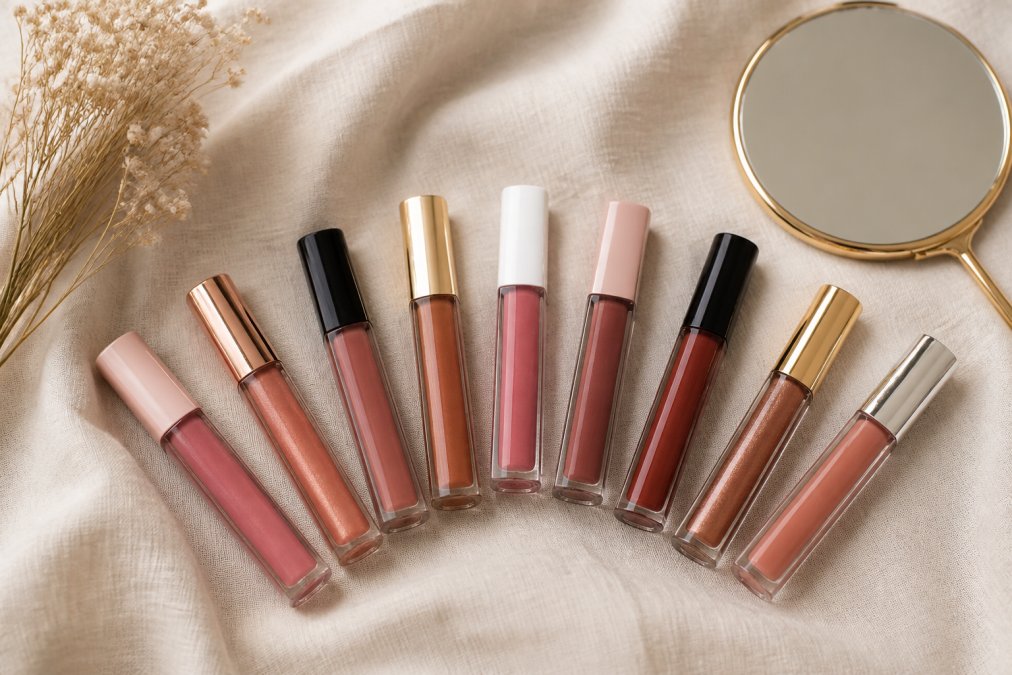
| Shade | Price | Finish | Best For |
|---|---|---|---|
| Ruby Rose | $7.99 | Sheer rose nude | Everyday wear |
| Glamorous | $7.99 | High shine | Non-sticky finish |
| Bloody Mary | $7.99 | Bold red | Evening looks |
| Lush Violet | $9.99 | Saturated violet | Statement color |
| Juicy | $7.99 | Sheer fruit tint | Layering |
| Coconut | $7.99 | Clear gloss | Hydration focus |
| Venus | $7.99 | Warm nude | Medium skin tones |
| Let's Be Clear | $7.99 | Transparent | Over lipstick |
| Crystal Clear | $7.99 | Glass shine | Minimal looks |
What Clean Beauty Lip Gloss Should Actually Contain
A clean beauty lip gloss should lead with emollients and occlusives that hold moisture in, not just sit on top. Look for shea butter, jojoba oil, and vitamin E near the top of the list.

What most guides miss is that "paraben-free" and "synthetic fragrance-free" labels say nothing about heavy metal content. The Campaign for Safe Cosmetics ingredient resources notes that color additives can carry trace contaminants, and few brands test for them. Ask for batch testing data before you trust a luxury price tag.
1. Ruby Rose: The Everyday Rose Nude
Ruby Rose is my workday shade: a sheer finish that flatters most skin tones without a mirror. It glides on smooth and stays comfortable all afternoon. At $7.99, it offers a moisturizing base. Color fades after about three hours, so you will reapply after lunch, a fair trade-off for a nude.
Why It Earns a Spot
- Non-sticky texture that does not catch on hair
- Buildable coverage from a whisper to a soft wash
- Pairs cleanly over a matte lipstick base
2. Glamorous: High-Shine Without the Stick
Glamorous offers a non-tacky finish. It reads wet without the gooey drag, layering evenly over bare lips and liner, and the shine holds roughly four hours.

3. Bloody Mary: The Bold Red Statement
Bloody Mary is for anyone who wants a red that photographs well. The pigment reads as a true red rather than a washed-out tint, wear time runs closer to five hours with minimal transfer, and the emollient base keeps it from settling into lip lines. Save it for evenings and events.

4. Lush Violet: The Splurge Shade
Lush Violet sits at $9.99, and offers a complex pigment load. The violet reads cool and modern without turning chalky, builds to near-opaque in two passes, and layers beautifully over a violet liner; on its own, it is a statement.
5. Juicy: A Sheer Fruit-Tinted Finish
Juicy gives a sheer fruit tint that works as a topper or alone. The grape-toned wash adds warmth without competing with your makeup, and it is excellent for layering, over matte lipstick to soften the finish, or over liner to add dimension. Hydration holds well, though the tint fades faster than the base.
6. Coconut: The Hydration Workhorse
Coconut is the clear gloss for people whose lips are the priority, focusing on moisturizing rather than color.
The American Academy of Dermatology's lip care guidance recommends reapplying lip products frequently in dry conditions, and Coconut is built for exactly that routine. The texture stays silky rather than waxy.
Sensitive skin types tend to tolerate this one best because it skips synthetic fragrance.
7. Venus: The Warm Nude for Medium Tones
Venus is a warm nude that flatters medium and olive skin tones. The finish is glossy but restrained.
It shares the same non-sticky base as the rest of the line, with wear time around three to four hours.
8. Let's Be Clear: The Layering Essential
Let's Be Clear is a transparent gloss that sits over whatever you already wear, adding shine without shifting your base color. It suits anyone who wants gloss but refuses to give up their favorite lipstick, and works as a barrier layer under drying matte formulas. The trade-off: no color of its own.
9. Crystal Clear: The Glass-Shine Minimalist
Crystal Clear delivers the glass-like shine that defines the current minimal look, offering a true high-shine finish without pigment. It is lightweight, absorbs quickly, and leaves a silky texture rather than a film. For everyday wear with no color commitment, this is the one.
Understanding Non-Toxic Certifications
Non-toxic certifications vary widely in what they verify. Some certify ingredient sourcing, others test finished batches for contaminants, and a few only attest that a brand avoided a short list of banned substances. The seal is a starting point, not a verdict.
The most common certifications you will see on luxury natural lip gloss fall into three buckets:
- Ingredient-screening seals verify that a formula avoids a defined "free-from" list (parabens, phthalates, synthetic fragrance). They say nothing about what the formula does contain.
- Finished-batch testing seals require the manufacturer to test the product as sold, which is the only way to catch contamination introduced during manufacturing.
- Organic-content seals certify the percentage of certified-organic agricultural ingredients by weight. A gloss can carry an organic seal and still be mostly synthetic emollient.
The Testing Gap Most Guides Skip
Here is what the certification conversation omits: a "clean" or "non-toxic" seal does not mean the product was screened for PFAS (per- and polyfluoroalkyl substances) or heavy metals like lead, cadmium, and arsenic. Color additives and mineral pigments can carry trace heavy-metal contamination from mining, and PFAS have historically been used in cosmetics for smoothness and wear. A "no parabens" seal tells you nothing about either.
A common pattern among transparent brands is to publish certificates of analysis (COAs) or batch-testing summaries on request. If a brand markets itself as clean but will not share testing data, treat the certification badge as marketing rather than proof. The Environmental Working Group's Skin Deep database lets you look up individual ingredients and see hazard ratings, which is more useful than any single seal, but it rates ingredients, not finished batches, so it cannot substitute for a COA.
Gloss vs. Oil: Which Is Right for You?
Gloss gives shine and color with a thicker, longer-lasting film; oil delivers lighter hydration and a subtler sheen but disappears faster. Choose gloss for visible color and a defined finish, oil if lip health is the priority and you reapply often. For sensitive skin, few-ingredient oils cause fewer reactions; for events and photographs, gloss wins.
Lip Gloss for Sensitive Skin: What to Avoid
Most sensitive-skin advice stops at "avoid fragrance," which is not enough if you have a diagnosed condition or known allergy. Two groups get almost no coverage in luxury natural lip gloss guides: people with contact dermatitis on or around the lips, and people with essential-oil allergies, ironic, since "natural" formulas are the most likely to contain them.
Contact Dermatitis and the Lip Line
Contact dermatitis around the mouth (cheilitis when it affects the lips) shows up as persistent dryness, cracking at the corners, or a rash following the outline of where you apply product. The reaction is often not to the pigment but to a preservative, fragrance component, or botanical extract. If your lips react to one gloss but not another, compare the ingredient lists and isolate what differs, do not assume all "natural" products are safe.
For this group, the safest formulas are the shortest ones: a base of a single oil or butter plus vitamin E, with no added fragrance, no essential oils, and no plumping agents. Clear and nude shades also carry lower pigment loads, which reduces exposure to color additives and their trace contaminants.
Essential-Oil Allergies Are Not Rare
"Natural fragrance" is often essential oils, a leading cause of allergic contact dermatitis in cosmetics. Peppermint, cinnamon, citrus, and lavender oils are common triggers, appearing frequently in lip plumpers and "tingling" glosses because the sensation reads as effectiveness, that tingling is irritation, not hydration. If you have reacted to a mint or cinnamon lip product, scan for oils listed by botanical name (for example, Mentha piperita for peppermint).
A Practical Screening Routine
- Patch-test on your inner arm for 24 hours before applying anything to your lips.
- Keep a note of the exact product and the reaction, so you can spot the shared ingredient across brands.
- Choose fragrance-free over "naturally fragranced", they are not the same claim.
- Skip plumping agents entirely if your lips crack easily.
If reactions are frequent or severe, a dermatologist can patch-test you against specific cosmetic allergens, which is far more precise than trial and error.
Layering Techniques That Actually Work
Layering is where a good gloss becomes a great one: start with a thin liner to define shape, then apply gloss only to the center of the lip for a fuller look.
For all-day wear, blot a matte lipstick first, then top with a clear gloss. The matte base grips the gloss and extends wear by hours.
Sustainability and Packaging: The Overlooked Factor
Packaging is where most clean beauty brands lose their credibility. A plant-based formula in a non-recyclable tube still ends up in a landfill.
Look for refillable compacts, glass components, or brands that publish packaging lifecycle data. Very few do, which is itself a useful signal about how seriously a brand treats the issue.
Frequently Asked Questions
What makes a lip gloss count as luxury natural lip gloss?
Two things: a formula built on plant-derived emollients and pigments rather than synthetic fillers, and a finish that performs like a prestige product. Look for jojoba oil, shea butter, vitamin E, and mineral pigments, plus a non-sticky texture that lasts. Price alone does not decide it. Several luxury natural lip gloss options sit under $10, so judge by ingredient list and wear time, not by the label on the tube.
Is there a 100% natural lip gloss available?
A completely 100% natural lip gloss is rare, because most formulas need a preservative or a stabilizer to stay safe past a few weeks. What you can find are glosses that are paraben-free, synthetic fragrance-free, and built mainly from plant-based oils, butters, and mineral pigments. Read the full ingredient list rather than the front label, since terms like 'clean beauty' are marketing language, not regulated definitions.
Are natural lip glosses as long-lasting as conventional luxury brands?
They wear differently rather than worse. Plant oils and butters absorb into the lip, so a moisturizing natural lip gloss tends to fade in two to three hours and needs a reapply after eating. Conventional formulas use heavier film-formers that cling longer but often feel tacky. If wear time matters most, layer a clear gloss over a lip liner or a matte lipstick base to extend it without adding stickiness.
How do I identify truly natural ingredients in a luxury lip gloss?
Start at the back of the tube. Ingredients are listed by weight, so the first five names tell you what the product mostly is. Oils, butters, and waxes near the top are a good sign. Watch for 'fragrance' or 'parfum' with no qualifier, which can hide dozens of compounds, and for dyes listed as FD&C or D&C numbers. A brand that publishes its full list, including color additives, is usually the one worth trusting.
Can a luxury lip gloss for sensitive skin still have shimmer or color?
Yes. The issue for reactive lips is rarely the pigment itself but the binder, fragrance, or preservative around it. Mineral pigments and mica-based shimmer are generally well tolerated, while synthetic fragrance and certain chemical sunscreens are common triggers. Patch test on the inner wrist for two days before wearing a new shade, and start with a sheer or clear finish if your lips are cracked or peeling.
Finding a clean gloss that hydrates, wears comfortably, and actually looks good is harder than it should be. FAITH & RICH built its lip gloss line around that exact problem, with a non-sticky formula, all-day hydration, and a shade range that covers everyday nudes through bold statements. Every shade ships for under $10, so you can build a full rotation without committing to a single luxury price point. Explore the collection and find the finish that fits your routine.


