

Luxury Natural Makeup for Sensitive Skin

Table of Contents
- What Makes Luxury Natural Makeup for Sensitive Skin Different
- Natural Makeup Ingredients to Avoid for Reactive Skin
- Key Ingredients That Soothe and Protect Sensitive Skin
- Non-Toxic Foundation for Sensitive Skin
- How to Transition to Clean Makeup Safely
- Luxury Natural Makeup Picks for Sensitive Skin
- Hypoallergenic and Non-Comedogenic Testing Standards
- Sustainability vs. Sensitivity Trade-Offs in Clean Beauty
Last Updated: August 22, 2026
What Makes Luxury Natural Makeup for Sensitive Skin Different
Luxury natural makeup for sensitive skin operates on a fundamentally different principle than conventional formulations. Instead of relying on synthetic dyes, preservatives, and chemical stabilizers that trigger inflammation, clean beauty prioritizes bioactive ingredients that work with your skin barrier rather than against it.
Most conventional makeup sits on skin like a mask. Luxury natural makeup for sensitive skin integrates with your skin's biology, delivering nourishment while providing coverage. At FAITH & RICH, we've built our approach around this distinction: every product is engineered for reactive skin types, combining handcrafted formulations with ingredients that soothe rather than irritate.
The core distinction comes down to three factors: ingredient transparency (you know exactly what's touching your face), and formulation design (avoiding common irritants like synthetic fragrances, parabens, and talc).
Natural Makeup Ingredients to Avoid for Reactive Skin
Your skin's barrier is a selective gate. When you apply the wrong ingredients, that gate breaks down. Understanding what to avoid is as important as knowing what to seek.
Synthetic fragrances rank first on the avoidance list. These fragrance blends can contain 30+ undisclosed chemicals, each carrying irritation potential (the FDA). For reactive skin, fragrance-free formulations eliminate a major trigger entirely.
Parabens (methylparaben, propylparaben, butylparaben) act as preservatives but are known skin irritants. Irritation can be immediate or cumulative, your skin tolerates them for weeks, then suddenly flares.
Talc appears in powders and foundations. Beyond safety concerns, talc is hydrophobic and repels water, disrupting your skin's natural moisture balance. For sensitive skin already struggling with dryness or inflammation, talc compounds the problem.
Synthetic dyes (like FD&C Red No. 40, Yellow No. 5) are petroleum-derived colorants. Your skin doesn't recognize them as natural compounds, triggering redness, itching, and swelling. Natural pigments like iron oxides and mica don't trigger this response.
Silicones (dimethicone, cyclopentasiloxane) create a plastic-like film on skin. While they feel smooth, they trap bacteria and prevent oxygen exchange. For acne-prone or reactive skin, silicones worsen breakouts and inflammation.
Alcohol denat (denatured alcohol) strips your skin barrier. It's cheap and dries fast, but it compromises the lipid layer that protects sensitive skin.
Key Ingredients That Soothe and Protect Sensitive Skin
Botanical Extracts and Plant-Based Oils
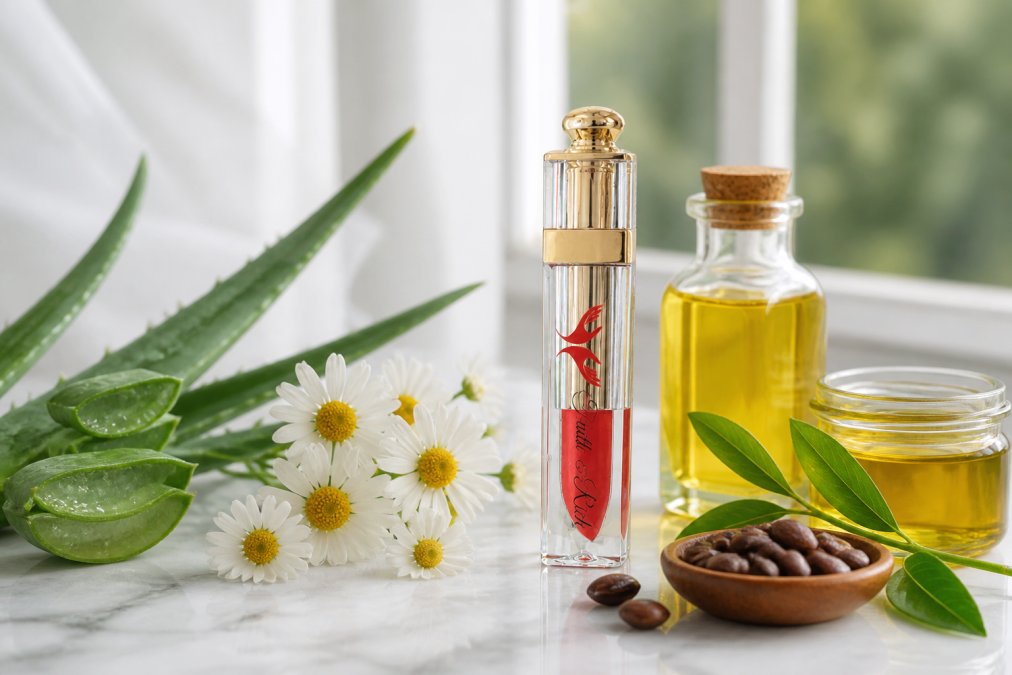
Botanical extracts work because they contain bioactive compounds your skin recognizes. Aloe vera reduces inflammation and accelerates barrier repair. Green tea extract is a polyphenol powerhouse that reduces sebum production and provides antioxidant protection. Chamomile calms active inflammation and reduces redness.
Jojoba oil mirrors your skin's natural sebum composition. When your skin recognizes an oil as "natural," it doesn't trigger immune response. Plant-based oils like rosehip and argan provide essential fatty acids your barrier needs, strengthening barrier function over time.
Mineral Pigments vs. Synthetic Dyes
Mineral pigments are inert compounds your skin doesn't recognize as foreign. Iron oxides and mica provide coverage without triggering immune response. Synthetic dyes are petroleum derivatives that your skin's immune system treats as invaders, creating inflammatory responses.
Carnauba wax and beeswax replace synthetic film-formers, providing structure and staying power without silicones. Beeswax offers antimicrobial properties, preventing bacterial colonization on lips and skin.
Non-Toxic Foundation for Sensitive Skin
Non-toxic foundations start with a base of plant oils or water, not silicone. They use mineral pigments for color and are fragrance-free and paraben-free by design.
Because the formula actually supports your skin rather than sitting on top of it, you need less product for the same coverage. One pump covers your face instead of two, reducing the total irritant load.
Shade matching is easier than expected. Because mineral pigments work across skin tones without oxidizing or turning orange, you get accurate color match without chemistry drama.
How to Transition to Clean Makeup Safely
Patch Testing and Gradual Introduction
Switching to luxury natural makeup for sensitive skin requires a deliberate transition, not a purge-and-replace approach. Your skin has adapted to your current products. Suddenly introducing entirely new formulations can trigger a purging phase with temporary breakouts.
Start with one product, usually foundation or concealer. Use it for one week while keeping everything else the same. Watch for reactions: redness, itching, bumps, or increased oil production. If your skin tolerates it, add a second product the following week.
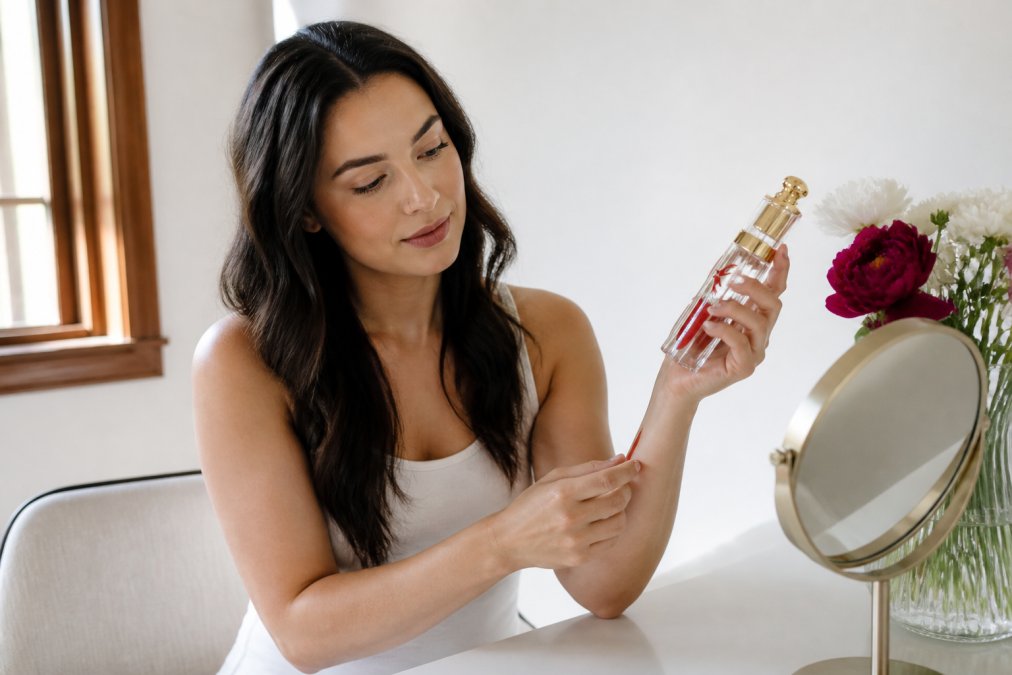
Patch test before full application. Apply the product behind your ear or on your jawline and wait 24 hours. If no reaction occurs, proceed to full face application.
The transition typically takes 4-6 weeks for your skin to fully adjust (the American Academy of Dermatology). During this period, you might experience slight purging as your skin clears congestion from previous products. This is normal and indicates your skin is healing.
Ingredient-Specific Reaction Mapping
Not all reactive skin responds the same way to ingredients. Mapping your specific reactions creates a personal ingredient guideline.
When you experience a reaction, note the ingredient list. Keep a simple log: product name, ingredients, reaction type (redness, itching, breakouts, dryness), and severity (mild, moderate, severe). After 3-4 products, patterns emerge. You might discover you react to silicones but tolerate parabens fine, or fragrance triggers you but mineral pigments don't.
Some reactions are delayed, you might use a product for three days before irritation appears. This is why gradual introduction matters.
Luxury Natural Makeup Picks for Sensitive Skin
Matte Lipsticks That Hydrate Without Irritation
Conventional matte lipsticks achieve their finish through silicones and synthetic polymers that crack your lip barrier and cause peeling. Luxury natural matte lipsticks use a different approach, starting with a hydrating base of plant oils and butters, then using waxes to create the matte finish.
FAITH & RICH's matte lipstick collection delivers this balance across multiple shades. The Boss Lady Red at $9.99 provides bold color without dryness. The formula glides on smoothly and hydrates your lips throughout wear. Nude Baby ($9.99) offers a clean, everyday shade that complements every skin tone. Brown Sugar ($9.99) bridges neutral and warm tones, providing richness for deeper skin tones. Confidence ($9.99) delivers a sophisticated berry tone, while Royalty ($9.99) offers a deeper burgundy. Sophisticated ($9.99) rounds out the collection with a timeless mauve.


The key difference: these matte lipsticks don't require constant lip balm reapplication. Because they're formulated with hydrating botanicals, your lips stay comfortable throughout the day.
Nourishing Lip Glosses for Reactive Lips
Natural lip glosses prioritize actual lip health. They use plant oils as the base, botanical extracts for color, and natural shine agents like mica. The result is a gloss that makes your lips look fuller while actually improving lip health over time.
FAITH & RICH's lip gloss line emphasizes nourishment-first approach. Ruby Rose ($7.99) delivers a classic rose tone with subtle shimmer and includes jojoba oil and aloe vera for hydration. Glamorous ($7.99) offers a warm, peachy-nude that provides all-day hydration without stickiness. Bloody Mary ($7.99) delivers deep berry tones with natural shimmer and stays put without drying. Lush Violet ($9.99) provides a statement shade that works on deeper skin tones.
These glosses actually improve your lips over time. Because they're formulated with nourishing botanicals, repeated application strengthens your lip barrier rather than weakening it.
| Product | Price | Type | Best For | Key Benefit |
|---|---|---|---|---|
| Boss Lady Red | $9.99 | Matte Lipstick | Bold statement looks | Long-lasting hydration |
| Brown Sugar | $9.99 | Matte Lipstick | Warm, everyday wear | Universal shade match |
| Nude Baby | $9.99 | Matte Lipstick | Neutral coverage | Natural appearance |
| Confidence | $9.99 | Matte Lipstick | Evening occasions | Sophisticated color |
| Royalty | $9.99 | Matte Lipstick | Deep skin tones | Rich pigmentation |
| Sophisticated | $9.99 | Matte Lipstick | Versatile wear | Timeless appeal |
| Ruby Rose | $7.99 | Lip Gloss | Classic everyday | Hydrating formula |
| Glamorous | $7.99 | Lip Gloss | Peachy-nude tones | All-day comfort |
| Bloody Mary | $7.99 | Lip Gloss | Bold statement | Dimensional color |
| Lush Violet | $9.99 | Lip Gloss | Deep skin tones | Rich pigmentation |
Hypoallergenic and Non-Comedogenic Testing Standards
Hypoallergenic means formulated to minimize allergic reactions. Non-comedogenic means it won't clog pores. These terms carry weight only when backed by actual testing.
The Cosmetic Ingredient Review (CIR) panel evaluates cosmetic ingredients for safety. Products meeting CIR standards have been tested for irritation potential. Dermatological testing applies products to reactive skin under controlled conditions. If no irritation occurs after 24-48 hours, it earns dermatologist-tested status.
Some brands conduct repeat insult patch testing (RIPT), applying the product repeatedly over weeks to catch delayed reactions. Non-comedogenic testing specifically examines pore-clogging potential on acne-prone skin.
Research from the American Academy of Dermatology emphasizes that sensitive skin requires formulations tested specifically on reactive skin types. Look for products with documented testing results, not just marketing language. The best indicator is transparency, brands willing to share testing protocols are confident in their formulations.
Sustainability vs. Sensitivity Trade-Offs in Clean Beauty
Clean beauty and sustainability sometimes conflict. Sustainable packaging can be heavier and more expensive. Natural preservatives are less effective than synthetic ones. Plant-based ingredients require agricultural resources.
For sensitive skin, luxury natural makeup brands that thrive do both. They use sustainable packaging without compromising product stability, source plant ingredients responsibly, and reformulate frequently to keep preservatives minimal.
FAITH & RICH's approach balances both. Handcrafted formulations prioritize ingredient quality, your skin health comes first. The community-driven model means sustainable practices are embedded in how we operate.
Some trade-offs are real. A foundation in glass packaging costs more than one in plastic. A product with minimal preservatives might have a shorter shelf life. Accepting these trade-offs is part of choosing luxury natural makeup for sensitive skin.
The emerging standard is radical transparency. Brands share ingredient sourcing, testing protocols, and sustainability metrics. You're evaluating actual data, not just marketing claims.
Choosing luxury natural makeup for sensitive skin is choosing products engineered for your skin's reality, not an idealized skin type. Your reactive skin needs formulations that support your barrier, not compromise it. FAITH & RICH's collection of matte lipsticks and nourishing lip glosses, from Boss Lady Red to Lush Violet, delivers this commitment at accessible price points ($7.99-$9.99 per product). Start with patch testing, map your ingredient triggers, and build a routine that celebrates your skin rather than fighting it. Your barrier will thank you.
Frequently Asked Questions
Q: What makes luxury natural makeup for sensitive skin different from regular makeup?
A: Luxury natural makeup for sensitive skin prioritizes clean formulations free from synthetic chemicals, parabens, talc, and harsh preservatives. These products use botanical extracts, mineral pigments, and plant-based oils like jojoba and aloe vera to nourish while delivering color. The difference lies in ingredient sourcing and testing rigor, not just marketing.
Q: What natural makeup ingredients to avoid should I know about if I have reactive skin?
A: Avoid synthetic fragrances, artificial dyes, parabens, talc, sulfates, and silicones, which commonly trigger irritation and inflammation. Some people react to certain essential oils or botanical extracts, so patch test new products. Avoid preservative-heavy formulas unless they're gentle alternatives like phenoxyethanol or plant-derived options. Synthetic chemicals and broad-spectrum irritants are more likely to compromise your skin barrier than clean, minimal formulations with recognized soothing agents.
Q: How do I know if a luxury makeup brand is truly natural and safe for sensitive skin?
A: Look for transparent ingredient lists with recognizable names like aloe vera, green tea extract, chamomile, and carnauba wax. Verify that the brand avoids synthetic dyes, parabens, talc, and fragrance. Read customer reviews from people with reactive skin, and always patch test first. Handcrafted or small-batch brands often provide greater ingredient transparency than mass-produced alternatives.
Q: How can I transition to clean makeup if my skin is very sensitive?
A: Start by patch testing one new product at a time on a small area of skin for 48 hours before full application. Introduce clean makeup gradually, replacing one product every 1-2 weeks rather than switching your entire routine at once. This ingredient-specific reaction mapping helps you identify which components your skin tolerates. Keep a journal of any redness, irritation, or inflammation. Consider consulting a dermatologist before making major changes. Many people find that transitioning slowly reduces the risk of unexpected flare-ups.
This article was written using GrandRanker


