

7 Ways to Use Raw Honey for Glowing Skin

Table of Contents
- Why Raw Honey Belongs in Your Skincare Routine
- 1. Raw Honey Face Mask for Deep Hydration
- 2. Does Honey Help With Acne? Spot Treatment Basics
- 3. Gentle Exfoliation With Honey and Sugar
- 4. Honey as a Cleanser for Sensitive Skin
- 5. Honey Skincare Routine for Beginners
- 6. Honey for Skin Barrier Support and Soothing
- 7. Pairing Honey With Brightening Ingredients
- Frequently Asked Questions
Last Updated: September 21, 2026
Why Raw Honey Belongs in Your Skincare Routine
Raw honey is unpasteurized honey that keeps its natural enzymes, antioxidants, and antimicrobial compounds intact. That difference matters more than most people realize. This guide from FAITH & RICH breaks down 7 ways to use raw honey for glowing skin, from hydration masks to spot treatments.
What Makes Raw Honey Different
Raw honey is a humectant, meaning it draws water from the air into your skin barrier. It also carries natural hydrogen peroxide, produced by an enzyme called glucose oxidase, which gives it mild antibacterial activity. The FDA's guidance on cosmetic ingredient labeling classifies honey as a cosmetic ingredient when used topically, not a drug, so it cannot legally be marketed as an acne treatment.
How to Choose and Store It
Look for the words "raw," "unfiltered," or "unpasteurized" on the label. Crystallization is normal and actually a good sign, it means the honey has not been heavily processed. Store the jar in a cool, dark cabinet with the lid sealed. If it hardens, place the jar in warm water for a few minutes.
1. Raw Honey Face Mask for Deep Hydration
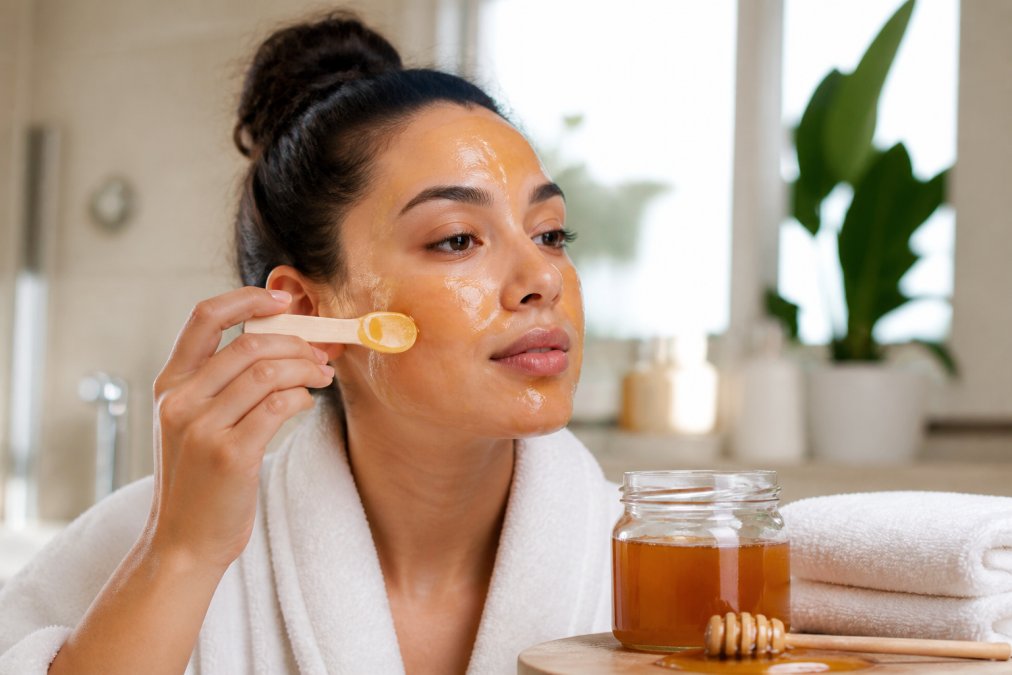
A raw honey face mask delivers hydration in about 15 minutes with one ingredient. Warm a tablespoon of raw honey between your fingers until it spreads easily, then apply a thin layer across clean skin. Leave it for 10 to 15 minutes and rinse with lukewarm water.
Simple Mask Recipes by Skin Type
- Dry skin: Mix 1 tablespoon raw honey with 1 teaspoon mashed avocado
- Oily skin: Combine honey with 1 teaspoon plain Greek yogurt
- Sensitive skin: Use honey alone, no add-ins
- Dull skin: Add 1 teaspoon fresh lemon juice
How to Apply and Rinse
Apply to damp skin, not dry skin. Honey spreads further and absorbs better when your face is slightly wet. Rinse with lukewarm water and a soft cloth. Hot water strips the barrier you just supported.
2. Does Honey Help With Acne? Spot Treatment Basics
Honey can calm inflammation around a blemish, but it is not a cure for acne. The antibacterial compounds in raw honey may reduce surface bacteria, while its anti-inflammatory properties can tone down redness. For stubborn cystic acne, see a dermatologist rather than relying on kitchen ingredients.
Why Honey Acts on a Blemish (and Where It Stops)
Raw honey works on acne through three mechanisms, none of which replace a prescription active:
- Osmotic effect. Honey is a supersaturated sugar solution with very low water activity, meaning there is little free water for bacteria to thrive in. When applied to a blemish, it draws fluid out of the surrounding tissue, which can temporarily reduce swelling and puffiness.
- Hydrogen peroxide. The enzyme glucose oxidase, which survives in unpasteurized honey, produces a slow, low-level release of hydrogen peroxide when the honey is diluted by skin moisture. That is mild antibacterial activity, not a sterilizing dose.
- Anti-inflammatory compounds. Flavonoids and phenolic acids in darker honeys (buckwheat, manuka) are associated with reduced redness, which is why a blemish looks calmer even when the underlying clog is still there.
How to Use It as a Spot Treatment
Dab a small amount of raw honey directly onto the blemish with a clean finger or cotton swab. Cover with a small bandage and leave it for 20 minutes, or overnight if you sleep on your back. Repeat daily until the spot settles. Patch test on your jawline first if you have sensitive skin.
Matching the Honey to the Blemish
- Whitehead or surface pustule: a thin layer of raw wildflower honey for 20 minutes is enough. The osmotic pull helps drain it.
- Red, inflamed papule (no head): manuka honey with a higher methylglyoxal rating is the better pick here, since the anti-inflammatory effect is what you want.
- Cystic or nodular acne: skip the kitchen jar and see a dermatologist. Topical honey will not reach the depth of the inflammation.
- Post-inflammatory mark (dark spot left behind): honey alone will not fade it. Pair with a brightening active like turmeric or vitamin C, covered in section 7.
How Often Is Too Often
Once or twice a day on a single blemish is the ceiling. More frequent application does not speed healing and can irritate the surrounding skin, especially if you are also using an active like benzoyl peroxide or a retinoid. If a spot has not improved in 7 to 10 days, that is a signal to change approach, not to apply more honey.
3. Gentle Exfoliation With Honey and Sugar
Honey and sugar make a mild exfoliating scrub that suits most skin types. Mix 1 tablespoon raw honey with 1 teaspoon fine sugar. Massage onto damp skin in slow circles for 30 seconds, then rinse. The honey buffers the sugar so it polishes without scratching.
4. Honey as a Cleanser for Sensitive Skin
For reactive or acne-prone skin, raw honey works as a gentle cleanser that will not strip natural oils. Massage half a teaspoon onto damp skin for 60 seconds, then rinse with lukewarm water. It removes light makeup and daily grime without the tight feeling that foaming cleansers often leave behind.
5. Honey Skincare Routine for Beginners
Building a honey skincare routine for beginners takes five minutes and three steps. Start with honey cleansing in the morning, add a honey mask twice a week, and use a honey spot treatment as needed. That is the entire framework.
A Simple Morning and Evening Routine
| Time | Step | Product Type | Frequency |
|---|---|---|---|
| Morning | Cleanse | Raw honey | Daily |
| Morning | Moisturize | Lightweight lotion | Daily |
| Evening | Cleanse | Raw honey or gentle cleanser | Daily |
| Evening | Treat | Honey spot treatment | As needed |
| Evening | Hydrate | Serum or cream | Daily |
| Weekly | Mask | Raw honey mask | 2x per week |
| Weekly | Exfoliate | Honey and sugar scrub | 1x per week |
Pair honey with a brightening serum if uneven tone is your main concern. FAITH & RICH's Turmeric Serum at $19.99 promotes healthy cell turnover and helps balance oil, which complements honey's soothing work.

6. Honey for Skin Barrier Support and Soothing
Raw honey supports the skin barrier by holding moisture in place and calming irritation. Its pH sits around 3.9, close enough to skin's natural acidity (roughly 4.5 to 5.5) that it rarely disrupts the acid mantle. That is why so many people with eczema-prone or windburned skin tolerate honey better than fragranced creams.
The Barrier Mechanism, Step by Step
Your skin barrier is a brick-and-mortar structure: corneocytes (the bricks) held together by a lipid matrix of ceramides, cholesterol, and fatty acids (the mortar). When the mortar thins, from over-cleansing, retinol, cold weather, or fragrance, water escapes and irritants get in. Honey helps on two fronts:
- Humectancy. Honey is roughly 80 percent sugars (fructose and glucose) plus about 17 to 18 percent water. Those sugars are hygroscopic, meaning they pull water from the air and from deeper skin layers into the upper layers, temporarily plumping the barrier.
- Occlusive film. As the water in honey evaporates on the skin, it leaves a light, breathable film that slows transepidermal water loss, the same job a heavier balm does, but without the greasy feel.
Tailoring the Soothing Application by Skin Type
- Dry, tight, flaky skin: apply a thin layer of raw honey over slightly damp skin, leave 15 minutes, then seal with a ceramide-rich moisturizer while the skin is still damp. The honey pulls water in; the moisturizer keeps it there.
- Reactive or rosacea-prone skin: use honey alone, no lemon, no essential oils, no sugar. Keep contact to 10 minutes and rinse with cool, not warm, water. Cool water reduces flushing.
- Eczema-prone skin: patch test on the inner forearm for 24 hours first. Honey can soothe, but it is not a substitute for a dermatologist-recommended barrier cream or a prescription topical.
- Compromised barrier from over-exfoliation or retinol: pause all actives for 3 to 5 days and use honey as a 10-minute rinse-off mask once daily. This is a reset, not a permanent routine.
After Sun and After Shaving
Apply a thin layer after sun exposure or shaving to reduce redness. Leave it on for 10 minutes before rinsing. For after-sun use, chill the jar in the refrigerator first, the cool temperature adds a second soothing signal on top of honey's own anti-inflammatory effect.
Where Honey Fits in a Multi-Step Routine
Honey is a humectant layer, not an active. In a modern routine, it belongs before your serum and moisturizer, not after. A workable order:
- Cleanse (honey or a gentle cleanser)
- Honey mask or honey layer, 10 to 15 minutes, rinse
- Hydrating serum (hyaluronic acid, niacinamide)
- Moisturizer
- SPF in the morning
7. Pairing Honey With Brightening Ingredients
Honey plays well with vitamin C, turmeric, and niacinamide, three ingredients that target pigmentation and dullness. The trick is layering: honey first as a humectant base, then your active serum, then a moisturizer to seal everything in.
Frequently Asked Questions
Which honey is best for the face?
Raw, unpasteurized honey is the best choice for skin because it keeps more of its natural enzymes, antioxidants, and antimicrobial compounds. Manuka honey is often recommended for acne-prone skin due to its higher antibacterial activity, but any raw honey can work well for hydration and soothing. Avoid highly processed honey that has been heated, as it loses many of these beneficial properties. Always check the label for 'raw' or 'unpasteurized' and do a patch test first.
How many weeks does it take for honey to work on the face?
Most people notice softer, more hydrated skin within a few days of regular use. For concerns like uneven tone, dark spots, or acne, expect to use honey consistently for 4 to 6 weeks before seeing visible changes. Results depend on your skin type, how often you apply it, and what other products you use. Pairing raw honey with a steady routine that includes cleansing and moisturizing will give you the best chance of seeing a glowing complexion over time.
What can I mix with honey on my face?
You can mix raw honey with ingredients like plain yogurt, oatmeal, turmeric, lemon juice, or a few drops of tea tree oil, depending on your skin goals. Yogurt and oatmeal are gentle and hydrating, turmeric and lemon can help with brightening, and tea tree oil may support acne-prone skin. Keep mixtures simple and test each new combination on a small area first. Avoid adding harsh acids or essential oils that irritate your skin.
What happens if I rub honey on my face every day?
Using raw honey on your face daily is generally safe for most skin types and can keep skin hydrated and soothed. Some people find that daily use of honey masks or cleansers helps maintain a healthy skin barrier. However, if you have oily or acne-prone skin, you may prefer to use honey masks two to three times a week and rely on a gentle cleanser on other days. Stop using it if you notice irritation, redness, or breakouts.
Is raw honey safe for all skin types?
Raw honey is well tolerated by most skin types, including dry, oily, and sensitive skin. It is naturally antimicrobial and anti-inflammatory, which can benefit acne-prone and irritated skin. That said, anyone with a pollen or bee product allergy should avoid it, and it is not recommended for infants under one year if ingested. Always do a patch test on your inner arm before applying honey to your face, especially if you have sensitive skin.


