

Natural Skincare Routine for Hyperpigmentation

Table of Contents
- Start Here: Your Natural Skincare Routine for Hyperpigmentation
- Natural Ingredients for Hyperpigmentation That Actually Do Something
- Sunscreen for Hyperpigmentation: The Step Most Routines Skip
- Step-by-Step: Hyperpigmentation Skincare Routine Morning and Night
- How Long Does Hyperpigmentation Take to Fade?
- Common Mistakes That Stall Your Progress
- Conclusion: Consistency Beats Intensity
- Frequently Asked Questions
Last Updated: October 4, 2026
Start Here: Your Natural Skincare Routine for Hyperpigmentation
Dark spots rarely fade on their own. A natural skincare routine for hyperpigmentation works by interrupting the pigment process at three points: calming inflammation, blocking excess melanin, and speeding up cell turnover. Skip any one of those, and the spots tend to linger.
At FAITH & RICH, we built our turmeric line around that idea. This guide walks you through the ingredients that have real evidence behind them, a morning and night routine you can follow, and the mistakes that quietly stall progress for months.
One thing before we start: natural does not mean weak, and it does not mean instant. The routine below is designed to be gentle enough for daily use and consistent enough to show results.
Natural Ingredients for Hyperpigmentation That Actually Do Something
Natural ingredients for hyperpigmentation fall into two groups: those that calm the skin and those that interrupt melanin production. The best routines use both, because dark spots are usually the end result of inflammation plus sun exposure.
Here is what the research on these ingredients generally supports, and how we use them at FAITH & RICH.
Turmeric: The Brightening Workhorse
Turmeric is the most studied natural brightener for uneven tone. Its active compound, curcumin, helps calm the inflammation that triggers excess pigment in the first place.
That matters because post-inflammatory hyperpigmentation, the kind left behind by acne or irritation, starts with inflammation. Calm the trigger and you slow the spot before it sets.
Our Turmeric Toner pairs turmeric with daily use in mind: it helps reduce inflammation, even skin tone, and minimize pores. The Turmeric Serum goes a step further by promoting healthy cell turnover and improving circulation, which helps your skin shed pigmented cells faster.


Honey, Licorice Root, and Vitamin C
Three more ingredients earn their place in a natural routine:
- Honey pulls water into the skin and supports its barrier, so irritation heals faster and pigment has less reason to form.
- Licorice root contains glabridin, which helps interrupt the enzyme that produces melanin.
- Vitamin C brightens tone and defends against the free radicals that darken existing spots.
You do not need all three in every product. One or two, used daily, is enough.
Sunscreen for Hyperpigmentation: The Step Most Routines Skip
Sunscreen for hyperpigmentation is not optional. UV exposure darkens existing spots and triggers new ones, so any routine without daily sun protection is fighting a losing battle.
This is the step most people skip, and it is the single biggest reason a routine stalls. You can brighten for weeks and undo it with one long afternoon outside.
A few practical rules:
- Apply every morning, even when it is cloudy or you are indoors near windows.
- Use enough to cover your face and neck fully, not a thin dab.
- Reapply if you are outside for more than two hours.
Our Rosewater Sunscreen is light enough for daily layering under makeup, which matters because the best sunscreen is the one you will actually wear every day.

Step-by-Step: Hyperpigmentation Skincare Routine Morning and Night
A hyperpigmentation skincare routine morning and night splits into two jobs. Morning is about defense: cleanse, treat, protect. Night is about repair: cleanse, treat, seal in moisture while your skin recovers.
Keep both routines short. A five-step morning and a four-step night are enough to see change if you stay consistent.
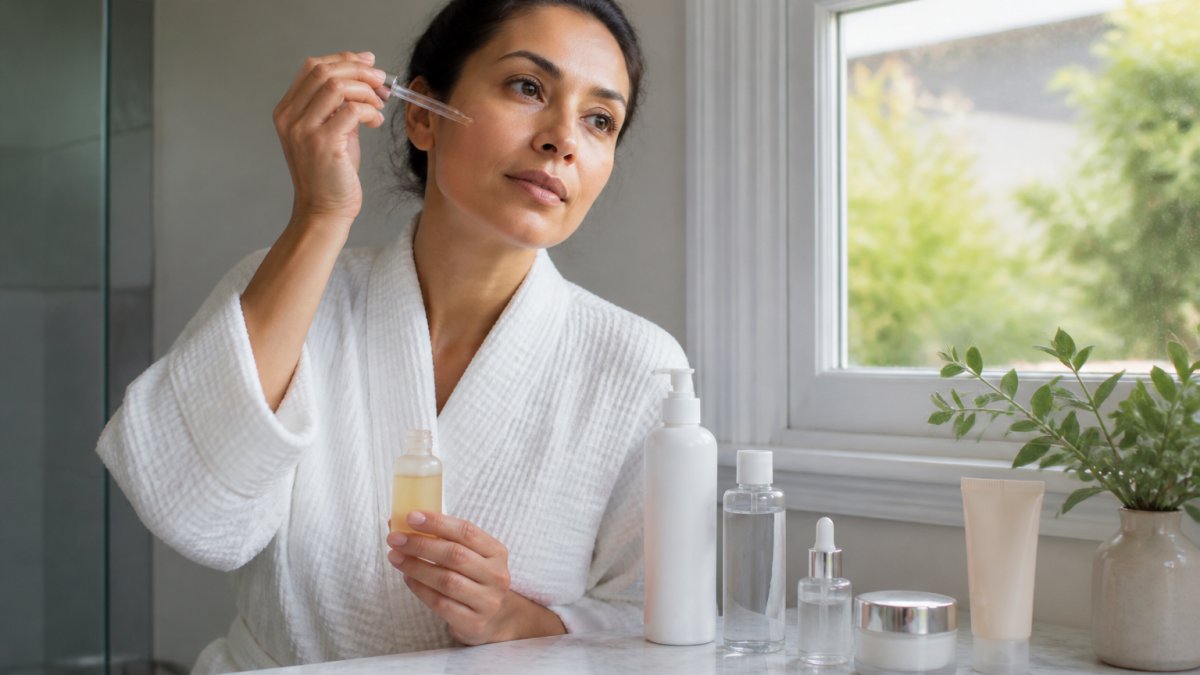
Morning Routine (5 Steps)
- Cleanse gently. Use lukewarm water and a mild cleanser. Our Turmeric Face Cleanser removes dirt and impurities without stripping your skin.
- Apply toner. Pat the Turmeric Toner into damp skin to calm redness and prep for what comes next.
- Add serum. Press the Turmeric Serum in with your palms rather than rubbing.
- Moisturize. Lock in hydration so your barrier stays strong.
- Finish with sunscreen. This is the step that protects every bit of progress you make.
Night Routine (4 Steps)
- Remove the day. Cleanse away sunscreen, makeup, and buildup.
- Treat. Apply toner, then serum, the same way you did in the morning.
- Moisturize. Night is when your skin repairs itself, so do not skip this.
- Sleep on a clean pillowcase. Friction and bacteria slow healing more than most people realize.
How Long Does Hyperpigmentation Take to Fade?
Hyperpigmentation typically takes 8 to 12 weeks to show visible fading with a consistent routine, and deeper or older spots can take several months. Surface pigment sits in the top layer of skin, which renews slowly.
That timeline is why so many people quit early. They expect change in two weeks, see none, and stop right before the routine would have started working.
What speeds things up:
- Daily sunscreen, without exception
- Consistent use of the same actives rather than switching every week
- Gentle handling, since irritation creates new spots
- Patience with the process, because skin turnover cannot be rushed
Common Mistakes That Stall Your Progress
Most stalled routines fail for the same handful of reasons. Fix these and the ingredients finally get a chance to work.
- Skipping sunscreen. The number one reason spots return or deepen.
- Over-exfoliating. Scrubbing too hard causes irritation, and irritation causes more pigment.
- Switching products too fast. Give any routine a full 8 to 12 weeks before judging it.
- Using actives on dry, irritated skin. Calm the skin first, then treat.
- Ignoring the neck and hands. They get the same sun exposure and need the same care.
A common mistake is treating hyperpigmentation as a spot problem. It is a whole-face routine problem, and consistency across your entire routine is what moves the needle.
Conclusion: Consistency Beats Intensity
The hardest part of fading hyperpigmentation is not finding the right ingredients. It is showing up every single day, even when you cannot see change yet.
FAITH & RICH makes that easier with a simple turmeric routine built for daily use. Our handcrafted toners calm and brighten, our honey-based formulas support your skin barrier, and our Rosewater Sunscreen protects the progress you have worked for. Every product is made to pamper you while it works.
Start your routine with FAITH & RICH and give your skin the steady care it needs to even out over time.
Frequently Asked Questions
What is a good natural skincare routine for hyperpigmentation?
A solid routine has four core steps: cleanse with a turmeric-based face cleanser to remove dirt and impurities, follow with a turmeric toner to even tone and minimize pores, apply a turmeric serum to support healthy cell turnover, and finish every morning with sunscreen. At night, repeat the cleanse, tone, and serum steps. Consistency matters more than the number of products you use.
Which natural ingredients help fade dark spots?
Turmeric is one of the most studied natural ingredients for hyperpigmentation because its antioxidants help reduce inflammation and even skin tone. Honey-based formulas support the skin barrier while you treat dark spots. Vitamin C and licorice root are also common in natural brightening products. Look for toners and serums that list these ingredients clearly rather than blends that bury them at the bottom of the label.
How long does hyperpigmentation take to fade with natural products?
Most people see gradual improvement over 8 to 12 weeks of consistent use. Dark spots fade from the bottom up, so the surface lightens before the deeper pigment clears. Sun exposure resets progress, which is why daily sunscreen is non-negotiable. If you stop your routine for a week or two, expect the timeline to stretch. Photograph your skin every two weeks in the same lighting to track real change.
Can natural ingredients irritate sensitive or darker skin?
Natural ingredients can still cause irritation, especially if you layer too many actives at once. Start with one new product, use it every other day for the first week, and watch for redness, stinging, or new breakouts. Turmeric and honey-based formulas are generally well tolerated, but patch-test on your inner arm first. If your skin reacts, pull back to just cleanser and sunscreen until it settles.


