

How to Fade Sun Spots Naturally at Home

Table of Contents
- Understanding Sun Spots and Dark Spots
- Natural Ingredients That Fade Sun Spots
- Does Lemon Juice Fade Age Spots
- How to Fade Age Spots on Hands
- How Long Do Sun Spots Take to Fade
- Over-the-Counter Age Spot Treatments
- Your Step-by-Step Home Routine to Fade Sun Spots
- When to See a Dermatologist
- Frequently Asked Questions
Last Updated: October 10, 2026
Understanding Sun Spots and Dark Spots
Sun spots are flat, brown patches that appear on your skin from years of sun exposure. They're also called age spots or solar lentigines. These marks form when UV rays trigger your skin to produce more melanin, the pigment that gives skin its color.
The good news: sun spots are harmless. They're purely cosmetic. But many people want to fade sun spots naturally for appearance reasons, and there are proven ways to do it at home.
What causes sun spots and age spots
Sun damage is the main culprit. Your skin cells respond to UV exposure by producing extra melanin as a defense mechanism. Over decades, this buildup concentrates in certain areas, creating the dark patches you see.
Other factors speed up the process: tanning beds, certain medications that increase sun sensitivity, and genetic predisposition. Some people's skin simply responds more aggressively to sun damage than others.
How to tell sun spots apart from other skin marks
Sun spots have specific characteristics that make them easy to identify. They're flat, not raised. They're brown or tan, sometimes with uneven edges. They appear most often on areas that get heavy sun exposure: your face, hands, shoulders, and forearms.
Other marks behave differently. Moles are usually raised and may have hair growing from them. Freckles are smaller and appear in clusters, often in younger people. Age spots from non-sun causes might appear in unexpected locations.
Natural Ingredients That Fade Sun Spots
Several natural ingredients have solid evidence behind them for lightening hyperpigmentation. The key is consistency and patience. Most natural approaches take 4-12 weeks to show visible results.
Turmeric and lemon for hyperpigmentation
Turmeric contains curcumin, a compound with antioxidant and anti-inflammatory properties. Lemon juice contains vitamin C, which brightens skin and helps fade dark spots. Together, they're a powerful combination for evening skin tone.
The FAITH & RICH Turmeric & Lemon Set ($79.99) combines both ingredients in a formulated product designed specifically for this purpose.
Many people apply turmeric-lemon masks 2-3 times per week. Mix turmeric powder with fresh lemon juice and a bit of honey to create a paste.
Vitamin C, niacinamide, and other evidence-backed options
Vitamin C is one of the most researched ingredients for brightening skin (pubmed.ncbi.nlm.nih.gov). It inhibits melanin production and has antioxidant benefits.
Alpha arbutin is another option. It's a naturally derived compound that blocks tyrosinase, an enzyme involved in melanin production. Green tea extract contains polyphenols with antioxidant properties.
The FAITH & RICH Turmeric Serum ($19.99) harnesses these principles with turmeric as its active ingredient. It promotes healthy cell turnover and improves circulation, helping your skin naturally shed pigmented cells faster.

For best results, layer these ingredients:
- Use vitamin C serum in the morning
- Apply niacinamide-based products in the evening
- Add a retinoid (if tolerated) a few nights per week
- Always follow with broad-spectrum sunscreen
Safety first: which DIY ingredients to avoid
Not all natural ingredients are safe for facial skin. Lemon juice, while containing vitamin C, is too acidic for direct application. Straight apple cider vinegar can burn your skin. Turmeric can stain skin yellow if left on too long or used too frequently.
Avoid these DIY approaches:
- Undiluted essential oils (too concentrated, cause irritation)
- Baking soda scrubs (too abrasive, damages skin barrier)
- Bleach or hydrogen peroxide (dangerous, cause chemical burns)
- Papaya or pineapple enzymes (too strong for sensitive skin without professional supervision)
The safest approach is using formulated products where ingredients are balanced and tested. Your skin will thank you.
Does Lemon Juice Fade Age Spots
Lemon juice contains vitamin C, which does help fade age spots, but only when used correctly.
The vitamin C in lemon needs to be at the right pH level to penetrate skin effectively. Formulated serums with stabilized vitamin C work better than fresh lemon juice.
Realistically, lemon juice alone won't fade age spots significantly. It's one component of a larger routine. Combine it with other ingredients like turmeric, niacinamide, or prescription-strength treatments for better results.
How to Fade Age Spots on Hands
Hands are notoriously difficult to treat because the skin there is thinner and more exposed to sun and environmental damage.
The routine for hands is similar to facial treatment, but with extra emphasis on sun protection:
- Apply vitamin C serum every morning
- Use a lightening cream with niacinamide or alpha arbutin twice daily
- Wear broad-spectrum sunscreen (SPF 30+) on hands every single day, even indoors
- Consider adding a retinoid cream at night if your hands tolerate it
- Exfoliate gently 1-2 times per week with a chemical exfoliant, not a scrub
Hand skin regenerates more slowly than facial skin. Expect 8-16 weeks before seeing noticeable fading. Consistency is everything. Many people give up after 4-6 weeks because they don't see results yet.
The FAITH & RICH Turmeric Toner ($19.99) works well on hands. Apply it after cleansing, then layer your treatment serum and sunscreen.

How Long Do Sun Spots Take to Fade
Most natural approaches to fade sun spots naturally take 8-12 weeks to show visible results. Some people see improvement in 4-6 weeks, while others need 16-20 weeks.
Prescription treatments work faster, typically 6-8 weeks. Over-the-counter creams fall somewhere in the middle, around 10-14 weeks.
The timeline also depends on your skin type and age. Younger skin regenerates faster and responds more quickly to treatment.
Track your progress with photos taken in the same lighting every two weeks.
Over-the-Counter Age Spot Treatments
Over-the-counter creams and serums are accessible and effective for many people. Look for these active ingredients:
- Hydroquinone (2%): reduces melanin production
- Retinol or retinoids: increase cell turnover
- Vitamin C: brightens and protects
- Niacinamide: reduces inflammation
- Alpha arbutin: blocks melanin formation
- Kojic acid: inhibits tyrosinase enzyme
Most drugstore options cost $15-$40. They work, but results are gradual. Consistency matters more than price. A $20 cream used religiously for 12 weeks beats a $60 cream used sporadically.
Combination products often work better than single-ingredient ones. Layering a vitamin C serum with a niacinamide cream, for example, creates a synergistic effect that's stronger than either alone.
| Ingredient | How It Works | Timeline | Best For |
|---|---|---|---|
| Hydroquinone | Reduces melanin production | 8-12 weeks | Stubborn, dark spots |
| Retinol | Increases cell turnover | 10-16 weeks | All skin types |
| Vitamin C | Brightens, protects | 8-12 weeks | Dull, uneven tone |
| Niacinamide | Reduces inflammation | 12-16 weeks | Sensitive skin |
| Alpha arbutin | Blocks melanin formation | 12-20 weeks | Mild to moderate spots |
Your Step-by-Step Home Routine to Fade Sun Spots
A consistent routine is more important than any single product. You don't need expensive items, you need commitment.
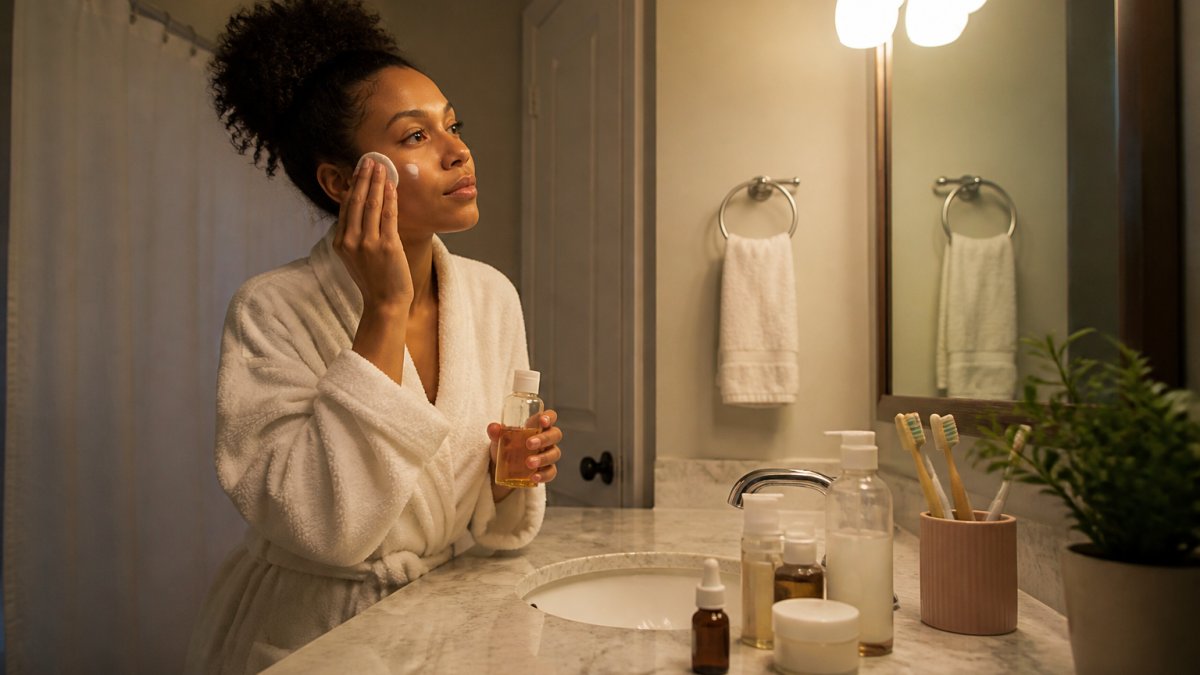
Morning routine with sun protection
Sun protection is non-negotiable. UV exposure will darken existing spots and create new ones. Without it, you're fighting a losing battle.
- Cleanse gently with lukewarm water and a mild cleanser
- Apply vitamin C serum to damp skin
- Wait 2-3 minutes for it to absorb
- Apply moisturizer
- Apply broad-spectrum sunscreen (SPF 30 minimum) to face and hands
- Reapply sunscreen every 2 hours if you're outdoors
The FAITH & RICH Sunscreen ($9.99) provides daily protection. Use it every day, rain or shine. Indoor UV exposure through windows is real too, especially if you sit near windows.
Evening routine with active fading ingredients
Your evening routine does the heavy lifting. This is when you apply active treatments that your skin can process overnight.
- Cleanse thoroughly to remove sunscreen and daily grime
- Apply the FAITH & RICH Turmeric Toner ($19.99) to clean skin
- Wait 1-2 minutes
- Apply your lightening serum or treatment cream
- Layer with moisturizer to prevent irritation
- Optional: apply a retinoid cream 3 nights per week (start with 1-2 nights if new to retinoids)
The Turmeric Toner preps your skin and adds anti-inflammatory benefits. The toner helps active ingredients penetrate more effectively.
Timing matters. Apply treatments to completely dry skin. Wait a few minutes between products so each one absorbs. This prevents pilling and ensures ingredients work optimally.
Patch testing and monitoring for irritation
Before committing to any new product, patch test it. This prevents wasting money and protects your skin.
- Choose a small, inconspicuous area (inner arm or behind ear)
- Apply a dime-sized amount of the product
- Wait 24-48 hours
- Check for redness, itching, burning, or swelling
- If clear, gradually introduce the product to your full routine
- If irritated, stop using it and wait for irritation to resolve
Some irritation is normal when starting active treatments. Mild redness or slight dryness often passes after a week or two as your skin adjusts. But burning, severe redness, or swelling means stop immediately.
If you have sensitive skin, introduce one new product every 2 weeks. This lets you identify which product causes problems if irritation develops.
When to See a Dermatologist
Most sun spots are harmless and respond well to home treatment. But certain signs warrant professional evaluation.
See a dermatologist if:
- A spot changes color, size, or shape
- A spot becomes itchy, painful, or starts bleeding
- You have more than a handful of spots and want faster results
- Home treatment hasn't worked after 16 weeks
- You're unsure whether a mark is a sun spot or something else
- You want professional treatments like laser therapy or chemical peels
A dermatologist can confirm that spots are benign, rule out skin cancer, and recommend prescription-strength treatments if needed. Professional treatments like laser work faster than natural approaches, often showing results in 4-6 weeks.
Sun spots fade naturally when you commit to a consistent routine combining evidence-backed ingredients with rigorous sun protection. The FAITH & RICH Turmeric Toner, Turmeric Serum, and Sunscreen work together to fade hyperpigmentation while protecting your skin from future damage.

Frequently Asked Questions
How long does it take to fade sun spots naturally at home?
Natural fading typically takes 4 to 12 weeks of consistent treatment, depending on the depth of pigmentation and your skin tone. Ingredients like vitamin C, niacinamide, and turmeric work gradually by promoting skin-cell turnover and reducing melanin production. Visible results appear sooner on lighter skin tones. Consistency matters more than speed, skipping applications resets your progress. If spots haven't faded after 12 weeks, consult a dermatologist about prescription-strength options or professional treatments.
Does lemon juice fade age spots safely?
Lemon juice contains citric acid and vitamin C, which can lighten pigmentation, but it carries significant risks. Lemon juice is highly acidic and can cause severe irritation, chemical burns, and increased sun sensitivity on delicate facial skin. It may also trigger photosensitivity, making spots darker if exposed to UV light. Safer alternatives include stabilized vitamin C serums or products combining turmeric and lemon in controlled formulations designed for skin safety, like the FAITH & RICH Turmeric & Lemon Set, which balances efficacy with skin protection.
Can over-the-counter creams really fade sun spots?
Yes, many OTC creams work when they contain proven fading ingredients like niacinamide, alpha arbutin, vitamin C, or retinoids. These ingredients reduce melanin production and accelerate skin-cell turnover. Results vary by product strength and consistency of use. For best results, choose products specifically labeled for hyperpigmentation or age spots, apply daily, and use broad-spectrum sunscreen to prevent new spots. If OTC treatments don't show improvement after 8 to 12 weeks, prescription options like hydroquinone or tretinoin may be more effective.
Are natural remedies like turmeric and aloe vera effective for fading dark spots?
Turmeric has antioxidant and anti-inflammatory properties that may help reduce hyperpigmentation and support skin-cell turnover, especially when combined with lemon or other brightening ingredients. Aloe vera is soothing but lacks strong lightening power on its own. Neither works as quickly as prescription treatments, but both are gentler on sensitive skin. The FAITH & RICH Turmeric Toner and Turmeric & Lemon Set combine these ingredients with careful formulation to maximize efficacy while minimizing irritation, making them practical choices for at-home fading routines.


