

Foods That Help Reduce Skin Hyperpigmentation

Table of Contents
- Foods That Help Reduce Skin Hyperpigmentation: What the Evidence Shows
- Foods for Dark Spots on Face: 8 Everyday Options
- Vitamin C Foods for Skin: Why They Matter for an Even Tone
- How Long Does Hyperpigmentation Take to Fade?
- Hyperpigmentation Treatment and Sunscreen: What Diet Cannot Replace
- Building a Daily Plate and Routine That Support Results
- Conclusion
- Frequently Asked Questions
Last Updated: October 6, 2026
Foods That Help Reduce Skin Hyperpigmentation: What the Evidence Shows
Certain foods that help reduce skin hyperpigmentation do exist, but they work as support, not as a cure. Research on nutrition and skin, including work summarized by Oregon State University's Linus Pauling Institute, shows that antioxidants like vitamin C and vitamin E can help defend skin cells from the oxidative stress that worsens dark spots.
Here is the honest version most guides skip: no single food erases pigmentation. Diet can help calm the inflammation and free-radical damage that drive melanin production, but it works slowly and only alongside sun protection.
Below, we break down which foods have the best supporting evidence, how long fading actually takes, and what diet cannot replace.
How Diet Affects Melanin Production and Existing Dark Spots
Hyperpigmentation is the overproduction of melanin in patches of skin, often triggered by UV exposure, inflammation, or hormonal shifts. Melanin itself is protective; the problem is when melanin production runs high in one area and creates uneven tone.
Diet enters the picture through two channels. First, antioxidant-rich foods help neutralize free radicals, the unstable molecules that damage skin cells and can worsen pigmentation. Second, a nutrient deficiency, particularly in vitamin C, vitamin E, or certain minerals, can leave skin more vulnerable to that damage.
What food does not do is bleach existing pigment overnight. It supports the skin's own repair process. That distinction matters, because it sets realistic expectations before you build a grocery list.
Foods for Dark Spots on Face: 8 Everyday Options
The most useful foods for dark spots on face are the ones you will actually eat daily: colorful produce, fatty fish, nuts, and spices with antioxidant properties. We group them into three practical clusters so you can build meals instead of memorizing a list.
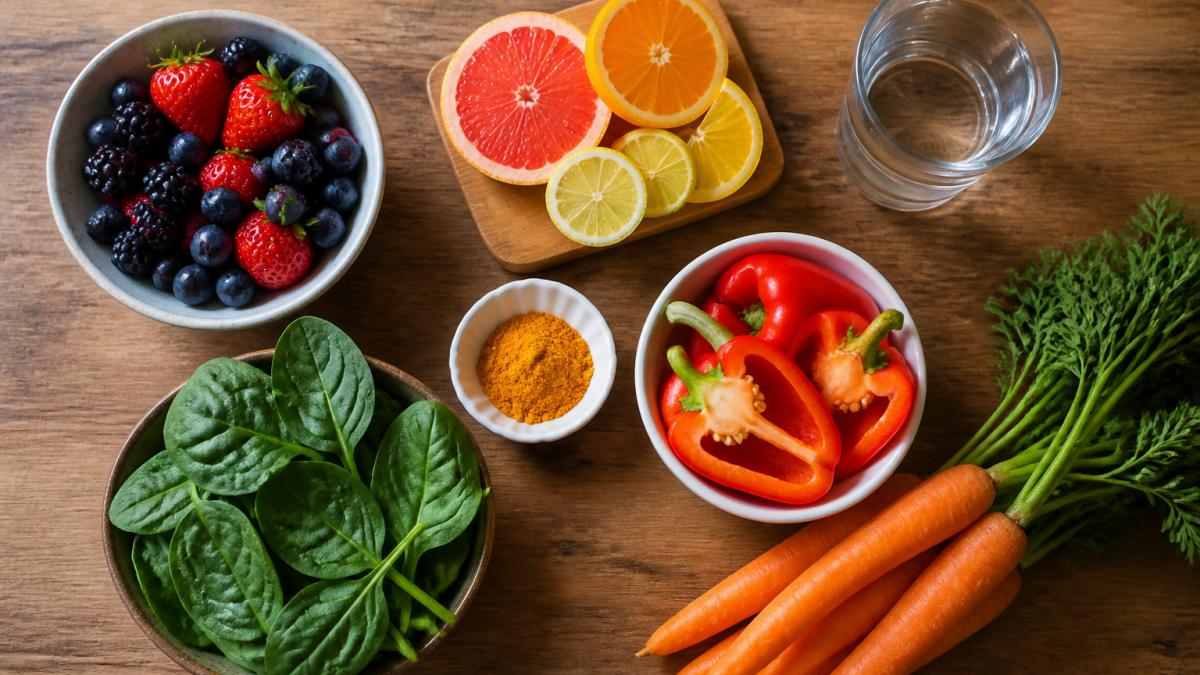
1. Citrus Fruits, Berries, and Red Bell Peppers
These are your vitamin C foods for skin, and they earn the top spot for a reason. Vitamin C supports collagen production and acts as an antioxidant that helps neutralize free radicals before they damage skin cells.
- Citrus fruits: oranges, grapefruit, lemons, all easy to add to breakfast
- Berries: strawberries, blueberries, raspberries, rich in antioxidants
- Red bell peppers: one of the highest vitamin C sources per serving
Lemon in particular shows up in traditional brightening routines. Our Turmeric & Lemon Set pairs lemon's natural vitamin C with turmeric to help fade the look of dark spots and even tone.

2. Carrots, Sweet Potatoes, and Leafy Greens
Beta-carotene-rich vegetables such as carrots and sweet potatoes support skin health from the inside. The body converts beta-carotene into vitamin A, which plays a role in skin cell turnover.
Leafy greens like spinach and broccoli add vitamin E, folate, and additional antioxidants. A common mistake is steaming these into mush, which leaches water-soluble nutrients. Light cooking or eating them raw in salads keeps more of the good stuff intact.
3. Salmon, Eggs, Almonds, and Turmeric
Omega-3 fatty acids from salmon and other fatty fish help support the skin barrier and may calm inflammation, which matters because inflammation can drive post-sun hyperpigmentation. Eggs and almonds round out the group with vitamin E, healthy fats, and minerals.
Turmeric deserves its own mention. Curcumin, the compound behind turmeric's color, is a studied antioxidant. It will not bleach a dark spot, but it supports the skin's response to inflammation. This is why we built our Turmeric Toner around it: the antioxidant power of turmeric helps reduce inflammation and even skin tone when used daily.

Vitamin C Foods for Skin: Why They Matter for an Even Tone
Vitamin C foods for skin matter because ascorbic acid is one of the few nutrients with a direct, well-documented role in both collagen formation and antioxidant defense. It helps neutralize free radicals and supports the skin's natural repair cycle.
Here is a practical comparison. Amounts below reflect commonly cited values for raw, edible portions and will vary by variety, ripeness, and storage.
| Food | Typical serving | Approximate vitamin C |
|---|---|---|
| Red bell pepper, raw | 1 medium pepper | Among the highest of common produce |
| Orange | 1 medium fruit | High |
| Strawberries | 1 cup sliced | High |
| Broccoli, raw | 1 cup chopped | Moderate to high |
| Kiwi | 1 medium fruit | High |
| Tomato | 1 medium | Moderate |
A red bell pepper, a handful of strawberries, or a glass of citrus juice covers a meaningful share of daily needs.
Two caveats worth stating plainly:
- Cooking and storage reduce vitamin C. It is water-soluble and heat-sensitive, so boiling leaches it into the cooking water and long storage degrades it. Raw or lightly cooked preparations preserve more.
- Eating vitamin C is not the same as applying it. Topical vitamin C has been studied for brightening and antioxidant protection on the skin surface; dietary vitamin C supports skin health systemically. Neither replaces sunscreen or topical brightening care.
A common pattern is that people eat plenty of vitamin C and still see no change in existing dark spots, because diet supports the skin's repair process rather than dissolving pigment that is already there. That is expected, not a failure of the diet.
How Long Does Hyperpigmentation Take to Fade?
How long does hyperpigmentation take to fade? For most people, visible improvement takes several weeks to several months, and diet alone is the slowest lever.
Not all pigmentation behaves the same way, and this is where most food lists go quiet. Sun spots, melasma, and post-inflammatory hyperpigmentation can have different causes and may not respond to diet in the same way:
- Sun spots (solar lentigines): driven by cumulative UV exposure. Prevention and sun protection matter most; diet is supportive at best.
- Melasma: often hormonal and UV-triggered, and frequently stubborn. It commonly requires clinician-guided treatment, and diet alone rarely resolves it.
- Post-inflammatory hyperpigmentation (PIH): follows acne, injury, or inflammation. Because inflammation is part of the driver, anti-inflammatory eating patterns are more plausibly relevant here than for sun spots.
Factors that speed things up:
- Consistency: daily sun protection, not occasional use
- Cause: post-inflammatory spots from acne often fade faster than sun-driven patches
- Skin type and depth of pigment: deeper pigment simply takes longer
- Treatment: evidence-based topicals or in-office care, guided by a clinician
Set a realistic window of two to three months before judging any routine. If nothing changes after that, that is your signal to see a dermatologist rather than double down on the same approach.
When to seek care. New, changing, or persistent pigmentation warrants professional assessment, especially if a spot is spreading, changing shape or color, or appearing suddenly. A dermatologist can distinguish benign pigmentation from something that needs evaluation, and can recommend treatments with better evidence than any grocery list.
A useful mental model: think of diet as keeping the soil healthy while sunscreen and treatment do the weeding. Skip either and progress stalls.
Hyperpigmentation Treatment and Sunscreen: What Diet Cannot Replace
Hyperpigmentation treatment and sunscreen are non-negotiable, and diet cannot substitute for either. This is the point competitors gloss over: UV exposure is the single biggest driver of new dark spots, so unprotected skin undoes dietary progress fast.
The American Academy of Dermatology's guidance on sun protection recommends broad-spectrum sunscreen as the foundation of any pigmentation plan. Reapply through the day, and pair it with shade and protective clothing.
Diet also cannot replace a dermatologist's care. If pigmentation is spreading, changing shape, or appearing suddenly, get it checked. The FDA's consumer information on skin products and treatments is a useful starting point for understanding what topical products can and cannot claim.
Building a Daily Plate and Routine That Support Results
Results come from stacking small habits, not chasing one miracle food. Use this simple framework to pair what you eat with what you apply.
| Focus Area | Daily Action | Frequency | Why It Helps |
|---|---|---|---|
| Antioxidant intake | Berries, citrus, or red bell pepper | Every day | Helps neutralize free radicals |
| Beta-carotene | Carrots, sweet potatoes, leafy greens | 4-5 days a week | Supports skin cell turnover |
| Healthy fats | Salmon, eggs, almonds | 3-4 days a week | Supports skin barrier, aids nutrient absorption |
| Sun protection | Broad-spectrum sunscreen | Every morning, reapply | Prevents new pigmentation |
| Topical support | Turmeric or vitamin C skincare | Morning and night | Complements dietary nutrients |
A simple daily plate might look like this: citrus or berries at breakfast, a spinach and red pepper salad with olive oil at lunch, salmon or eggs with sweet potatoes at dinner, and almonds as a snack. That covers vitamin C, beta-carotene, omega-3s, and vitamin E without a supplement.
On the topical side, our Turmeric Serum supports healthy cell turnover and balances oil, while our Double Glutathione Set helps improve the look of uneven skin tone as part of a daily routine.

Conclusion
Stubborn pigmentation is frustrating precisely because it fades on its own timeline, not yours. Pairing antioxidant-rich foods with daily sun protection and consistent topical care gives your skin the best chance to even out over the coming months. At FAITH & RICH, our turmeric and lemon skincare line is built for exactly that routine, with handcrafted toners, serums, and sets designed to brighten and even tone while you care for your skin from the inside out. Explore the FAITH & RICH turmeric collection and build a routine that supports your glow.
Frequently Asked Questions
Can certain foods help reduce skin hyperpigmentation?
Foods supply nutrients your skin uses to repair itself, including vitamin C, vitamin E, beta-carotene, and omega-3 fatty acids. These support collagen and help neutralize free radicals from UV exposure. That said, no single food fades dark spots on its own. A diet rich in berries, citrus, leafy greens, carrots, and fatty fish works best alongside daily sunscreen and any treatment a dermatologist recommends.
How long does hyperpigmentation take to fade?
Most dark spots fade gradually over several months, and stubborn patches from years of sun damage can take six months to a year or longer. Progress depends on the cause, your skin tone, how consistently you protect your skin from UV rays, and whether you use an active treatment. Photograph your skin monthly in the same lighting so you can track real change instead of guessing.
Which vitamin C foods for skin should I eat most often?
Red bell peppers, citrus fruits, strawberries, kiwi, broccoli, and tomatoes all deliver vitamin C. Your body cannot store it, so spread these across meals rather than loading up once. Pairing them with iron-rich foods like spinach or eggs can also help. Vitamin C supports collagen production and helps defend skin from the free radicals that worsen post-sun hyperpigmentation.
Does diet alone get rid of hyperpigmentation?
No. Diet supports skin health, but it cannot replace sun protection or treatment. Daily sunscreen is the single most important step, because UV rays keep triggering melanin production and undo your progress. If dark spots persist after months of consistent sun protection and a nutrient-rich diet, see a dermatologist to rule out other causes and discuss options such as prescription topicals.
Can a nutrient deficiency cause dark spots or uneven skin tone?
Yes. Low levels of vitamin B12, vitamin D, iron, or zinc have been linked to changes in skin color and slower healing. A deficiency can also make existing pigmentation look more pronounced. If you eat a varied diet and still notice new or worsening discoloration, ask a doctor to check your levels before adding supplements, since some vitamins are harmful in high doses.


